
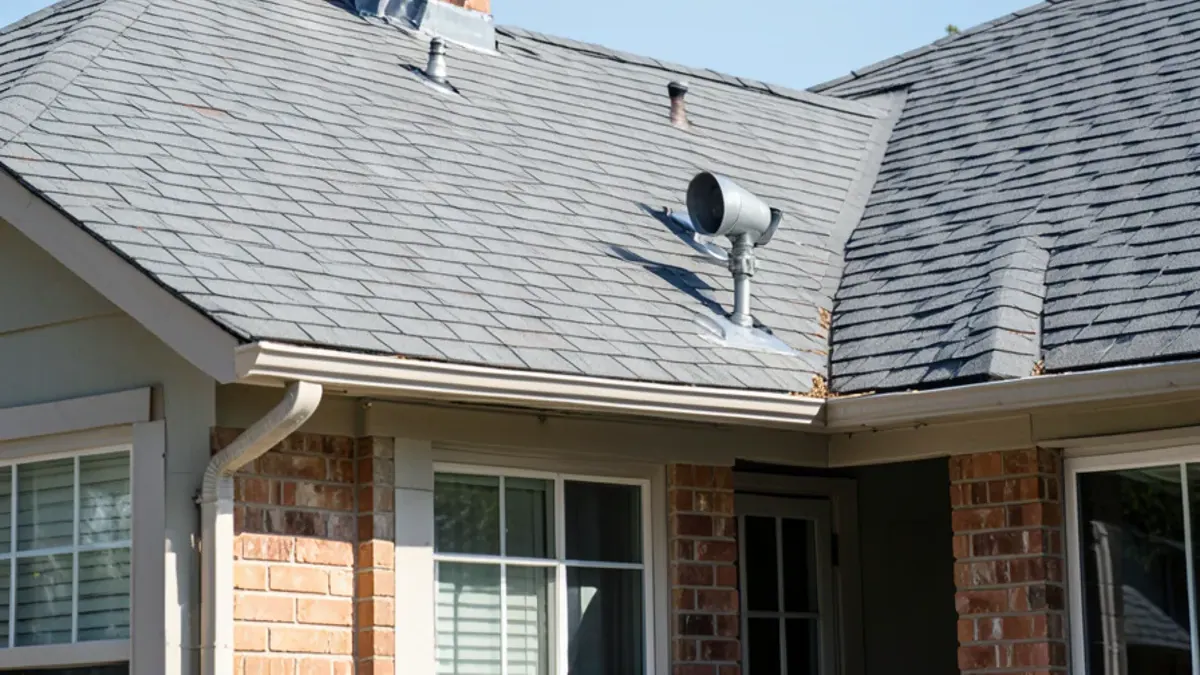
Why would a new roof leak?
A new roof leaks because of an installation fault, not age. The usual faults sit at flashing, vent boots, valleys and nailing, plus decking problems that were not caught at tear-off. A properly installed shingle field rarely fails in the first few years, so a leak this early almost always traces to a detail. That is good news: a detail fix is smaller than a new roof.
Report the leak to the installer in writing, with photos, as soon as you see it. Everything after that depends on a record of when it started.
What installation faults cause early leaks?
These are the faults we look for first on a young roof:
- Old flashing reused at a wall, chimney or skylight instead of replaced
- Step flashing missed or not woven in with each shingle course
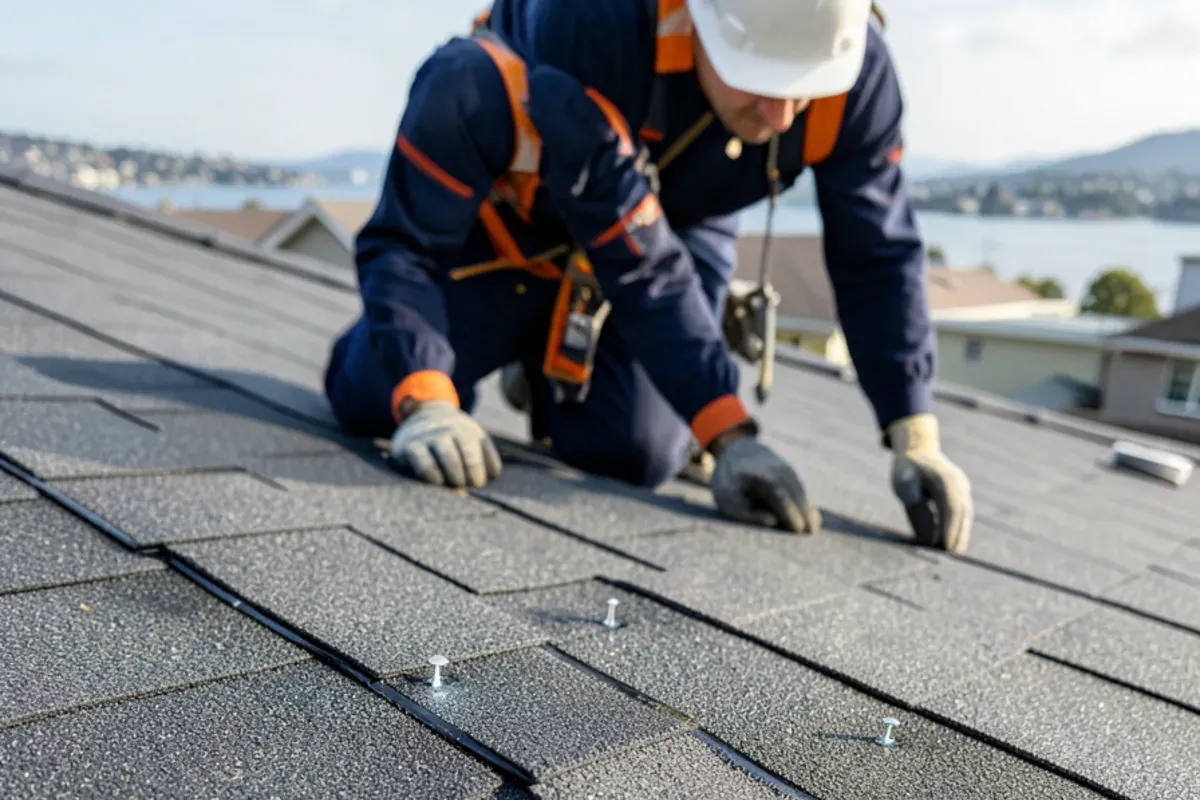
- Nails driven too high, exposing the nail heads, or driven crooked so the shingle cannot seal
- Vent pipe boots left old, or sealed with caulk only
- Underlayment not lapped correctly at valleys and eaves
- Drip edge omitted or installed in the wrong order with the underlayment
- Ridge or hip caps nailed poorly
- Damaged or aged decking left under new shingles
Some of these are visible from the ground with binoculars, such as lifted tabs and bright nail heads. Others, like missing step flashing, only show when shingles are lifted. A skylight that starts leaking right after a reroof is a classic case of old flashing left in place.
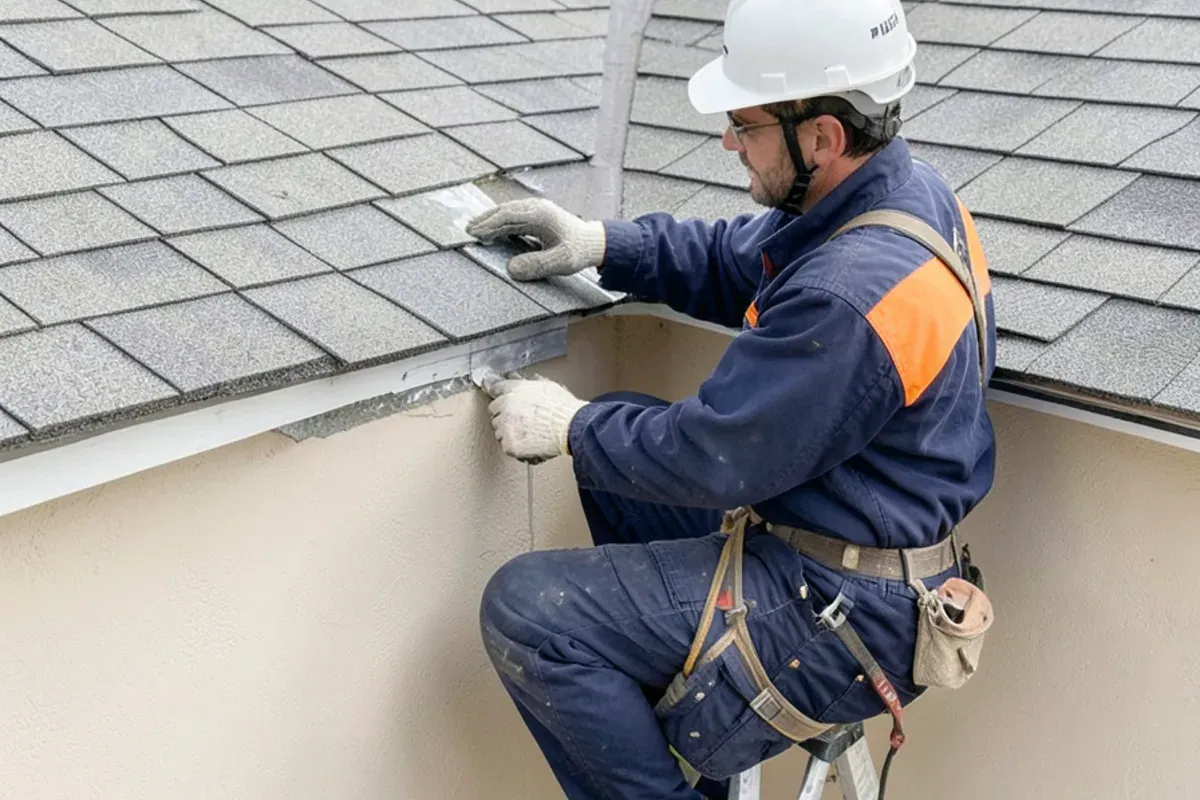
Which fault shows up where?
Each installation fault leaves a different trace, and knowing the trace shortens the call to the installer. Use this as a quick read of your own roof:
| Fault | Where it shows | Who can spot it |
|---|---|---|
| Reused or missing step flashing | Stain on a wall or ceiling beside a sidewall | Roofer, after lifting shingles |
| Exposed or high nails | Bright dots in a shingle row | You, from the ground with binoculars |
| Old vent boot left in place | Stain near a plumbing vent, worse over time | Roofer or you in the attic |
| Missing or misplaced drip edge | Water marks on fascia, rot at the eave | Roofer, at the roof edge |
| Poor valley underlayment | Streak below a valley | Roofer, in the attic or on the roof |
Rules back this up. A City of Santa Clara building bulletin summarizing the California Residential Code says asphalt shingles go on wood structural panel or solid lumber sheathing, and that a drip edge at the eaves and rakes extends a quarter inch below the sheathing and at least two inches back onto the deck. The inspector at your final inspection should see those details, so ask what was checked.
Is it a leak from the new roof or something else?
Confirm the roof is the source before you call. Condensation in the attic, a failed skylight seal, an overflowing gutter or a bath fan venting into the attic can all stain a ceiling. A water pattern that tracks rain points to the roof. A stain that appears on cold, dry mornings points to moisture inside the house.
Roofs on new-construction houses can leak for the same reasons, and also because other trades cut holes after the roof is done. A plumber or an HVAC installer who adds a vent after final roofing leaves a penetration someone has to flash.
What does a workmanship warranty cover?
A workmanship warranty covers the contractor's installation work. A manufacturer warranty covers the shingles themselves, and manufacturers such as GAF and CertainTeed publish their own terms. The two are separate documents with different claim paths, and neither is a promise of how long your roof lasts.
We do not quote warranty terms in a blog post. The terms go in your contract in writing; ask us before you sign, and ask any roofer the same. Check four things: how long the workmanship warranty runs, what it excludes, whether it passes to a new owner, and who you call.
Customers on Alameda jobs have reported receiving warranty details and paperwork, and one had a loose shingle replaced under the workmanship warranty after strong wind.
How to get a leaking new roof fixed
- Document it. Photos of the stain, the attic and any exterior clues, with dates.
- Notify in writing. Email or text the contractor with the location and a request for an inspection.
- Give a fair repair window. Let the contractor inspect and fix it under the warranty.
- Keep the contract and paperwork together. Warranty terms, change orders, invoices.
- Escalate if needed. The CSLB handles complaints about poor workmanship, with time limits set by statute: four years for defects visible on reasonable inspection, ten years for hidden structural ones, according to Business and Professions Code section 7091.
Not legal advice; check the CSLB's current process before you file.
What does a roofer check on a young roof?
A roofer starts with the water path, then works back toward the oldest-looking detail. On a roof less than a few years old, the field of shingles is rarely the problem, so the visit is mostly a detail audit.
- Photograph the interior stain and mark the wet zone in the attic
- Check every penetration uphill from that zone, including vents, pipes and skylights
- Lift the shingles along walls to see whether step flashing sits under each course
- Look at nail placement and sealant strips on the nearest courses
- Check eave edges for drip edge and underlayment order
- Probe the deck from the attic for soft or stained wood
The trade-off is repair against re-do. Re-flashing one wall or resetting a vent boot is a small, fast fix. If the same fault repeats across the roof, such as high nailing on every course, the honest advice may be to redo a section. On one Alameda job, a change order for aged decking was explained before work continued, which is how unexpected findings should be handled.
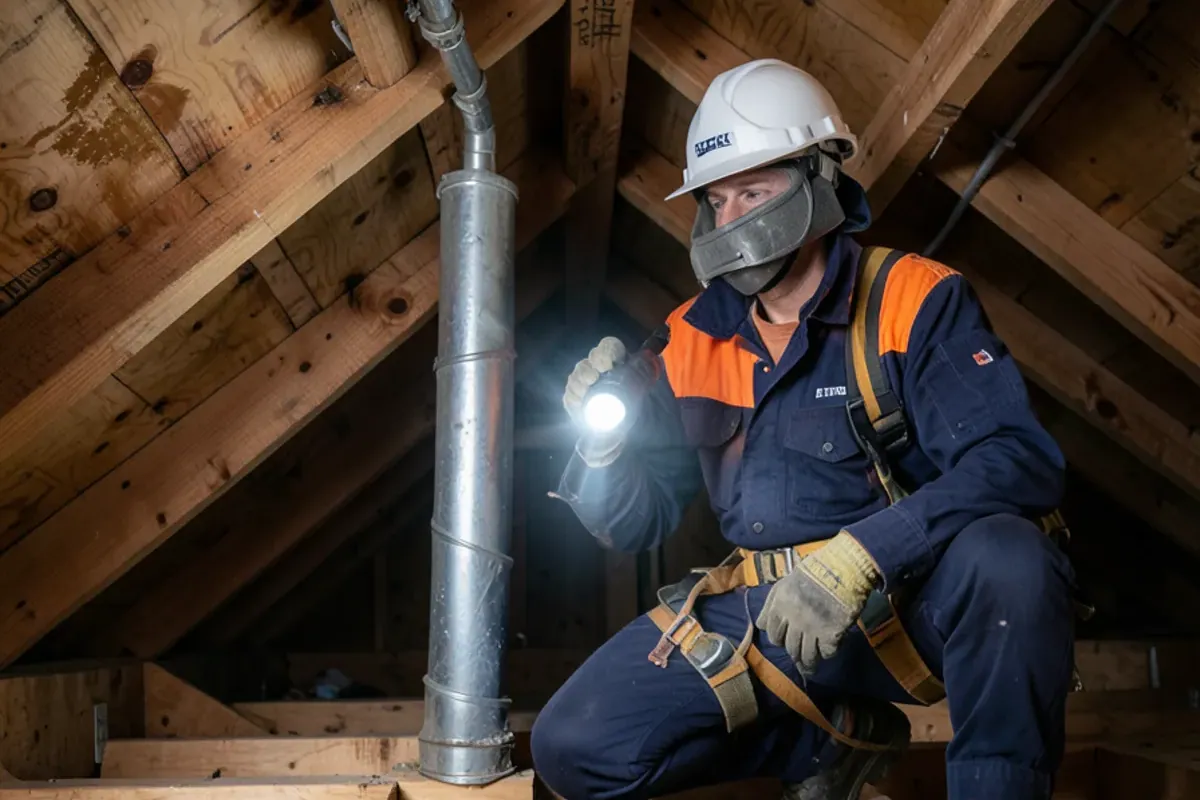
What should a leak repair report include?
Ask the installer for a short written report after the visit. It does not need to be long, but it should answer six questions:
- Where did the water enter, with a photo of the spot?
- What was the cause: flashing, nailing, boot, underlayment or something else?
- What was replaced or reset, and with which parts?
- Was the repair water-tested, and how?
- Does the repair fall under the workmanship terms in your contract?
- What should you watch for after the next rain?
Some installers say a new roof needs a few rains to settle. Treat that with caution. A correctly built roof sheds water from the first storm, and a leak in the first season is a reason to ask for an inspection, not to wait.
If the same spot leaks again after a repair, say so in writing and ask for a second look from a different person. A repeat leak at the same place usually means the cause was missed, not that the roof is cursed.
When a new roof needs a second opinion
Sometimes the first contractor will not return, or the repair does not hold. We have taken over after a past contractor would not return, and we have finished a roof where a previous crew left only underlayment and a leak, which took a couple of days. A skylight that leaks after another roofer's reroof is a common second-opinion call.
A second roofer can document faults, but whether a prior contractor owes repairs is between you and them. If you are comparing roofs for leak repair or general roof repair, ask for the findings in writing so you have them for the warranty claim.
For Alameda homeowners, start here to see how we handle inspections and written estimates.
Call the office and describe what the roof is doing; a free inspection will tell you whether it is a detail fix or something bigger.