
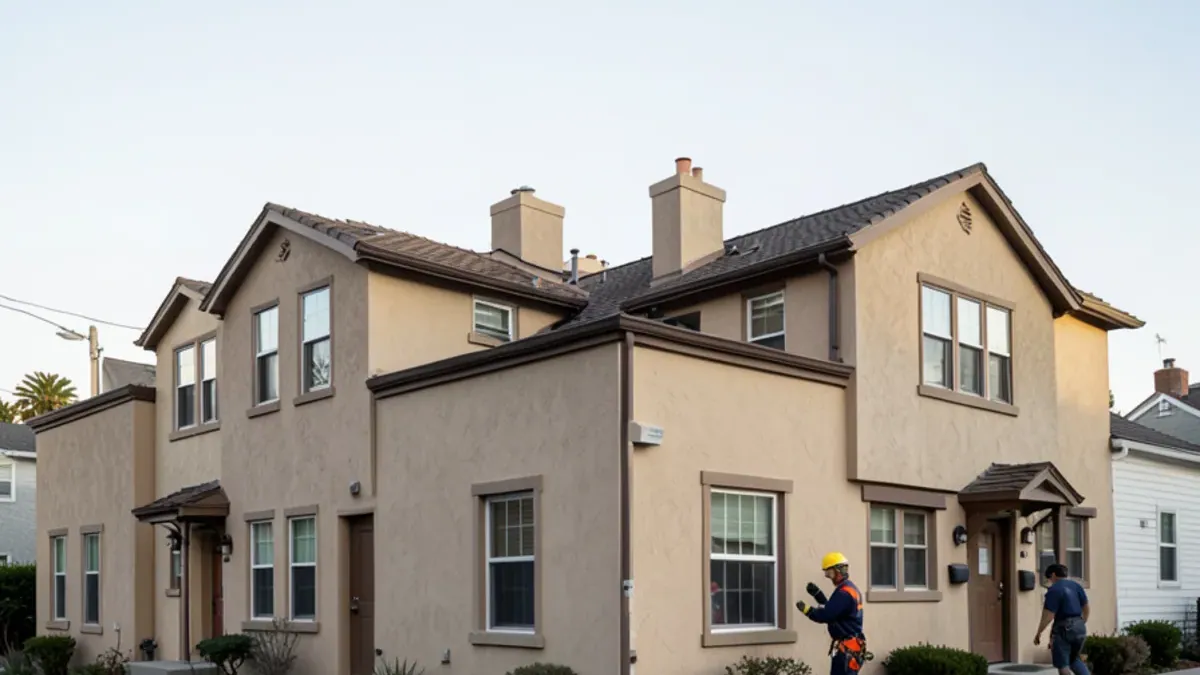
What a flat roof contractor in Alameda handles
A flat roof contractor in Alameda handles four jobs: finding and stopping leaks, replacing worn membranes, building new low-slope roofs on additions, and waterproofing walkable decks. The common thread is water management. Flat roofs do not shed water by gravity the way a pitched roof does, so every detail from the slope to the drain bowl decides how long the roof lasts.
Most flat and low-slope roofs here sit on mid-century stucco homes, townhouses, rear additions, garages and the small enclosures that cap a stair to the roof. Alameda's housing is old. About 32% of homes were built in 1939 or earlier, and the median home dates to 1965, according to Point2Homes. Roofs on buildings that age often carry two or three past repairs, and the repairs are where we start looking.
What a flat roof job includes
A flat roof estimate should name its deliverables, so two bids compare line by line:
- Written inspection findings with photos of drains, parapets, seams and deck
- Removal of the failed membrane and disposal of the old material
- Replacement of soft or rotted sheathing, priced per sheet before work continues
- Tapered insulation or cover board where ponding needs fixing
- New membrane with flashing at every wall, curb, vent and skylight
- New or rebuilt drains and scuppers, then a walkthrough with photos
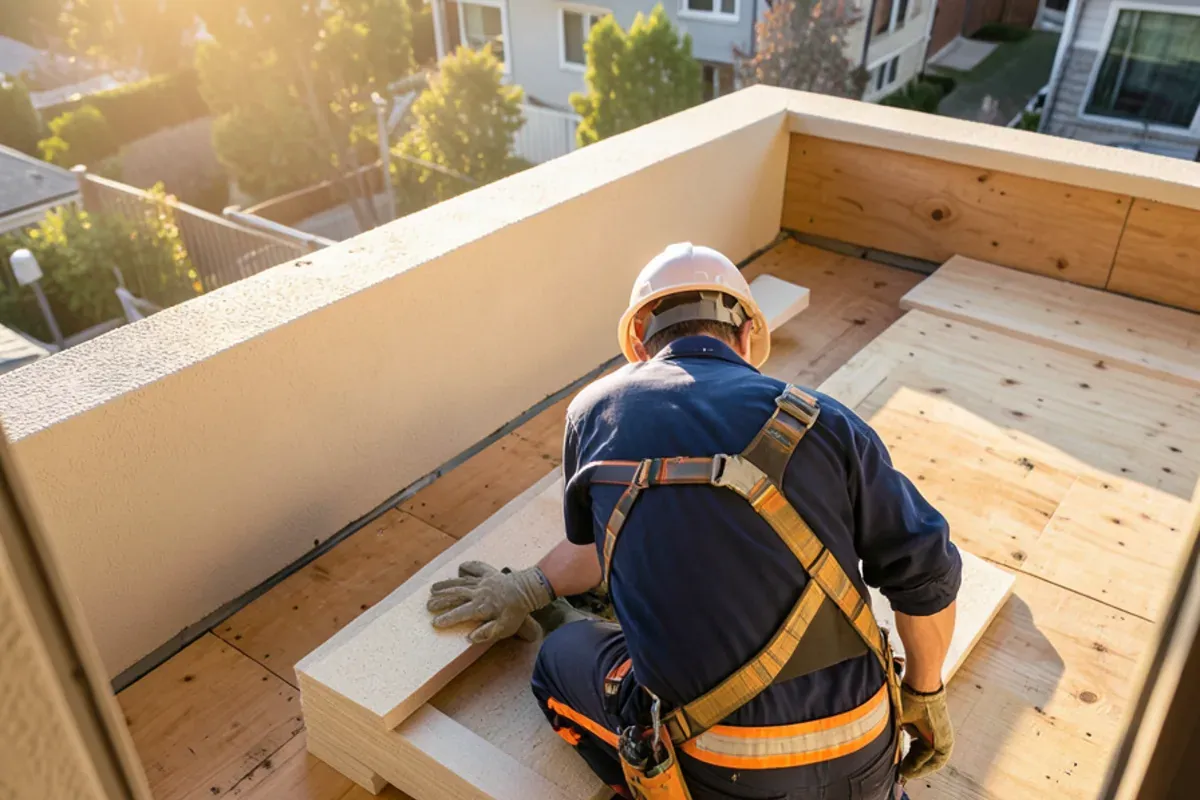
Flat roof systems: which one fits your roof?
Five systems cover almost every low-slope roof we see. Each has its own page, and each wins in a different situation.
- TPO and PVC are white single-ply sheets with heat-welded seams. They suit larger, simple roofs and anyone who wants a reflective surface.
- Torch-down and modified bitumen are layered asphalt sheets. They tolerate foot traffic and complicated details well.
- EPDM rubber is a black or white rubber sheet that works on small, uncomplicated areas.
- Roof coatings extend a sound roof with a liquid membrane when replacement is not needed yet.
- Roof deck waterproofing is a separate job: a walkable membrane over living space.
The honest answer to "which one" arrives after the inspection. A roof with eleven penetrations and a stair bulkhead reads very differently from a clean 400 square foot garage roof.
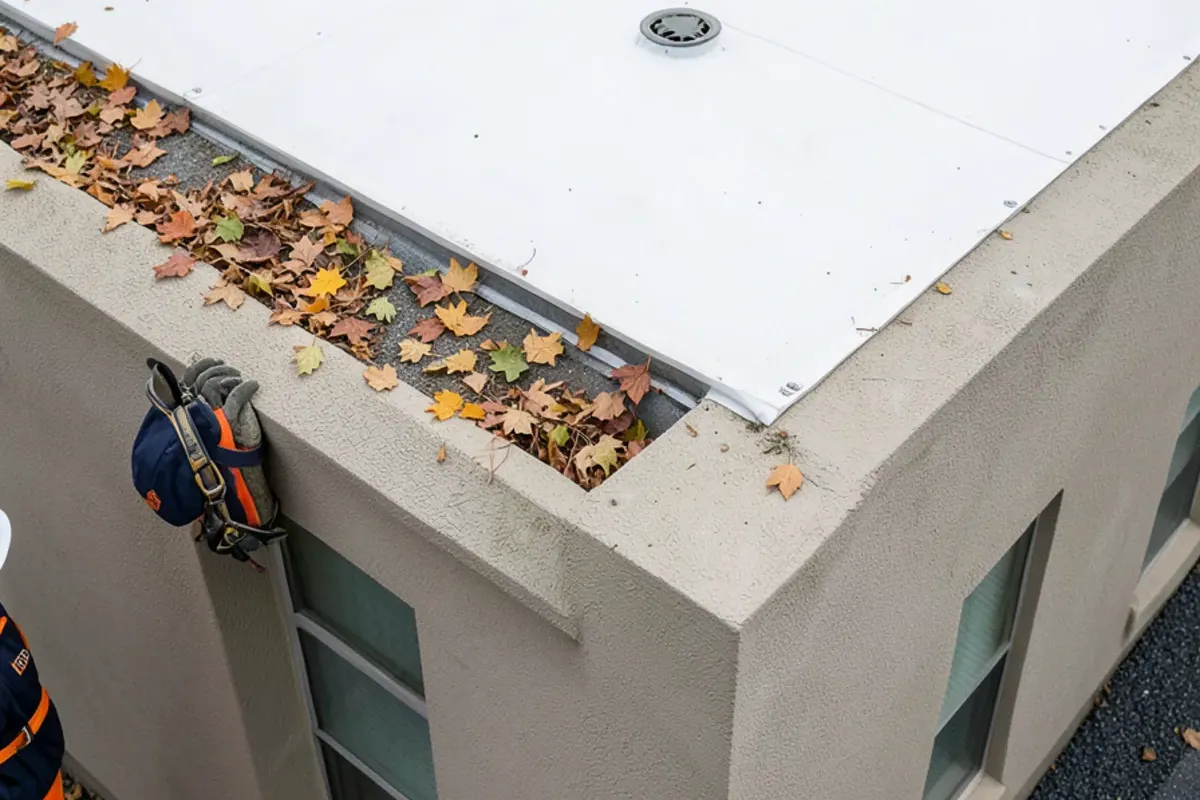
Low slope roofing in Alameda: drainage first
Low slope roofing in Alameda has to handle about 22 inches of rain a year that falls almost entirely between October and April, on roughly 66 days in ZIP 94501 (BestPlaces). That is a long wet season for a roof that cannot shed water quickly.
California's building code sets a design slope of at least 1/4 inch per foot for new built-up, single-ply and liquid-applied roofs. Older Alameda roofs often sag below that over decades, so water collects in the middle. We check the slope with a level and a bucket of water if needed, then decide between tapered insulation, added drains, or both. A new membrane over a roof that still ponds repeats the old failure in new material.
Signs your flat roof is failing
The first big rain of the season shows which flat roofs are weak. Look for these:
- Water standing on the roof more than 48 hours after rain
- Blisters, cracked seams or exposed fabric in the membrane
- Tar or granule staining below scuppers and downspouts
- A ceiling stain that grows after storms and fades in summer
- Loose or lifting metal at parapet caps and wall flashing
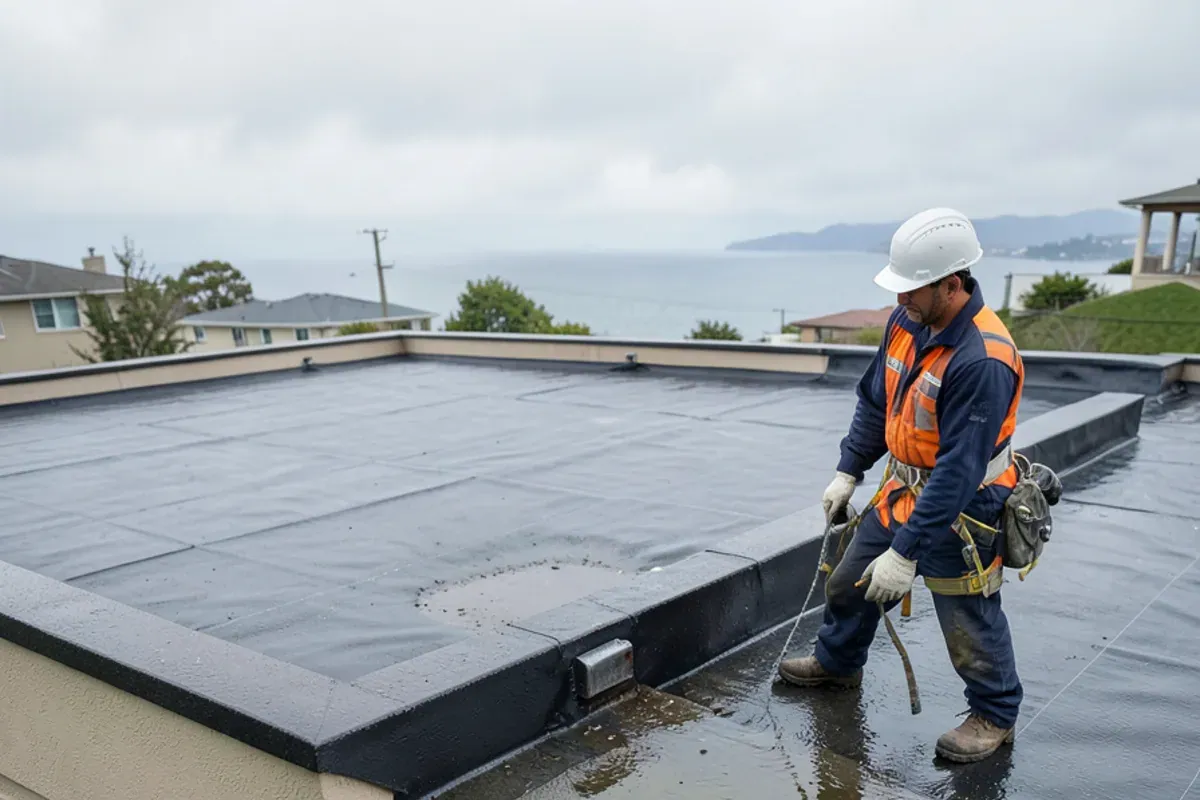
Townhouse flat roofs and bulkhead roof replacement
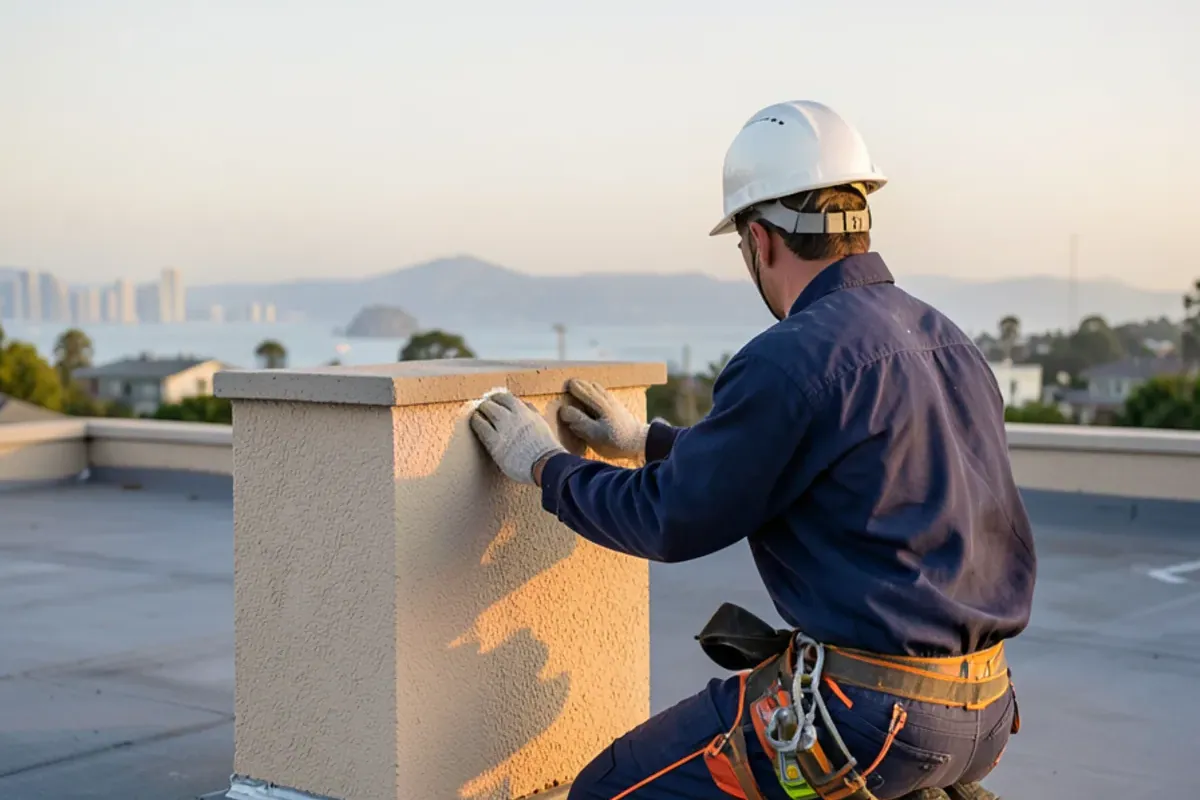
Townhouse flat roofs are tight jobs. Parapets on three sides, shared walls, small drains and a stair bulkhead leave little room for error, and the flashing at each wall matters more than the open field of the membrane. An Alameda customer had a townhouse flat roof and its bulkhead replaced by this company, so the bulkhead is planned as part of the roof, not as an afterthought.
Check your association documents before you sign anything. Some townhouse roofs are common elements the association maintains, and some associations require written approval of the material or color. Get that approval in writing first.
How a flat roof installation runs
A flat roof installation follows the same order on almost every house:
- Inspect the roof, drains, parapets and deck, then send a written estimate with the findings.
- Confirm who pulls the permit and what the Permit Center needs.
- Tear off the old membrane down to the deck and look at the wood.
- Replace damaged sheathing, explained to you before the work continues.
- Install tapered insulation or cover board where the slope needs it.
- Lay the new membrane, flash every wall, curb and penetration, and set new drains.
- Walk the finished roof with you, send photos, and clear the debris.
Roof area, deck repair and the weather decide the schedule, and the estimate gives you a realistic window before you commit.
What does a flat roof cost, and what moves the number?
A flat or built-up roof ran about $6,000 to $18,000 in 2026 Alameda pricing data. That range is a third-party benchmark, not a quote from us. Five things push a job toward either end:
- Roof area and the number of stories to carry material up.
- System chosen, since heat-welded single-ply, modified bitumen and EPDM price differently.
- Deck condition, because rotted sheathing is discovered at tear-off, not before.
- Insulation, tapered boards and drain changes.
- Parapet height, curbs, bulkheads and skylights, which all need their own flashing.
Judge any bid by its written estimate. Ask it to list the membrane, the insulation, the flashing and the plywood allowance as separate lines.
Permits, licensing and energy rules for Alameda flat roofs
The City of Alameda Permit Center says most construction work needs a permit, and a third-party Alameda County guide puts roof work at about 200 square feet and up (PermitFlow). Your estimate should say who pulls it, and you should confirm that before signing.
Alameda sits in Climate Zone 3. The 2025 Energy Code's cool-roof ratings for single-family low-slope reroofs apply in Zones 4 and 6 through 15, so a typical house here falls outside them (Cool Roof Rating Council). The building department has the final word.
California requires a C-39 Roofing classification for roofing work. Look up any roofer's license, bond and workers' compensation status at cslb.ca.gov before you sign.
Where we work
We cover Alameda and the surrounding East Bay from our West End office on Webster St. Oakland is about 12 minutes away, Berkeley is roughly 18, San Leandro about 24, Hayward around 31 and Castro Valley about 35, longer when the tubes and bridges back up. See our pages for Oakland, Berkeley, San Leandro and Hayward for what roofs there tend to need.