What counts as a roof storm emergency in Alameda?
A storm emergency is any roof damage that lets water in or could injure someone. Missing shingles over a living area, a branch through the roof, a lifted ridge cap in front of rain and a skylight leaking in a downpour all qualify. A few curled shingles with no water inside can wait for a normal inspection.
Alameda gets about 22 inches of rain a year, nearly all of it October through April, over roughly 66 days in ZIP 94501 (BestPlaces). The island's open bay exposure also brings strong winds ahead of winter fronts. Damage that happens in October can leak for weeks before it shows up on a ceiling, so treat any storm event as a reason to look.
Signs a storm hit your roof
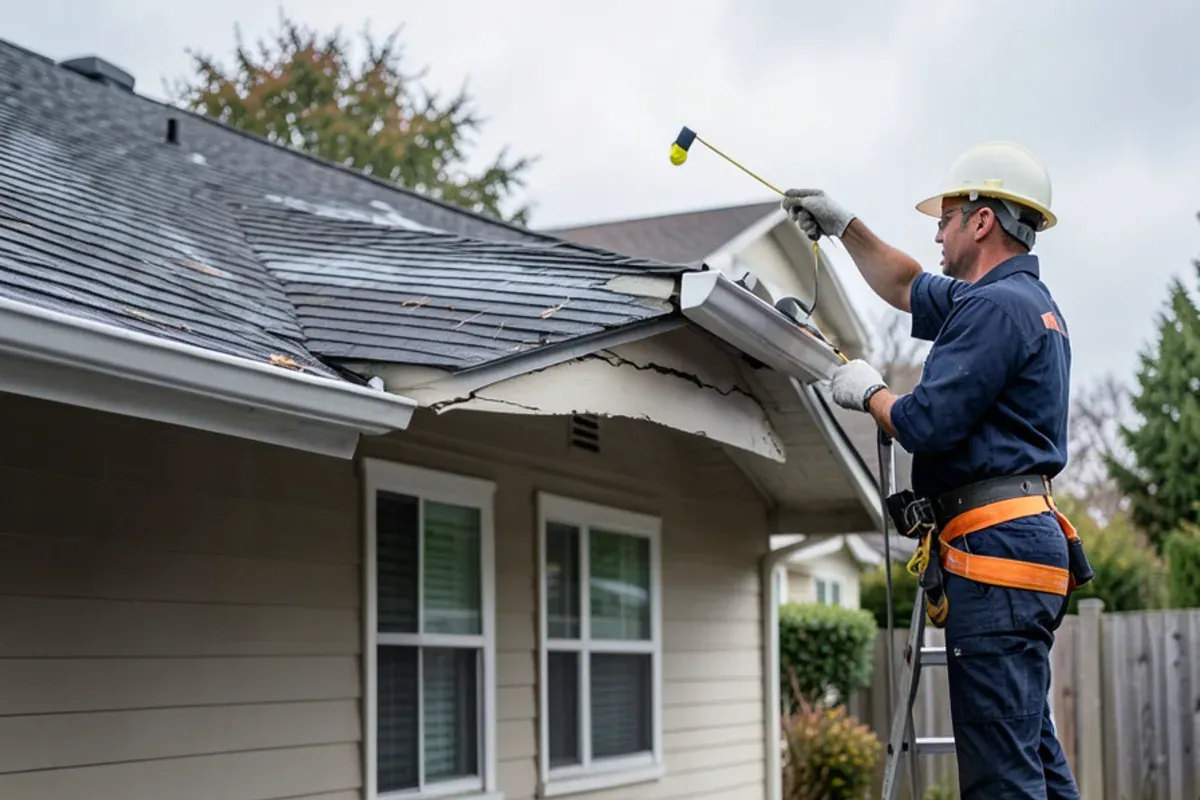
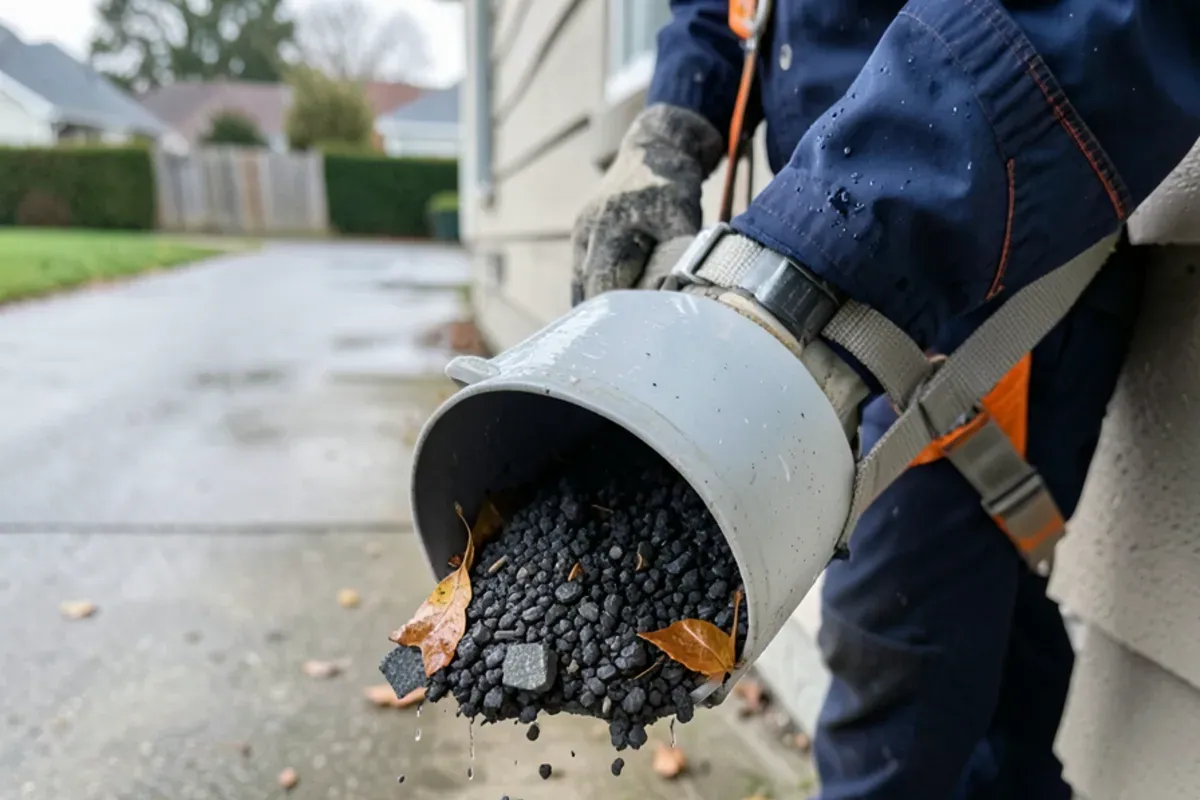
From the ground, look for missing, lifted or creased shingles, bent flashing, displaced ridge caps and gutters pulled away from the fascia. Granules and shingle fragments in the downspouts point the same way. Inside, look for fresh ceiling stains, damp insulation and daylight at nail holes in the attic. Many wind-damaged roofs look fine from the street, which is why a close-photo inspection is the reliable test.
What to do right now
Do these in order. They protect people first, the house second and your claim third.
- Stay off the roof. A wet roof is slick, and damaged framing may not hold you.
- Keep clear of downed lines and leaning trees. Call the utility or 911 for those.
- Photograph everything. Shoot wide and close, outside and inside, with the date stamp on.
- Contain the water. Buckets, towels, and move electronics and furniture.
- Call us. We will ask where the water is coming in and how big the damaged area is.
- Call your insurer. Report the loss, and keep the claim number with your photos.
- Save receipts. Tarps, drying and temporary repairs may be part of the claim.
Where we go and how fast
We work from 1910 Webster St on the West End of Alameda and cover nearby East Bay cities. Response depends on the storm. After a windstorm, Alameda customers have reported a same-day stop to tarp lost ridge shingles and a visit within 24 hours to waterproof. Others reported an inspection within a day of calling. We do not promise a response time, since a widespread storm means many calls at once.
What happens when we arrive
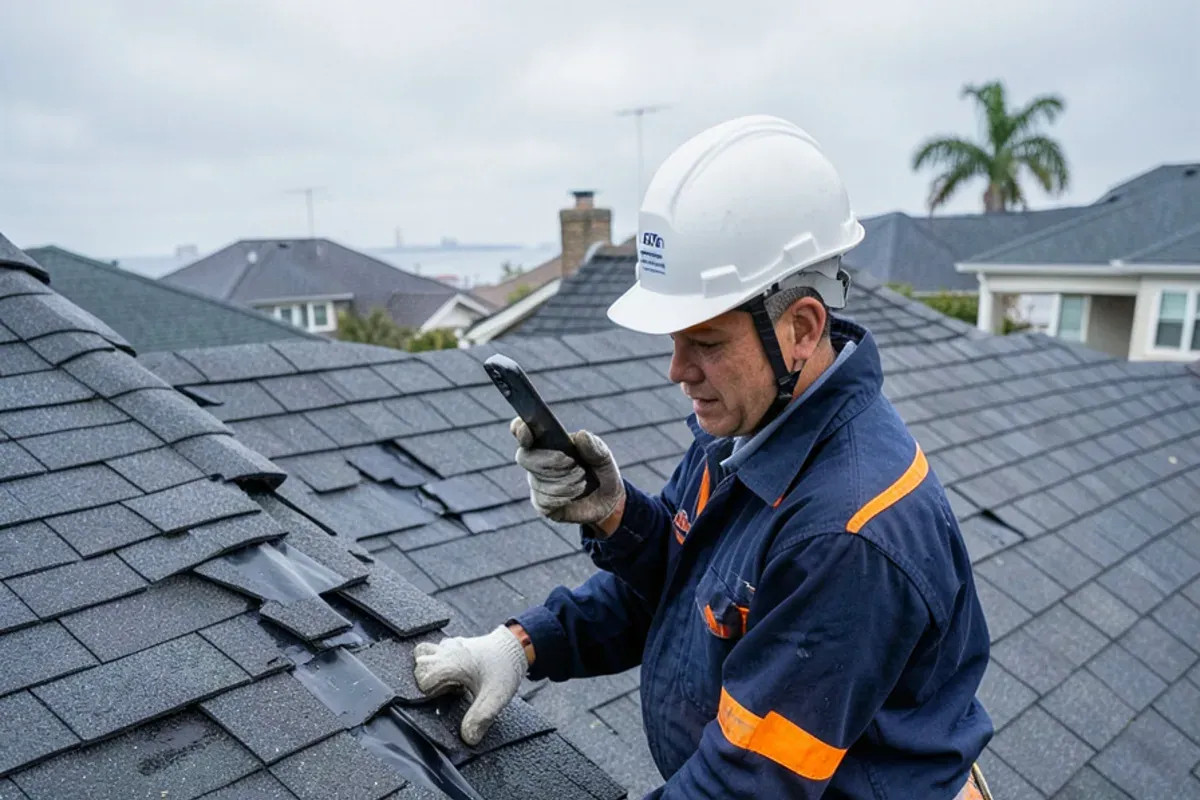
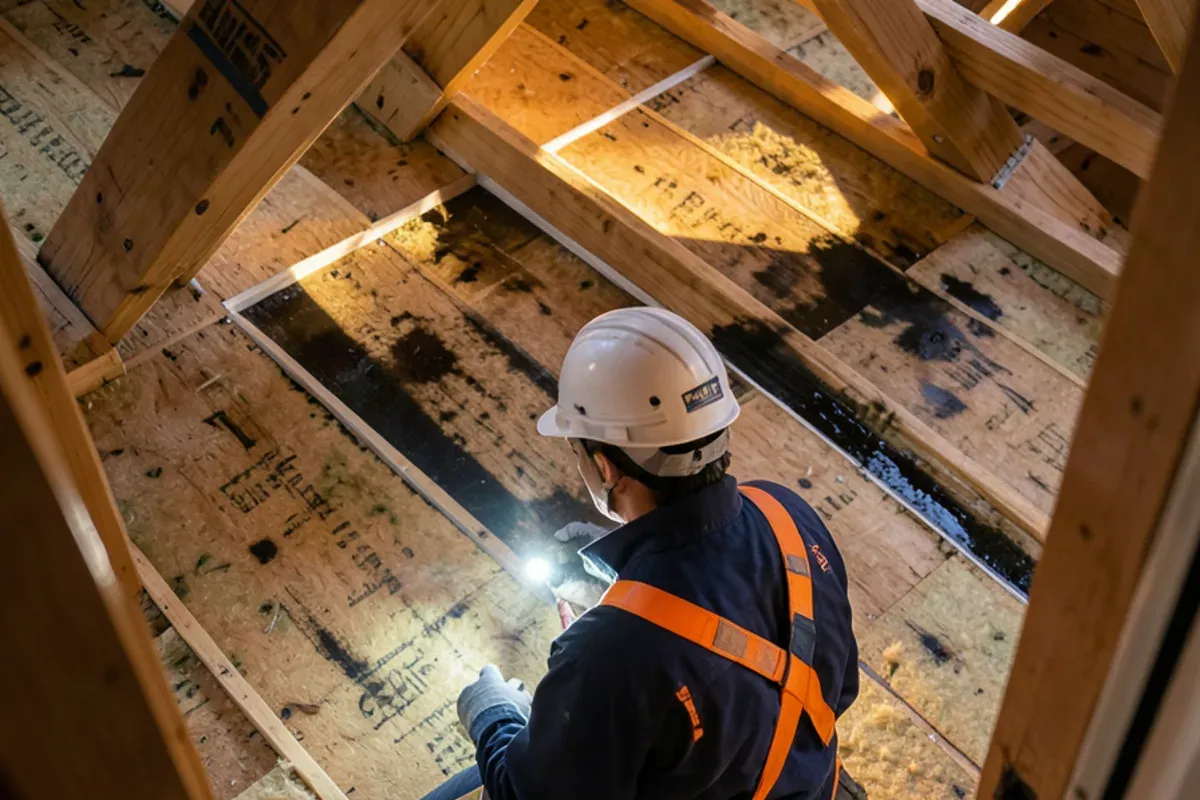
Our first goal is to stop water, and our second is to record what happened. Wayne or Pedro often does the inspection.
- Safety check of the roof surface, the eaves and any hanging debris
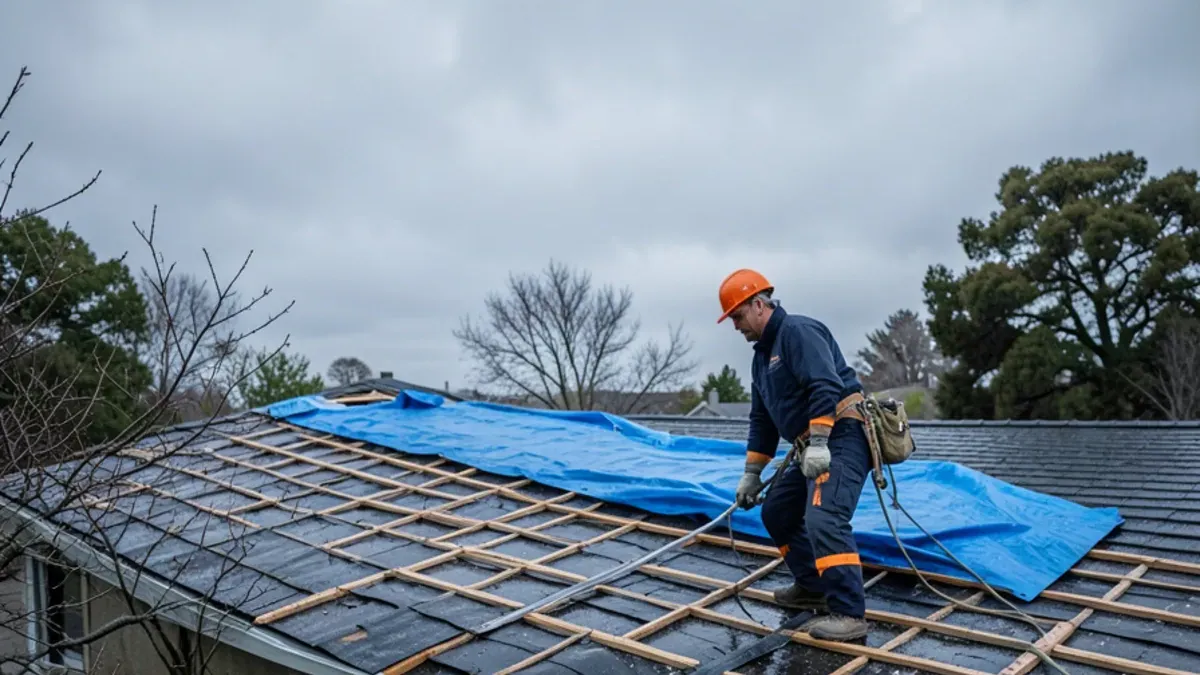
- Temporary protection, such as a tarp or a sealed flashing, where it is needed
- Photo set of every damaged slope, ridge, flashing, vent, skylight and gutter
- Written scope listing what is damaged and what repair or replacement it calls for
- Moisture note on interior stains, which we document but do not repair
You get the photos and the scope by text or email, often the same day.
Roof repair for storm damage: your options
Repair when the damage is local and the roof is otherwise sound. Replace when damage is widespread, the shingles are brittle or the roof is already near the end of its life. Wind often lifts shingles that cannot be re-sealed, and old shingles can break when they are bent back.
Support pages go deeper on each cause and path:
- Wind damage roof repair covers lost shingles, ridge caps and creased tabs.
- Tree damage roof repair covers limbs, punctures and framing.
- Roof insurance claims explains documentation, adjuster visits and the limits of a roofer's role.
- Roof replacement for insurance renewal is for owners whose insurer is worried about roof age.
Roof storm damage insurance: what we do and do not do
We help you document the damage and meet your adjuster on site to walk the damage. In California, only the policyholder, the insurer or a licensed public adjuster negotiates a claim, so we do not negotiate, and we never promise an outcome. Sudden damage is usually covered and wear and tear usually is not, but your policy governs.
Do not let anyone inflate an invoice to absorb your deductible. Under California Penal Code section 550, that is insurance fraud. We do not offer to cover deductibles. If a dispute arises, the California Department of Insurance has a consumer line.
Permits, claim timing and licensing
Permanent repairs usually need a permit from the City of Alameda Permit Center, so confirm the rule for your address. California's Department of Insurance says insurers must acknowledge a claim within 15 days, and the state's claim regulations set 40 days to accept or deny once proof of claim is in. Roofing in California requires a C-39 classification from the Contractors State License Board, so check any roofer's number at cslb.ca.gov.
Water damage and roofline repairs after a storm
Water that gets in once usually keeps getting in until the roof is fixed. Fix the opening first, then dry the house. We repair the roof, and we document ceiling stains, wet insulation and wall marks with dated photos for the claim. Interior repair is a separate trade, and your insurer may need drying records.
Storms damage the edge of the roof as often as the field. Falling limbs bend gutters, wind pulls fascia loose and overflowing water rots soffits. Alameda customers have had gutters, fascia and soffits replaced along with their roofs, and the gutters cleared of debris during the job.
What does storm repair cost?
Pricing is explained before work starts. Emergency tarping and sealing are priced for the visit, and permanent repair is priced from a written scope. What moves the number:
- Size of the damaged area
- Roof pitch and access
- Whether decking or framing is damaged
- Material and matching availability
- Gutter, fascia and flashing damage
- Permit requirements
One Alameda customer reported a patch repair around $2,000, which is one person's figure, not a price list. The written estimate sets the price, so get one before you approve the work.
For emergency repairs, the City of Alameda's permit page says the application is due the next working business day, so ask who files it.
Where we handle storm repairs
Oakland is about 12 minutes from our Webster St office, Berkeley about 18, San Leandro about 24, Hayward about 31 and Castro Valley about 35. These are estimates, and bridge and tunnel routes can run long at storm-day traffic.