
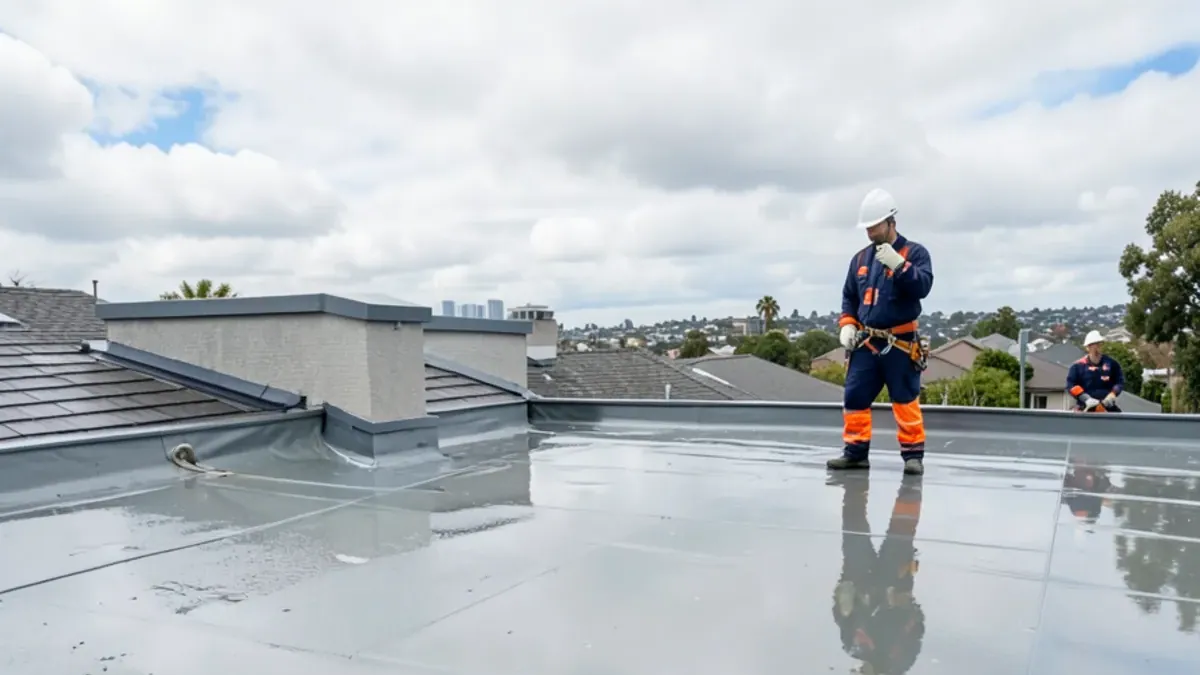
What is ponding water on a flat roof?
Ponding is water that stays on a flat roof more than 48 hours after rain, under normal drying conditions. That is the National Roofing Contractors Association definition. A puddle that disappears by the next afternoon is normal. A pool that is still there after two days is a drainage problem, and it will shorten the life of the membrane.
Flat roofs are not truly flat. They are built with a slight slope, often about a quarter inch per foot, toward drains, scuppers or edges. When that slope is lost or blocked, water collects in low spots.
Why is ponding bad for a flat roof?
Standing water causes four kinds of damage:
- Weight. An inch of water weighs about 5.2 pounds per square foot, so a pool over a few hundred square feet adds up, and it can deepen a sag.
- Membrane wear. Constant wetness and sun exposure age the surface faster than a roof that drains.
- Debris and algae collect in the pool and stain the surface.
- Leaks. A seam or small puncture under standing water has water pressing on it all the time.
Many membrane manufacturers also exclude damage caused by standing water from their warranties, so ponding can become a coverage dispute later.
How do you measure a ponding problem?
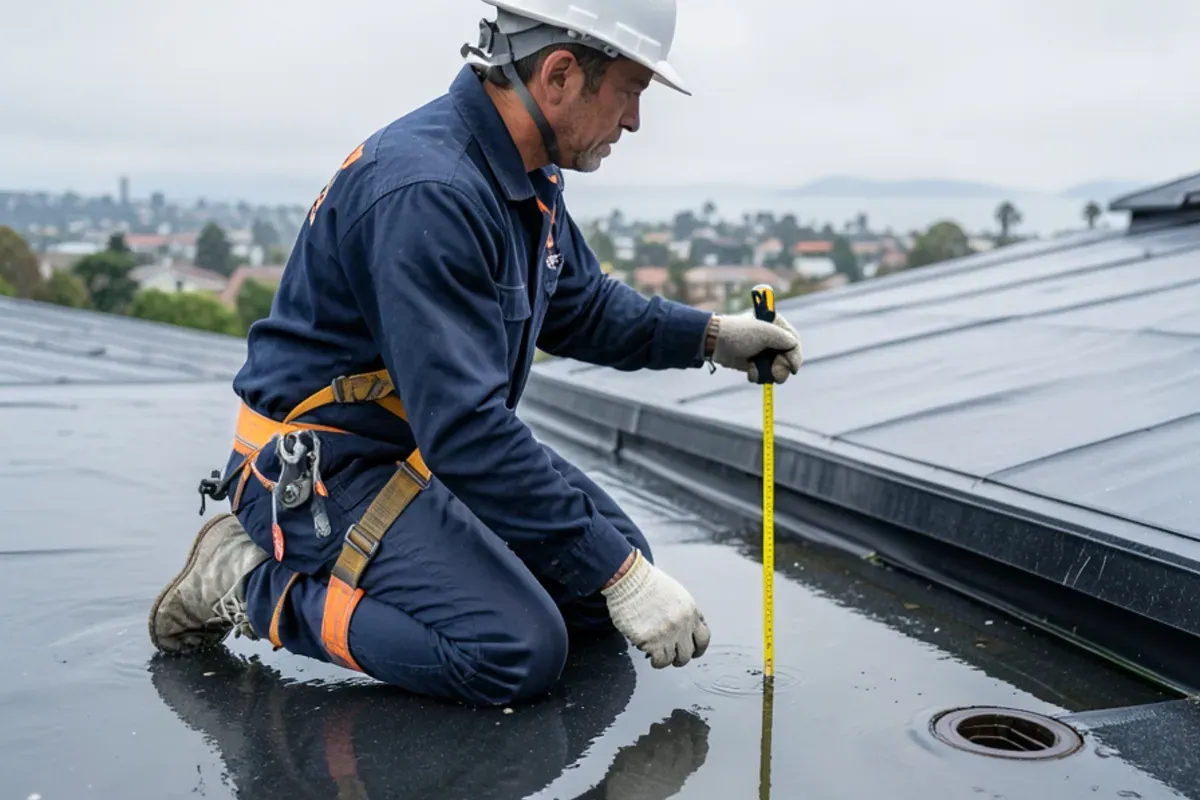
Measure the pool, then time it. A phone photo and a tape measure give a roofer more than a description does. After a dry spell, use this simple check:
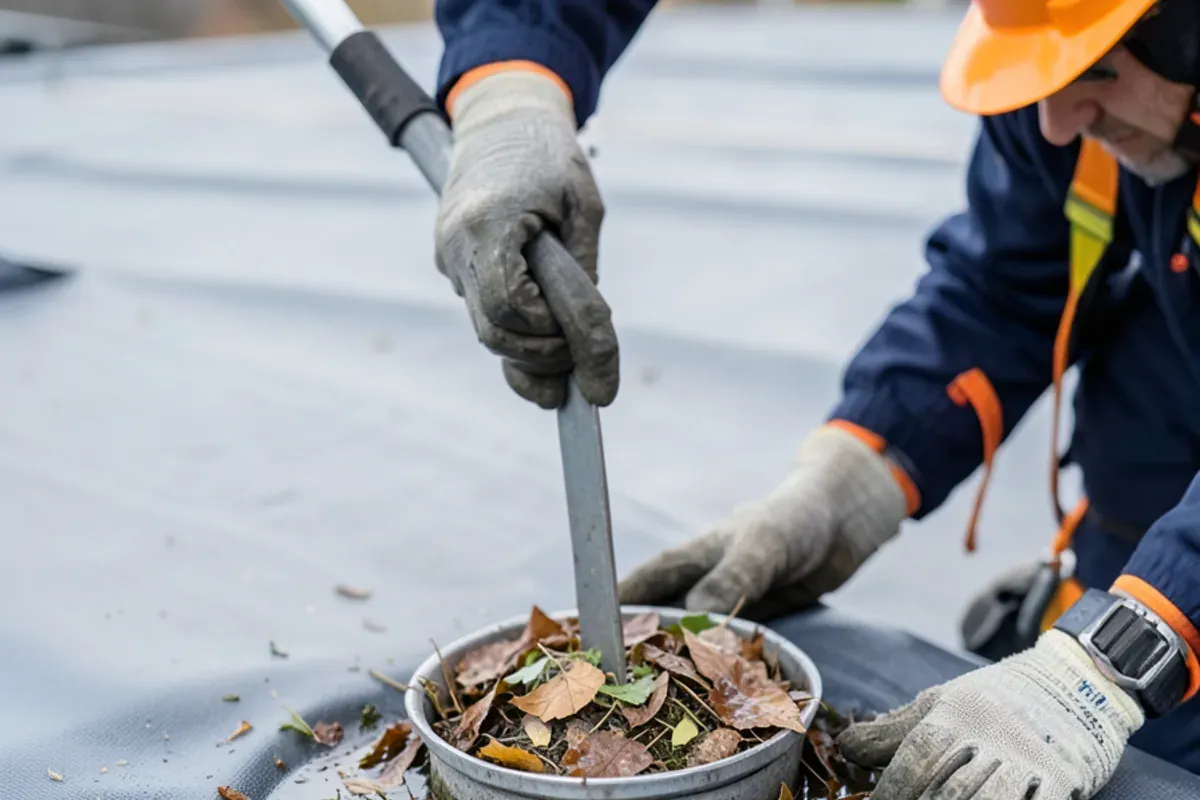
- Clear the drains, scuppers and gutters of leaves and grit
- Wait for a rain, then photograph each pool from the same spot
- Measure the longest side and the deepest point with a tape
- Return 48 hours after the rain stopped, in dry weather, and photograph again
- Note whether the pool is nearest a drain, a wall or the middle of the field
A pool in the middle of the field points to deck sag or lost slope. A pool beside a drain points to a blocked or poorly placed outlet. A pool along a wall often means the slope runs the wrong way. This reading helps decide whether the fix is a cleaning, a tapered build-up or a new drain. Manufacturers differ on how long water may stand before it affects a warranty, with some sources putting it at 48 to 72 hours, so read your own paperwork.
What causes ponding?
Five causes cover most roofs:
- Clogged drains, scuppers or gutters. Leaves, debris and old roofing granules block outlets.
- Deck deflection. The structure sags between supports, creating a basin.
- Not enough slope. The roof was built too level or settled over time.
- Poor repairs or layers. Earlier patches and recovers built up humps that trap water.
- Too few drains. Water travels too far to reach an outlet.
Alameda rain falls mostly between October and April, so a drainage fault has months of repeated wetting each year. Flat and low-slope roofs are common on townhouses and small buildings here.
How are ponding problems fixed?
Match the repair to the cause.
| Cause | Typical fix |
|---|---|
| Clogged drain or scupper | Clean it, add a strainer or screen |
| Small low spot | Build up with tapered insulation or a cover board |
| Large basin or deck sag | Re-slope with tapered insulation, or repair the deck |
| Too few drains | Add a drain or scupper |
| Damaged membrane under the pool | Patch or replace the section |
| Worn-out roof overall | Replace |
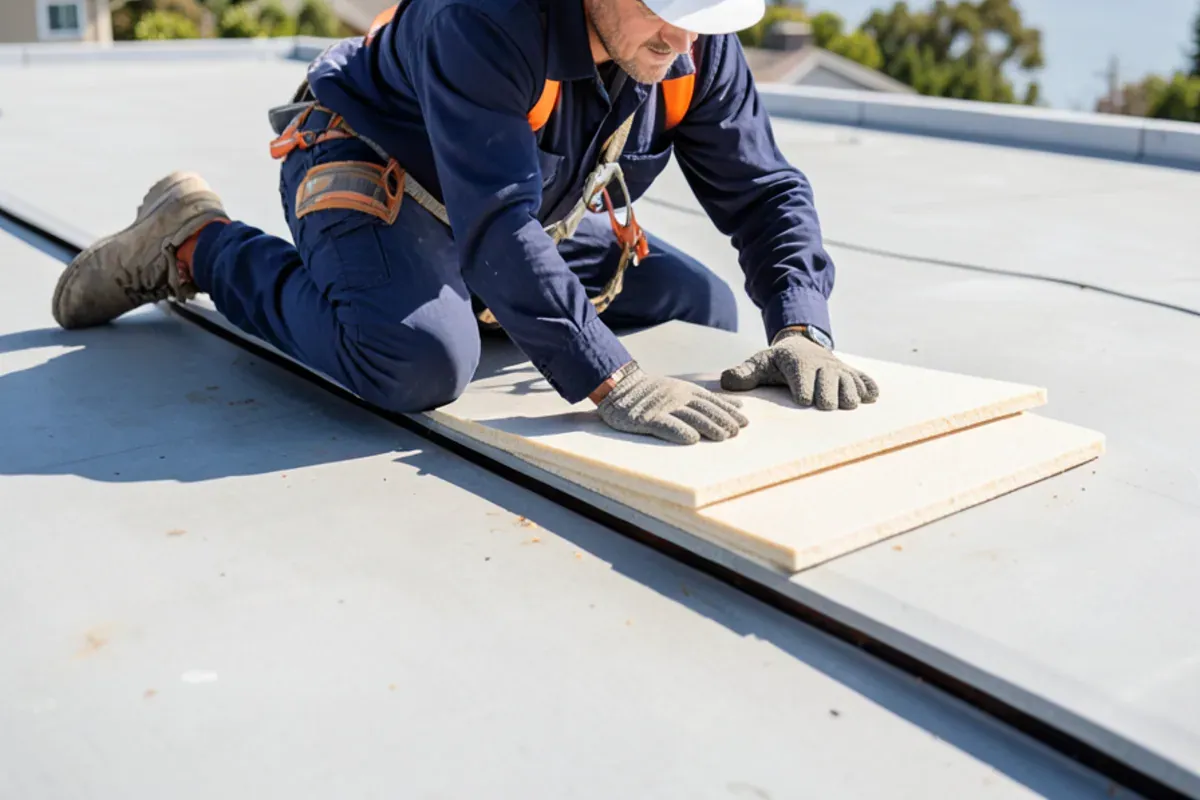
Tapered insulation is foam board cut in graduated thickness, laid so the roof surface slopes toward the drain. It is a standard way to fix drainage when a roof is being recovered or replaced. A coating over a pond only hides it.
Before a repair, walk through these steps:
- Check the drains and scuppers after rain, and clear them
- Mark where water sits and how long it stays
- Inspect the membrane under the pool for blisters, splits or soft insulation
- Decide whether the fix is drainage, membrane or both
- Ask for the fix to be written into the estimate
What we see on flat roofs in Alameda
A townhouse flat roof and bulkhead in Alameda has been replaced. On a flat roof the drains and scuppers carry everything, so they deserve attention. If you own a townhouse with a flat section, make a habit of checking drains in October before the rains and again after the first big storm.
The same applies to nearby cities. Flat and low-slope roofs are common in Emeryville, and we cover it from our Webster St office, about 18 minutes away outside peak traffic. For coverage there, see Emeryville. For a flat roof in Alameda itself, begin on the home page.
What do roofers weigh before choosing a drainage fix?
A roofer picks the lightest fix that moves the water. Adding a drain is the cheapest way to cut travel distance, but it needs a path for the pipe and a place to discharge. Tapered insulation fixes slope across a wide area, but it raises the roof surface and may force changes to flashing at walls and doors. Re-decking is the answer when the structure sags, and it costs the most.
The honest trade-off is permanence against disruption. A scupper cleaning takes an hour and may be all the roof needs. A tapered build-up usually comes with a recover or replacement, because it is easiest while the membrane is off. Doing it under an old membrane that is near the end of its life spends money on a roof you are about to replace. Leaf debris from nearby trees and a drain that was never sized for the roof are common culprits on any flat roof, so drainage is checked before anything else.
A coating over a pond only hides it, and the coating wears out in the pool first. See roof coatings for when a coating makes sense, and flat roof replacement when the membrane has run its course.
How can you spot ponding before it becomes a leak?
Check the roof the day after a rain and again two days later. The first look shows where water gathers. The second look shows what stays.
Signs to record:
- A ring or stain line on the membrane where a pool used to be
- Algae, moss or dirt in a distinct patch
- A soft or spongy feel underfoot, which suggests wet insulation
- Blisters or wrinkles in the membrane near the low spot
- Water marks on the ceiling below after rain
Take photos with something for scale, and note the date and the time since the last rain. A roofer can use those to see how the water moves.
Stay off a flat roof you cannot reach safely, and off wet membrane, which can be slick. From a ladder at the edge, a phone camera held above the parapet shows a lot.
What should a flat roof estimate say about drainage?
The estimate should name the drainage fix, not just the membrane. Look for the location of each drain or scupper, whether tapered insulation is included, how low spots will be corrected, and what happens if the deck needs repair. Ask for that in writing before work starts.
When to call for flat roof repair
Call when water sits for two days, when you see a stain ring, when a ceiling below shows a spot after rain, or when the membrane looks blistered or cracked. Read about flat roof repair for what a visit covers, and the main flat roofing page for membranes and replacement.
Call the office and ask for a free inspection; the written estimate will say whether the fix is drainage, membrane or both. Get the drainage fix itemized so you can compare quotes.