
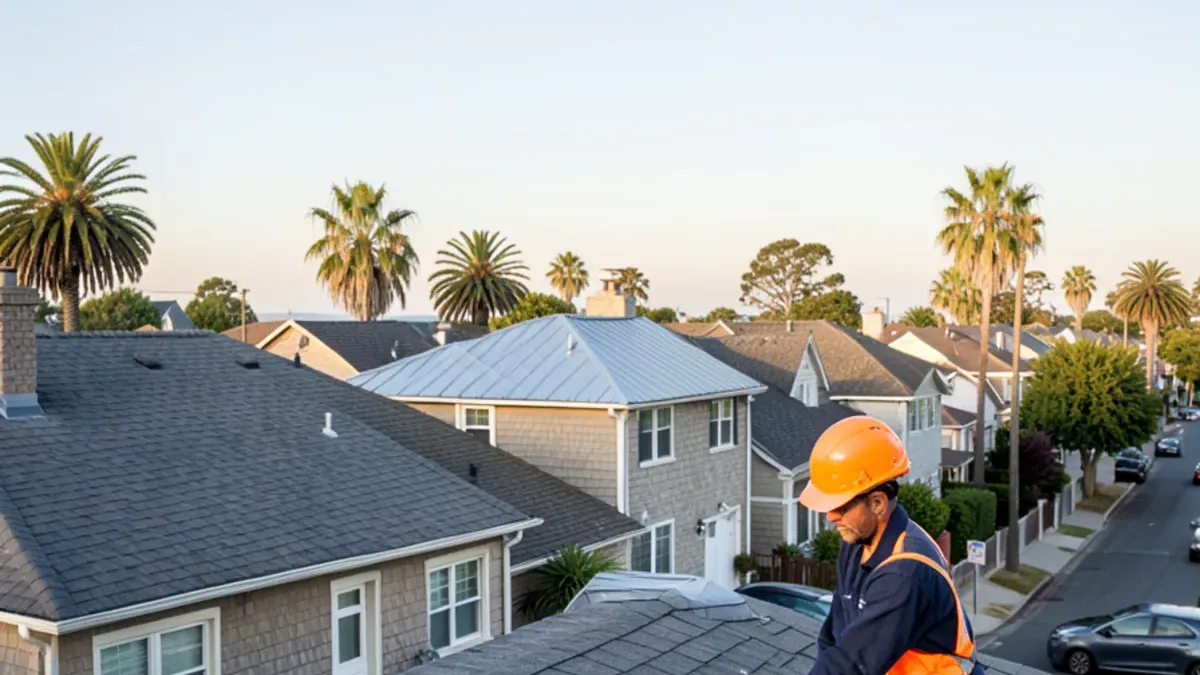
For most Alameda homes the best roof is an architectural asphalt shingle, with standing seam metal as the stronger long-term option if the budget allows. Flat and low-slope sections need a membrane or built-up system. Tile suits Spanish and Mediterranean homes only when the framing can carry the weight.
What Alameda's climate asks of a roof
Alameda is mild. Rain totals about 22 inches a year and falls mostly from October to April, on roughly 66 days in ZIP 94501 (BestPlaces). Summers are cool, so thermal stress is lower than inland. The challenges are different: long damp stretches that grow moss and algae in shade, salt on the wind that corrodes unprotected metal, and an old housing stock. About 32% of Alameda homes date to 1939 or earlier (Point2Homes), and the median home was built in 1965.
Alameda is in California Climate Zone 3. Under the 2025 Energy Code summarized by the Cool Roof Rating Council, the cool-roof reroof requirements for single-family homes apply only in other zones, so color and reflectance are a choice here, not a mandate.
How do the main roofing materials compare?
| Material | Fit in Alameda | Watch for |
|---|---|---|
| Architectural asphalt shingle | Most pitched roofs, budget-friendly, easy repair | Fasteners and flashing near the water, moss in shade |
| Standing seam metal | Longer-term owners, simple roof shapes | Coating and fastener choice for salt air, installer skill |
| Clay or concrete tile | Spanish and Mediterranean styles | Weight, brittle tiles, matching old tile |
| Single-ply membrane or built-up | Flat and low-slope areas | Drainage, seams, foot traffic |
| Wood shake | Not permitted as new material | See the City's guide |
The City's own residential design guide notes that wood shingles and shakes are no longer a permitted roofing material. It adds that newer architectural asphalt styles closely imitate them and provide superior fire resistance. Stay with that guidance when a home originally had wood.
Shingle vs metal in Alameda
Shingles are the default for a reason. They cost less, repair in small sections and come in profiles that suit older houses. One Alameda customer had matching shingle materials tracked down and delivered for a partial repair, which is hard to do with a tile or a custom metal panel. Reroofs on several homes have been finished in a single day, and one in about 10 hours.
Metal suits an owner who wants a longer service life and a simple roof plane. Taking off shingles and installing metal on another Alameda home ran about a week. The extra time buys labor on trim, flashing and panels cut to length. In salt air, specify the coating and the fasteners by name. The short version is that exposed-fastener panels on an island need more attention than concealed-fastener standing seam. Our metal roofing page covers the options in detail.
What about Victorians and older homes?
Choose for the style and for what is under the roof. The City's guide asks that roofing materials be compatible with the original style of the building and that the amount of roof visible from the street be weighed. On a steep, cut-up Victorian roof, an architectural shingle with a visible profile is usually the practical answer.
Older roofs often hide plank decking and thin framing. Tile is heavy, and decking that has aged needs replacing before any material goes on. One Alameda customer had aged decking found at tear-off, handled by a change order explained before work continued.
What are the options for a flat or low-slope roof?
Alameda has many flat roofs on additions, townhomes and garages. A low-slope area needs a membrane, since shingles shed water only above a minimum pitch. The common systems are:
- Single-ply membranes such as TPO, PVC and EPDM, which are welded or adhered in sheets
- Built-up roofing, which layers bitumen and fabric on site
- Torch-applied or modified bitumen, which is heat-welded in rolls
The Cool Roof Rating Council's summary shows that low-slope single-family reroofs need a reflective, rated product only in Zones 4 and 6 through 15, so Alameda owners choose by durability and drainage, not a reflectance minimum. The asphalt shingle roofing page and the broader roof replacement overview cover the process.
Which material fits which kind of house?
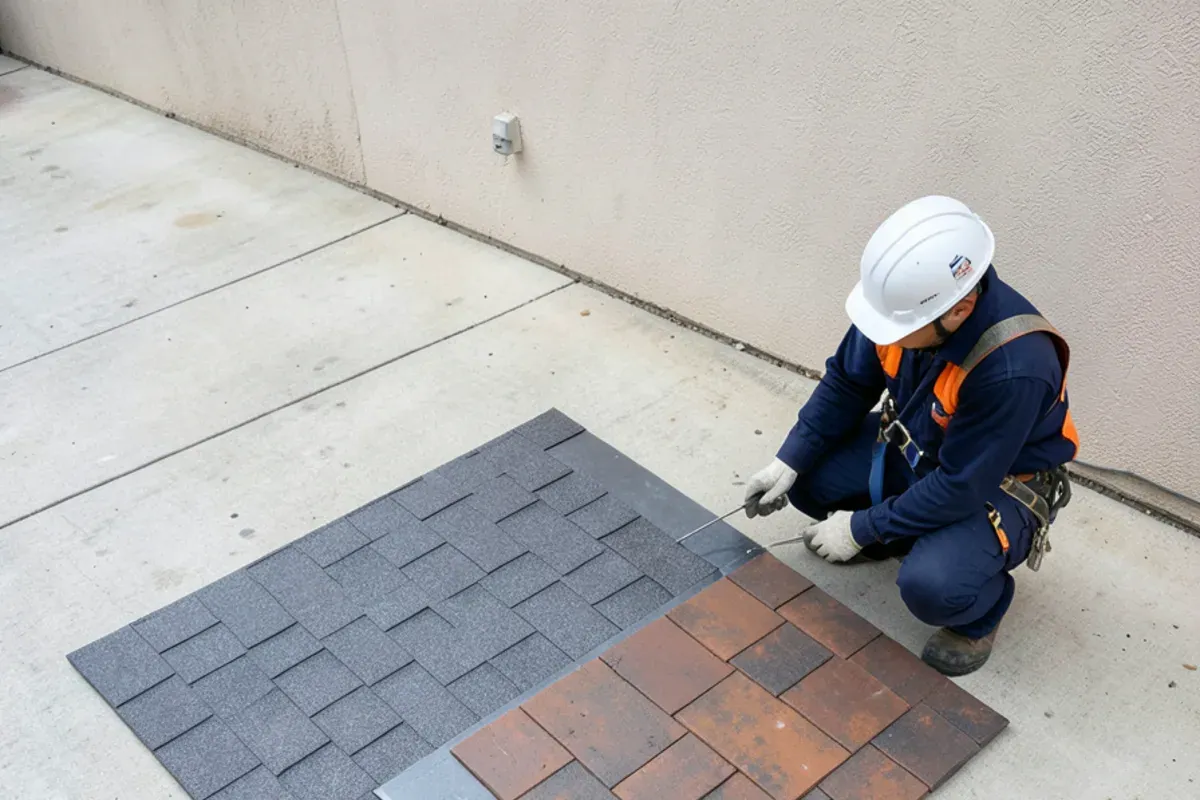
Match the roof to the house and its slope before comparing prices. This is how we would sort the common Alameda cases.
| Alameda house | Usual fit | The deciding question |
|---|---|---|
| 1900s to 1930s Victorian or bungalow | Architectural shingle | What does the City's guide say about your address? |
| 1950s to 1960s stucco ranch | Architectural shingle or standing seam metal | How long will you stay? |
| Spanish or Mediterranean style | Tile, or a shingle that matches | Can the framing carry tile weight? |
| Townhome, addition or garage with a flat section | Single-ply or built-up membrane | Where does the water drain? |
| Bayside home within sight of the water | Shingle or metal with stainless fasteners | Which coating and fasteners are specified? |
Most houses are mixed, with a pitched main roof and a flat porch or addition. That means two systems on one estimate, and the flashing where they meet is the detail to ask about.
Which material would we steer you away from?
Four combinations cause the most regret. Shingles on a slope below the manufacturer's minimum pitch, because they will not shed water. Exposed-fastener metal panels near the bay with plain steel screws. Tile on framing nobody has checked. And thin flat-profile shingles on a Victorian, where the style calls for depth and shadow lines.
None of these is a ban. Each is a case where the cheaper path costs more within a few winters. A fair estimate tells you why it picked the material it did and what it ruled out, and an honest roofer says so even when the cheaper option would win the job. Past Alameda customers describe being told to wait rather than replace, and that is the same habit applied to material choice.
How do you compare bids across materials?
Different materials make bids hard to compare, so ask each roofer to price the same scope in the same order.
- Tear-off and disposal, with the number of layers stated.
- Decking repair, priced per sheet or per board.
- Underlayment type and brand.
- Flashing, drip edge and vent boots.
- The covering itself, by product and color.
- Permit, inspection and cleanup.
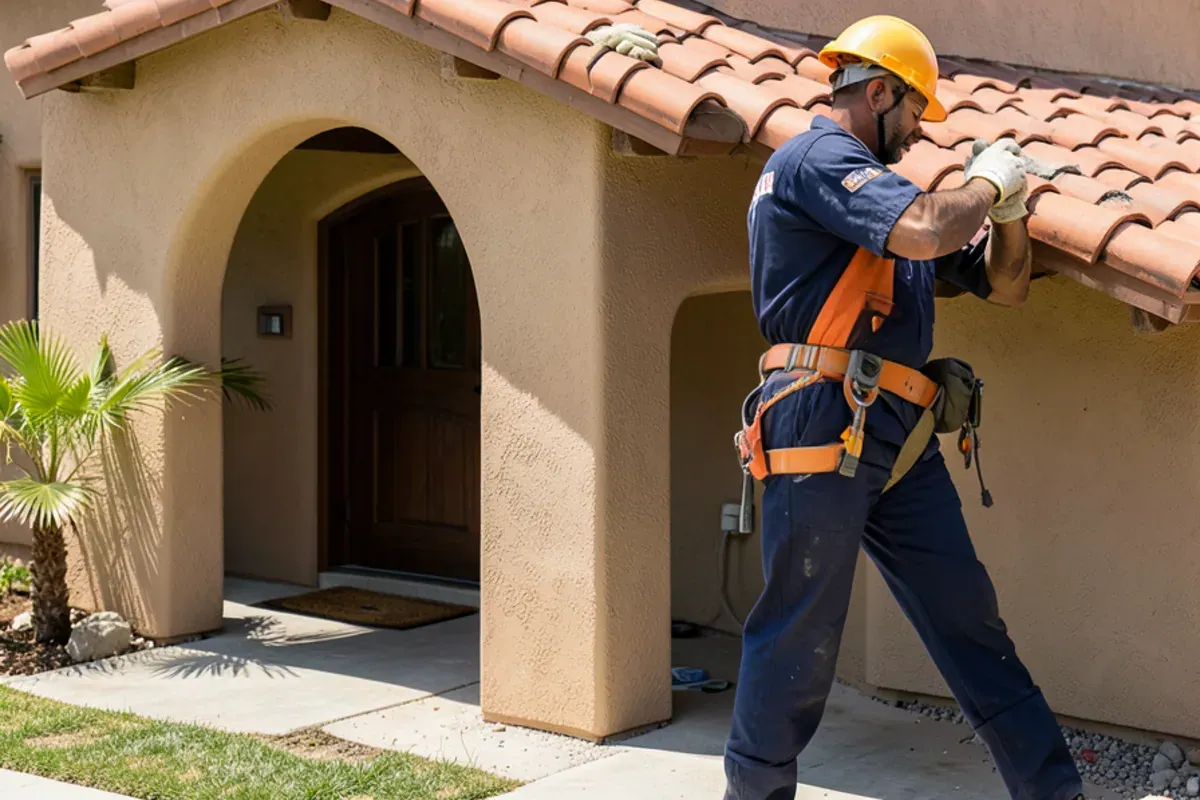
The tile roofing page covers the weight and framing questions in more depth.
What does the price depend on?
Material is one factor. Roof size, number of planes, pitch, tear-off layers, decking replacement, flashing, gutters and access also set the total. A 2026 Alameda pricing guide puts a full roof at $8,500 to $35,000 or more, and Homeyou's 2026 figures show $6,248 to $8,056 for a 1,282 sq ft composition shingle roof. Those are third-party ranges, not quotes. Your written estimate is the number that counts, and it should list material, underlayment, flashing and decking as separate lines.
Questions to ask before you choose
- What are the nails, flashing and underlayment made of?
- How is the roof attached at ridges, valleys and edges?
- What does the manufacturer's warranty cover, and what voids it?
- Who pulls the permit, and what is the inspection plan?
Past customers describe detailed written quotes and aerial photos on steep or multi-section roofs. If a comparison across materials would help, call or request an estimate and tell us the roof's age, shape and any plans for solar. We work across Alameda, and the cities we cover are on the service areas page.