
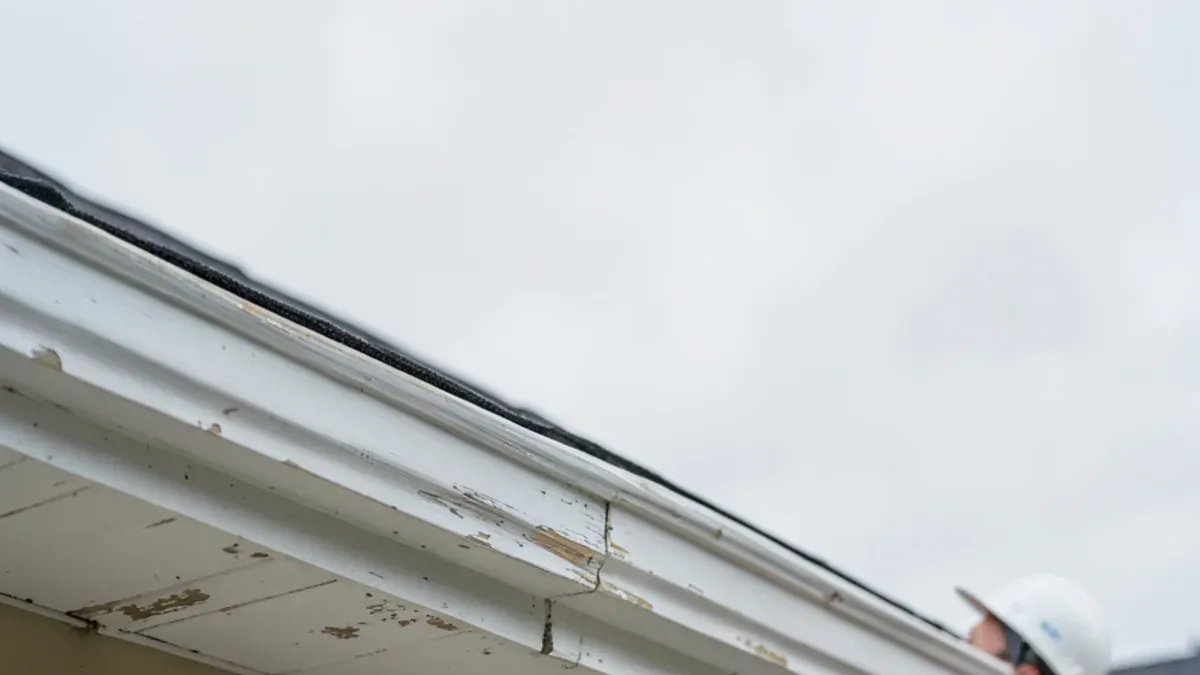
What causes fascia rot?
Fascia rots from repeated wetting, and the usual source is water getting behind the gutter. Overflow, a missing drip edge, a roof leak at the eave and unsealed board ends all do the same thing: they keep the wood damp. The USDA Forest Products Laboratory puts the moisture level at which decay fungi can grow at about 20%, so a board that is wet often enough will eventually rot. This is what people call dry rot, though the wood is in fact wet for long periods.
Fascia is the board at the end of the rafters that carries the gutter. When it fails, the gutter loses its backing, and the soffit and roof edge are next.
How can you tell fascia is rotting?
Look at the roofline from the street and then up close.
- Peeling or bubbled paint along the lower edge
- Dark stains or streaks below the gutter
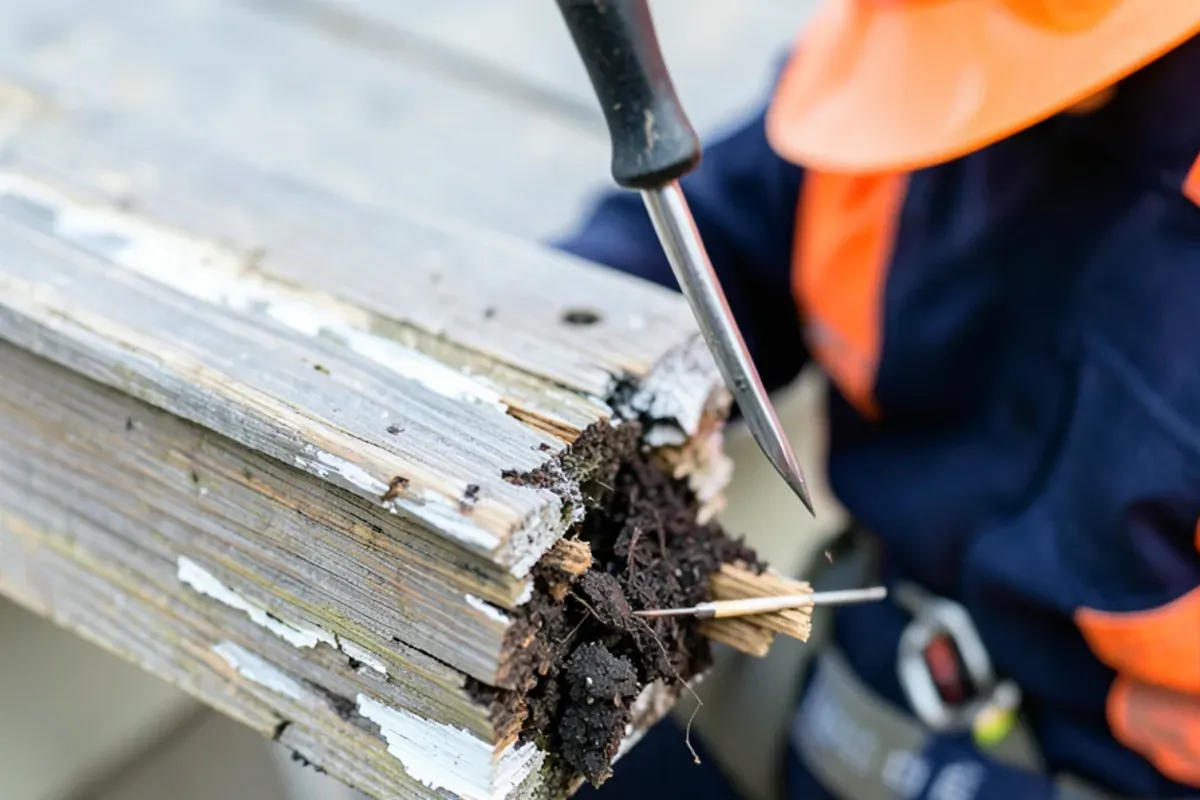
- Soft wood: a screwdriver sinks in
- Cracks or crumbling at board ends and corners
- A gutter that sags or pulls away
- Gaps where birds or insects get in
- Mushroom or fungal growth in extreme cases
Press the wood gently with a screwdriver tip. Sound wood resists. Rotted wood gives or flakes. Check the bottom edge and the ends first, because that is where water collects.
Replace one board or the whole run?
The extent of the soft wood decides the repair. Use the table as a first read, then confirm with a screwdriver:
| What you find | Usual repair |
|---|---|
| Peeling paint, wood firm | Scrape, prime, repaint, fix the water source |
| One soft spot at a board end | Cut out and splice in a new section |
| Soft along several feet | Replace the board between sound points |
| Soft along the full run | Replace the run, check the rafter tails |
| Soft rafter tails or soffit | Repair framing first, then trim |
| Gutter pulled away from soft wood | Replace the board and re-hang the gutter |
Splicing a short section is cheaper than a whole run, but splices leave joints that must be sealed. Where the paint is the only problem, a repaint is the honest answer, and the estimate should say so.
Why does water reach the fascia?
Four paths explain most cases.
Overflowing gutters. Water spills over the front lip, and the splash and runoff wet the face of the board. If your gutters overflow in heavy rain, read about overflowing gutters and repair options before replacing the board.
Water behind the gutter. Without a proper gutter apron or drip edge, water running off the shingles slips behind the gutter and down the back of the fascia.
Missing or short drip edge. The California Residential Code requires drip edge at the eaves and rake edges for asphalt shingles, per a city reroofing guide that cites the code section. Older roofs often lack it, because the rule came with later code editions.
Roof leaks at the eave. A leak at the lower edge soaks the deck edge and fascia from above.
A fifth cause is workmanship: board ends that were never primed, or joints left open to water.
How to fix fascia rot properly
Replace the wood, and fix the water at the same time. The repair sequence:
- Probe the roofline and mark all soft areas
- Remove the gutter section in the way
- Cut out rotted fascia back to solid wood, and check the rafter tails and soffit
- Install new primed fascia, with all cut ends sealed
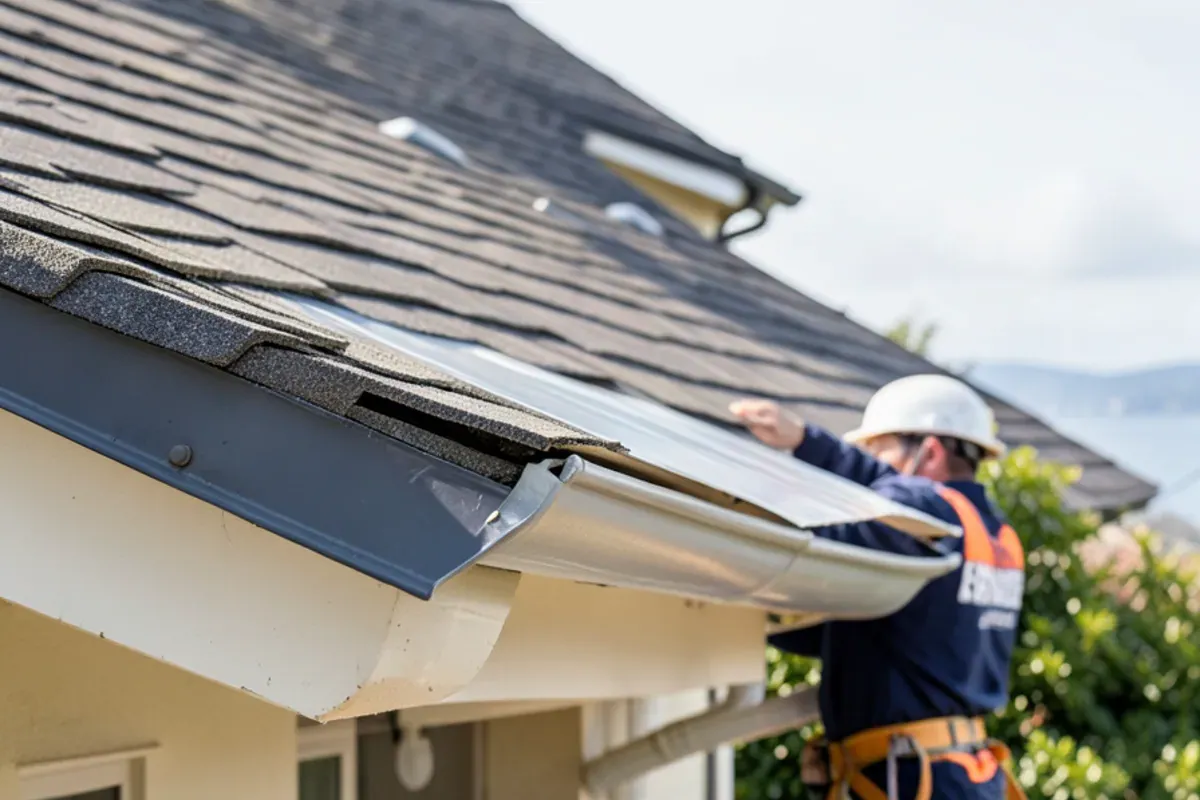
- Install or correct the drip edge and gutter apron so water goes into the gutter
- Re-hang the gutter at the right slope
- Paint the new wood, including the edges
If you skip step 5, the new board gets wet in the same place. That is the part many quick patches leave out.
What do roofers check beyond the fascia board?
A roofer checks the wood behind and above the fascia, because rot rarely stops at one board. The inspection runs in a set order:
- Probe the fascia face, bottom edge and ends
- Check the soffit panel next to it for stains, sag or soft edges
- Pull the gutter section to look at the back of the board and the drip edge
- Probe the rafter tails where they meet the fascia
- Look at the edge of the roof deck for dark staining on the underside
- Check the attic eave for daylight, damp insulation or blocked vents
The trade-off is access. Fascia can often be replaced in sections with the gutter off, but if the rafter tails are soft, a carpenter-level repair is needed before trim goes back, and the estimate changes. That finding should be raised before the work continues, the same way aged decking is raised on a reroof. On one Alameda ranch home, trim, soffits, fascia and gutters were replaced in one project, which avoids opening the same eave twice. For the gutter side, see gutter installation.
What we see on rooflines in Alameda
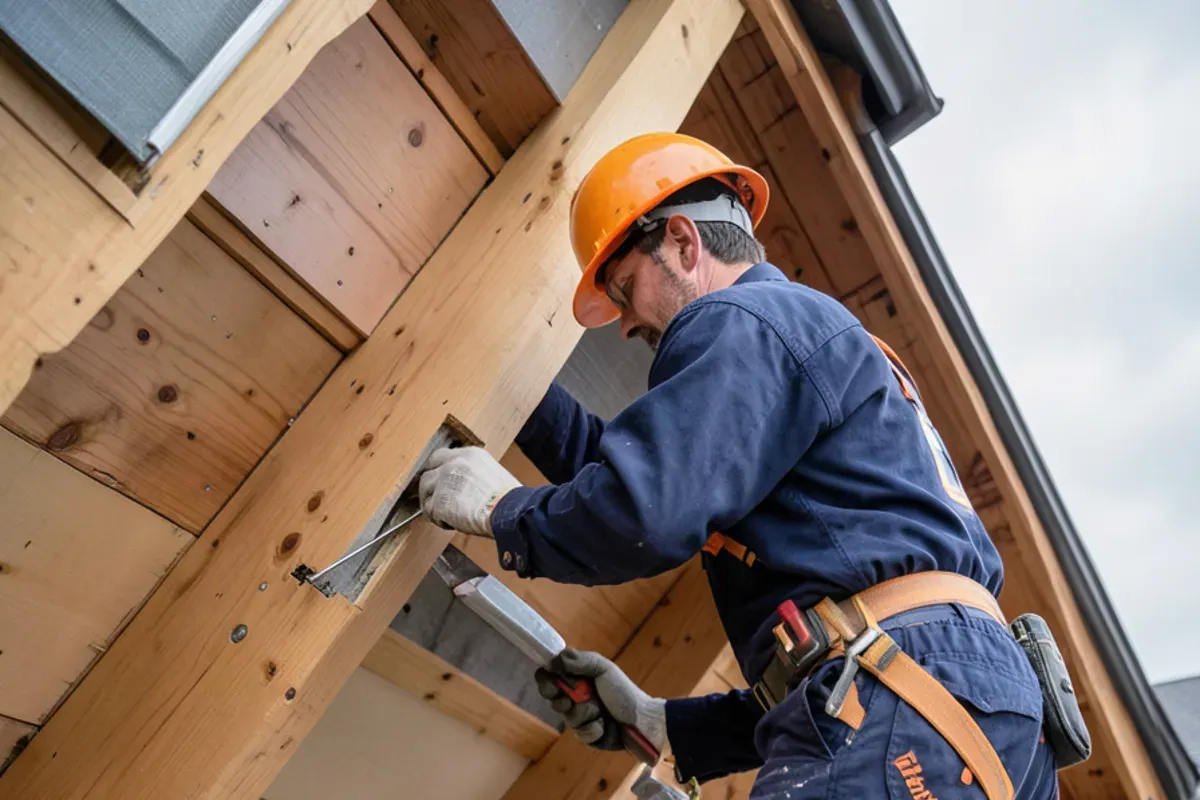
Alameda gets its rain mostly in the October to April stretch, which gives water months of repeated chances at the same fascia board. On one Alameda ranch home, roofline trim, soffits, fascia and gutters were all replaced together. On other jobs, gutter and flashing faults from a previous contractor were fixed in the same visit.
Replacing fascia with the gutters off also makes it easy to correct the roof edge. Past Alameda customers have had gutters installed after a reroof, which is a natural time to check the boards behind them.
How do you keep new fascia from rotting?
Prevention comes down to keeping the board dry and sealed. Five habits do most of the work:
- Keep gutters clear before the rainy season so they do not spill over the lip
- Make sure the drip edge and gutter apron send roof water into the gutter, not behind it
- Prime and paint every face of the board, including the cut ends, before it goes up
- Repaint when paint starts to peel, rather than waiting for bare wood
- Fix roof leaks at the eave as soon as they show
Material choice also matters. Primed wood, finger-jointed trim and cellular PVC trim all exist, and each has trade-offs in cost, movement and how well it takes paint. Ask what is going on your house and why, and check that cut ends are sealed whichever you pick.
If you are planning a reroof, raise the roofline at the start. The old shingles and gutters are coming off anyway, so the fascia is exposed, and the roofer can check every board and the eave detail while the work is open. Soft boards found at that point can be replaced with the same crew, and the new drip edge can go on over sound wood.
When is fascia repair the right call?
Repair when the rot is limited to a few feet and the cause is clear. Replace longer runs when the board is soft along its length. See fascia and soffit repair for what a visit covers, and the gutters section for related work. Owners in Alameda can begin at the home page.
Call the office and book a free inspection; the written estimate will show the boards, the drip edge and the gutter work as separate lines.