
Which is better for a Bay Area home, metal or asphalt shingles?
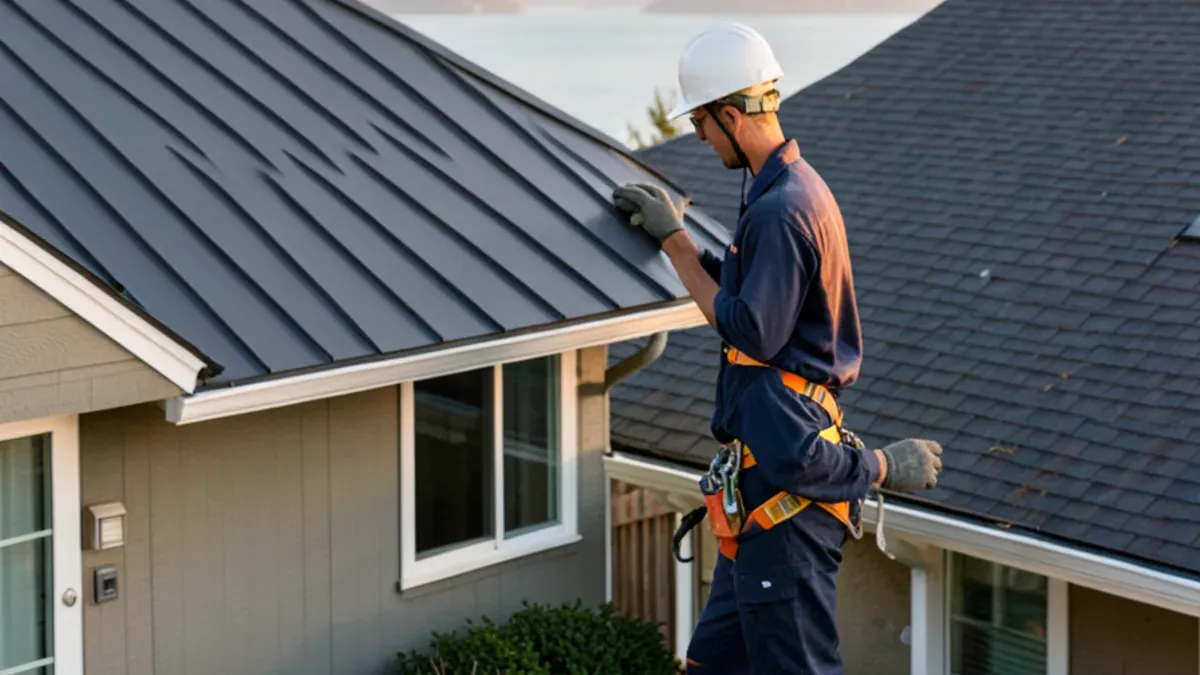
Neither wins everywhere. Metal costs more up front and typically lasts longer, while asphalt shingles cost less and are easier to patch. The deciding factors are budget, how long you will own the home, the look you want, and how close you are to salt air.
California's contractors' board says a typical residential roof is expected to last 15 to 20 years, which is the planning number for composition shingles. Metal is built and sold for longer service, but the warranty the maker writes and the real life of the roof are different things, so treat any warranty number as a legal document and not a promise.
| Metal (standing seam) | Asphalt shingles | |
|---|---|---|
| Up-front cost | Higher | Lower |
| Expected life | Longer | Typically 15 to 20 years (CSLB) |
| Repair | Harder to match, often panel work | Easy to patch |
| Moss | Doesn't root easily (Oregon State) | Moss can lift edges |
| Noise | Can be louder in rain | Quiet |
| Look | Modern, clean lines | Familiar, many colors |
How long does each roof really last?
Industry guides put metal at roughly 40 to 70 years and asphalt shingles at 15 to 30 (Bob Vila's comparison). California's contractors' board plans on 15 to 20 years for a typical residential roof. The ranges overlap at the low end, which is why site conditions matter: shade, salt air, attic heat and installation quality move the real figure up or down.
Do not read a warranty length as a lifespan. A warranty covers what the paper says, with exclusions, and says little about how the roof performs after 40 years. Get the exact terms in writing before you sign.
Who should choose metal, and who should choose shingles?
Your time horizon decides it more than the material does. The table sorts common situations.
| Your situation | Usual lean |
|---|---|
| Staying 25 years or more | Metal, if the budget allows |
| Selling within a few years | Shingles, since the extra metal cost may not come back |
| Shaded lot with moss trouble | Metal sheds moss better; see the Oregon State note above |
| Tight budget or a simple gable | Shingles |
| Complex roof with many valleys and skylights | Either; the flashing detail decides the cost and the leaks |
| Solar planned | Either; plan the roof and panel layout together with your solar company |
| Rental you want to maintain cheaply | Shingles are cheaper to patch; metal needs fewer repairs |
There is no universal winner, and a roofer who says there is has stopped listening to your house.
Can metal go over your old shingles?
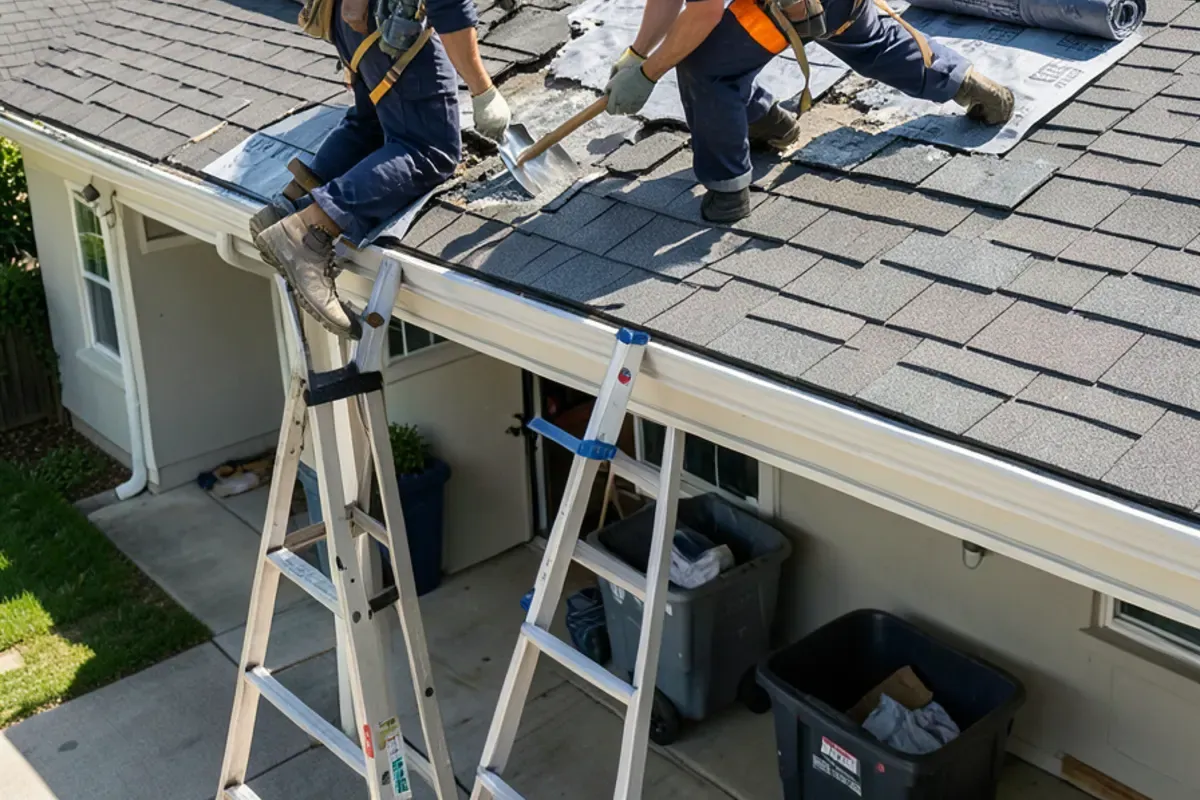
Sometimes, but the rule is the same as for any new covering. California Building Code reroofing rules bar a new covering over a roof that already has two or more applications, so a two-layer roof means tear-off. Even over one layer, a tear-off lets a roofer see the deck, replace aged boards and flash the roof correctly. The Alameda metal job above started with shingle removal, and Bob Vila notes that some lightweight metal products can go over a sound existing roof in other places. Ask your bidder what they will do and why, and have the answer on the estimate.
How much does each cost?
We do not publish a dollar figure for metal here, because Bay Area prices swing too widely to quote fairly. These factors drive the price of both:
- Roof size, pitch and number of planes
- Tear-off of old layers and disposal
- Deck repairs found once the roof is open
- Metal type, gauge and finish, or shingle grade
- Flashing details, penetrations and skylights
- Access and staging on tight lots
One metal roof estimate for an Alameda customer was done from satellite images and GPS, so a first number does not always require a roof climb. The final price comes from a written estimate, not from a blog.
What changes near the bay and in salt air?
The bay changes the metal choice, not the question of whether metal belongs here. Aluminum is described as highly corrosion-resistant and suited to coastal areas (Bob Vila), which is why it comes up for waterfront homes. Salt in the air attacks some coated steels faster than aluminum, and manufacturers often write salt exposure limits into the warranty. Before you buy, ask for the written warranty and read the clause on proximity to salt water, then match the metal and finish to that clause.
Alameda is an island city. About 22 inches of rain falls a year, almost all October through April (BestPlaces), so water shedding matters as much as corrosion. Both roof types need flashing done well. The Oregon State guide notes that moss doesn't easily take root on metal, a real point for shaded lots.
What should you ask before choosing a metal roof?
Metal is less forgiving of poor detailing than shingles, so the questions matter more.
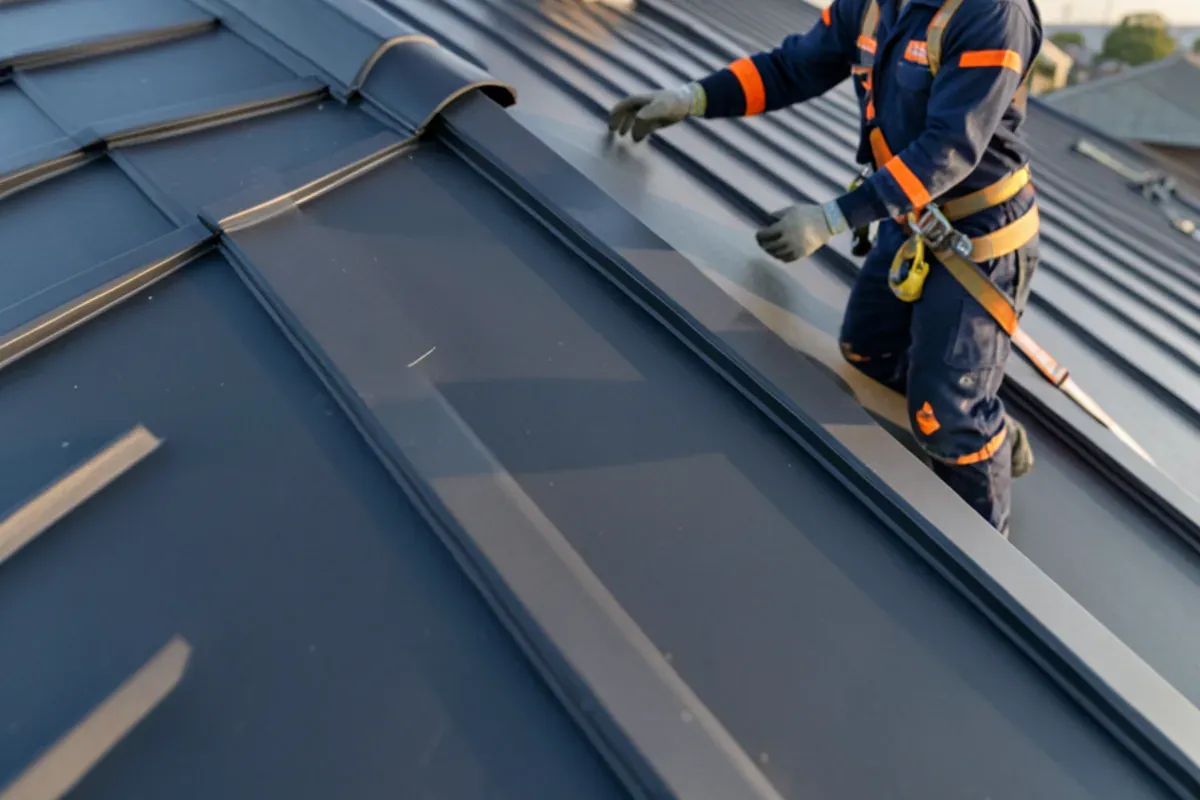
- Is it standing seam with hidden fasteners, or exposed-fastener panels that need screw checks over time?
- What are the metal, gauge and finish, and does the written warranty exclude salt air or coastal exposure?
- What goes under the metal, and how does it deal with condensation and noise?
- How are valleys, chimneys, skylights and wall joints flashed?
- Who pulls the permit, and does the exterior change need Planning review?
- If solar panels are planned, has your solar company agreed the layout and roof attachment details? We time the roof work around the panels, and your solar company handles them.
A shingle bid has shorter answers to most of these, which is part of why it is cheaper and quicker. Weak flashing fails either roof, so judge the bids on those details.
Which looks better on an older Alameda house?
That is a taste and a permit question. About 31.9% of Alameda homes were built in 1939 or earlier (Point2Homes), and a change of roof material alters how a historic house reads from the street. The City of Alameda Permit Center says work that changes the exterior of a building may need Planning design review, so ask before you order. Shingles in a matching color rarely raise the question; a new metal profile can.
What about cool-roof rules?
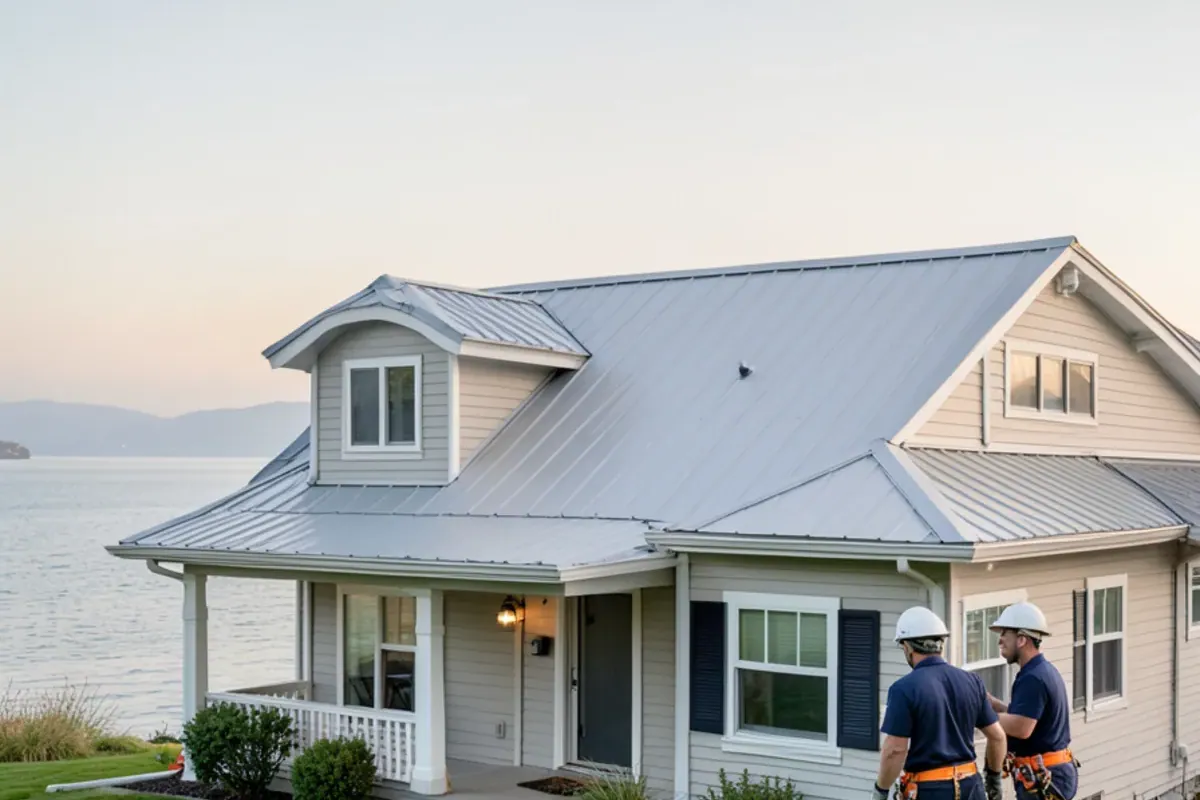
Alameda sits in California Climate Zone 3. Under the 2025 Energy Code summary from the Cool Roof Rating Council, single-family reroof cool-roof requirements apply in Climate Zones 4 and 8 through 15 for steep slopes, so Alameda is outside that list. A cool roof is an option here, not a mandate, and the local building department has the final word. Colors and finishes that reflect sun are available in both metal and shingle.
What we see on metal and shingle jobs
In Alameda, one roof had its shingles removed and a metal roof installed, about a week of work for that tear-off and install. A different owner needed screws replaced on an existing metal roof, which is the kind of fastener upkeep exposed-fastener panels can need. Another customer suggested a lighter color to keep a sunroom cooler. Shingles on the same island have been finished in a day on several homes.
For the wider range of options, see the roof replacement overview and the metal roofing page and the asphalt shingle roofing page explain each material in depth for homes across Alameda. If you are leaning one way, call us or ask for a free estimate, and compare written bids for both on the same roof.