
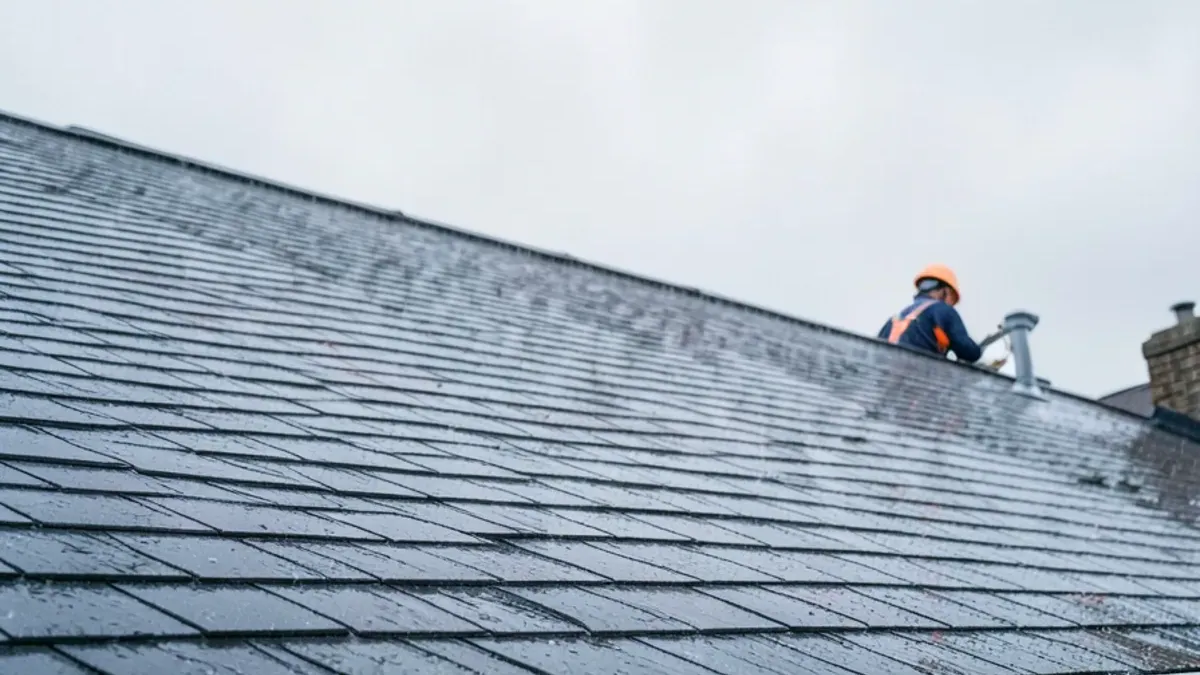
A roof leaking during a storm needs four things in the first hour: people and valuables moved out from under the drip, water caught in a container, wet electrical kept off limits, and a call to a roofer who can dry in the opening. Do not climb onto the roof while it is raining. Everything else can wait for dry weather.
What do you do in the first ten minutes?
Start inside, with the water and the people under it. The goal is to limit damage until the roof can be reached safely.
- Move people, pets and valuables out of the room below the leak.
- Set a bucket or storage tub under the drip and lay a towel in it to quiet the splash.
- Lift rugs and slide furniture away from the wet area, even if the floor looks dry.
- Photograph and film the leak, the stain and the water, with a timestamp.
- Turn off power to the affected room at the breaker if water is near outlets, fixtures or a ceiling fan.
- Call a roofer and your insurer's claim line, in that order if the water is still coming in.
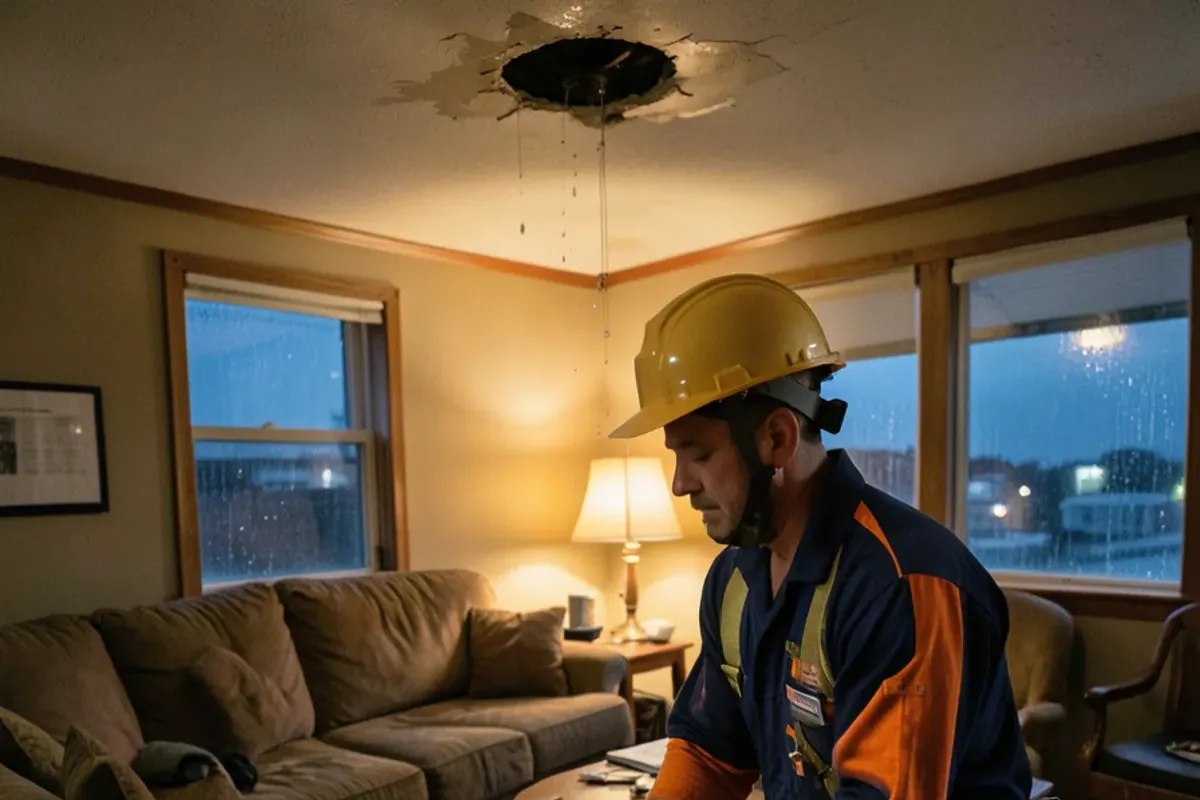
Electricity and water do not mix. The CDC says not to touch electrical equipment that is wet or while standing in water, and to switch power off at the source when conditions are unsafe. A dripping light fixture counts.
Why should you stay off the wet roof?
You should stay off because the roof is slick, the light is poor and the leak is usually not where you think it is. OSHA's residential guidance sets the point at which fall protection is required for workers at six feet above a lower level. A one-story eave already clears that, and a homeowner has no harness, no anchor and no training.
Water also travels. It enters at a flashing seam, runs down the underside of the sheathing and rafters, and drips from a ceiling several feet away. Climbing up in the rain to find it rarely works and puts you at risk. CSLB's roofing guide notes that interior water damage is commonly caused by a leak at one weathered portion of the roof or by poorly installed flashing around chimneys and skylights. Those are places to inspect in daylight, with the roof dry.
Can you check the attic for the leak path?
Yes, if the hatch is easy to reach and the ceiling below is dry. Take a flashlight and look from the hatch without stepping off the walkway. Do not step between joists, because the drywall below will not hold you.
Look for these signs of where water is entering:
- Dark, damp trails running down rafters or the underside of the sheathing
- Wet or matted insulation directly above the stain, which marks where it lands, not where it enters
- Daylight or drips near a chimney, plumbing vent, skylight curb or exhaust vent
- Rusted nail tips poking through damp sheathing, a sign of repeated moisture
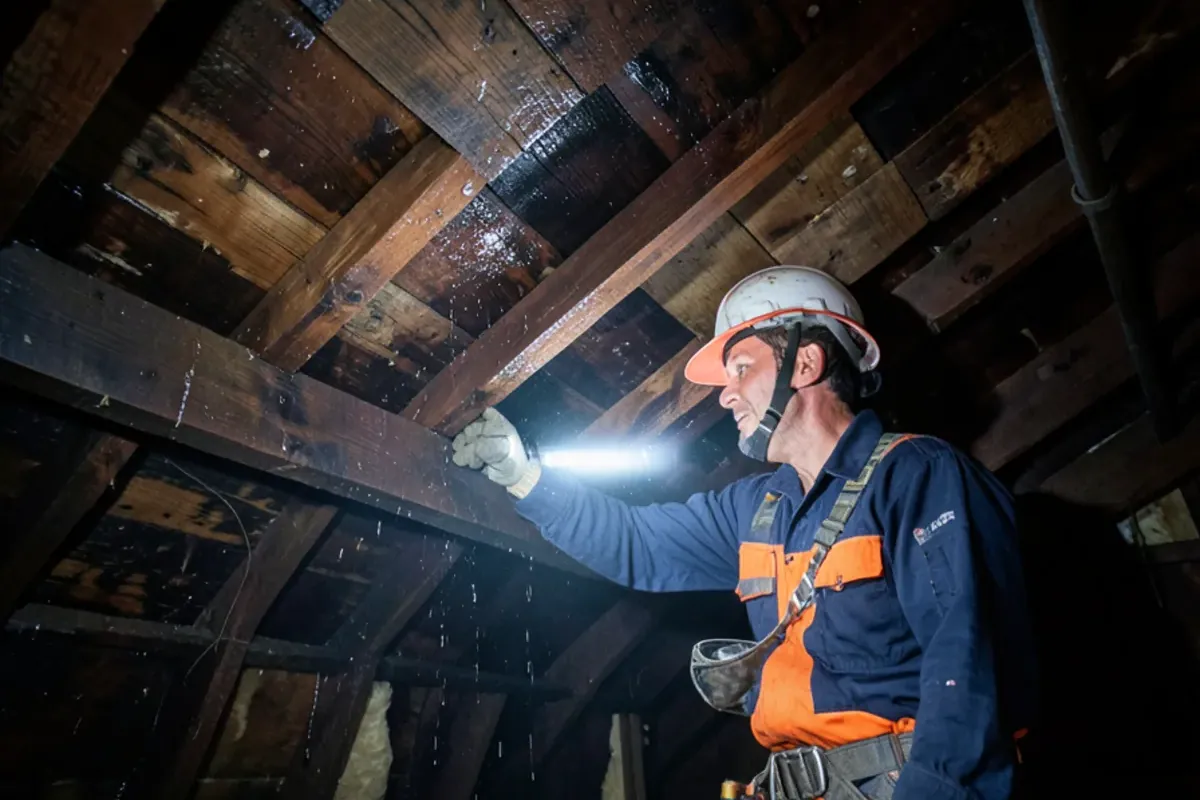
Photograph what you see and note which wall it is nearest. That one detail helps a roofer start at the right flashing. Never crawl into a wet attic with a light fixture or wiring nearby, and skip the attic entirely if the ceiling is bulging.
What can you do about a bulging or sagging ceiling?
A bulge means water is pooled above the drywall and the ceiling is carrying its weight. Stay out from under it. If you can reach the lowest point safely, a small hole over a bucket relieves the water in a controlled way and can prevent a larger collapse. If the drywall is cracking, wet insulation is falling, or the bulge sits near a fixture, leave the room and call.
| Situation | Do now | Leave for dry weather |
|---|---|---|
| Steady drip | Bucket, towel, photos | Finding the entry point |
| Ceiling bulge | Clear the room, relieve over a bucket if safe | Drywall removal and drying |
| Water at a fixture | Breaker off, keep out | Electrical inspection |
| Wind-lifted shingles | Photos from the ground | Permanent shingle repair |
What does a field call look like in Alameda?
Storm leaks in Alameda cluster between October and April. The city gets about 22 inches of rain a year, almost all of it in those months, on about 66 days in ZIP 94501 according to BestPlaces. Many of the homes are old: 31.9% were built in 1939 or earlier, per Point2Homes, so aged flashing and tired decking are common culprits.
Past customers describe the first contact as the part that mattered. One Alameda customer reported a same-day reply to a leak call and a quick inspection. Another had a callback in under half an hour and a visit the same day. On one small skylight leak, Pedro sealed it from the truck before the homeowner had hired anyone. After a windstorm, a crew stopped by the same day for another customer and tarped lost ridge shingles. A garage skylight leak on a different job was patched the next day. Those are past jobs, not a promise of timing, because a heavy storm day stretches any schedule.
Skylights deserve special mention. On one Alameda job the repair was a reseal of existing flashing on three skylights instead of a replacement.
What should your claim file hold by morning?
A storm leak claim is easier when the record starts the same night. Build the file while the water is still visible, before any cleanup:
- Wide and close photos of every stain, drip and wet surface, plus a short video showing the water in motion.
- The date, the time rain began, and how the weather looked, written in your phone notes.
- Photos of the roof from the ground, if you can see missing or lifted shingles without leaving the yard.
- Receipts for buckets, plastic sheeting, towels and any emergency service.
- A list of damaged belongings, with brand and rough age where known.
- The name, date and time of every call to your insurer and roofer.
Keep wet materials until the adjuster has seen them, or photograph them thoroughly before they go in the trash.
What does a roofer actually do to dry in a storm leak?
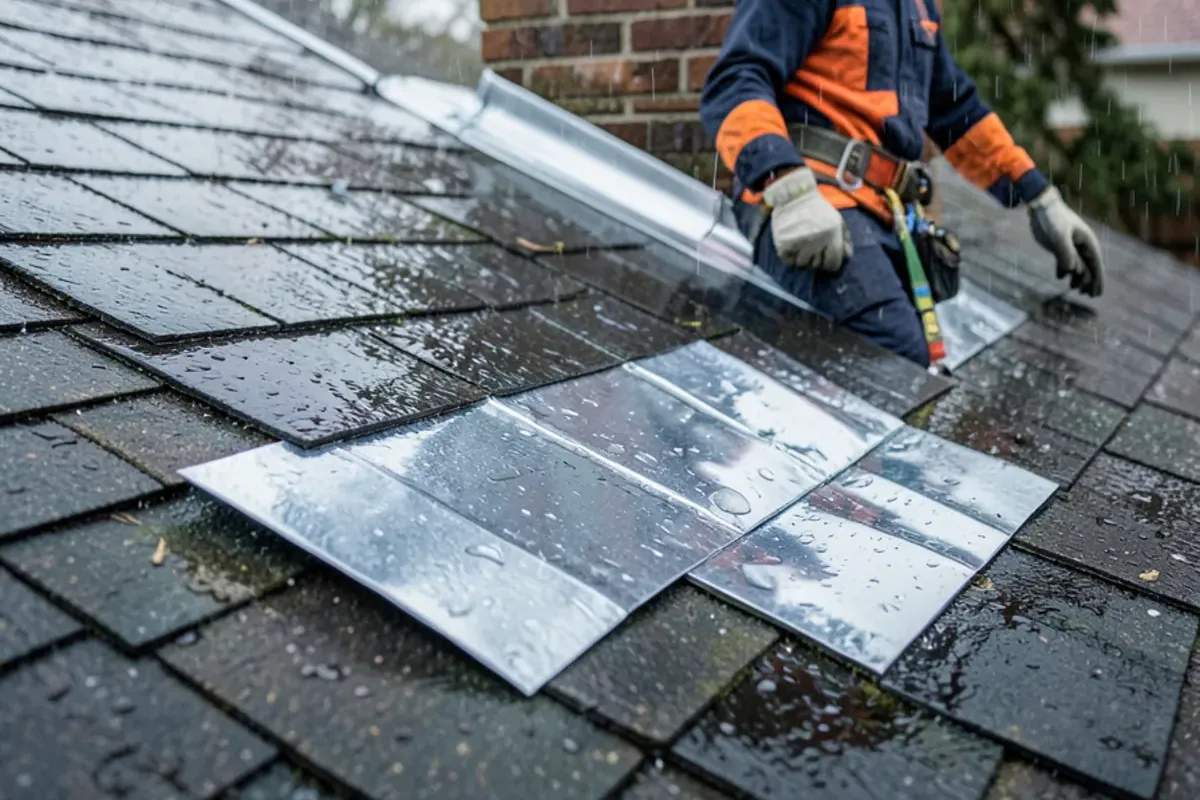
A dry-in stops water from entering, and nothing more. In the field, that is a patch, a tarp or a reseal, chosen by what the opening is. A small gap at a skylight or vent flashing can often be sealed in minutes. Lost shingles or a torn ridge get a tarp fastened beyond the damaged area, with the edges lapped so water sheds instead of pooling. A tarp is temporary, and wind can lift one in a day if it is fastened poorly. Our page on emergency roof tarping explains what a temporary tarp involves.
The trade-off is plain: a quick seal during the storm buys time but is not the repair. The permanent fix waits for dry weather and a daylight inspection, since flashing, decking and underlayment have to be seen and replaced, not covered. A roofer who offers a final repair in the middle of a downpour is guessing at what lies under the wet shingles.
Who do you call, and in what order?
Call a roofer first when water is entering, then your insurer. The roofer can tarp or seal the opening, and the insurer opens the claim. The California Department of Insurance says insurers reimburse reasonable costs to protect your property, so save receipts for any materials, and hold off on extensive permanent repairs until the adjuster has seen the damage. State regulations give an insurer 15 calendar days to acknowledge a claim notice and 40 calendar days after proof of claim to accept or deny it (10 CCR §2695.7).
Ask any roofer for the C-39 license number and check it at cslb.ca.gov before work begins. Read the estimate before you sign, since the terms go in your contract in writing. For active leaks, our emergency roof leak repair page explains what a temporary dry-in includes, and the wider emergency roof repair section covers tarping and rescue work. For a leak in Alameda itself, our home page shows how visits run from the Webster St office.
What happens after the rain stops?
The roof gets a dry-weather inspection as soon as it is safe to walk. A roofer checks flashings, valleys, vents, penetrations and decking, and writes up a repair or replacement scope. Wet insulation and drywall come out separately, since we fix the roof and document interior damage for the claim.
Ask for photos of what was found. Past customers report they received photos of progress and finished work the same day, which helps with both the insurer and your own records.
If your roof is leaking right now, call the office or request a free estimate and say that water is entering. A short description of where it drips and what the roof looks like is enough to start.