
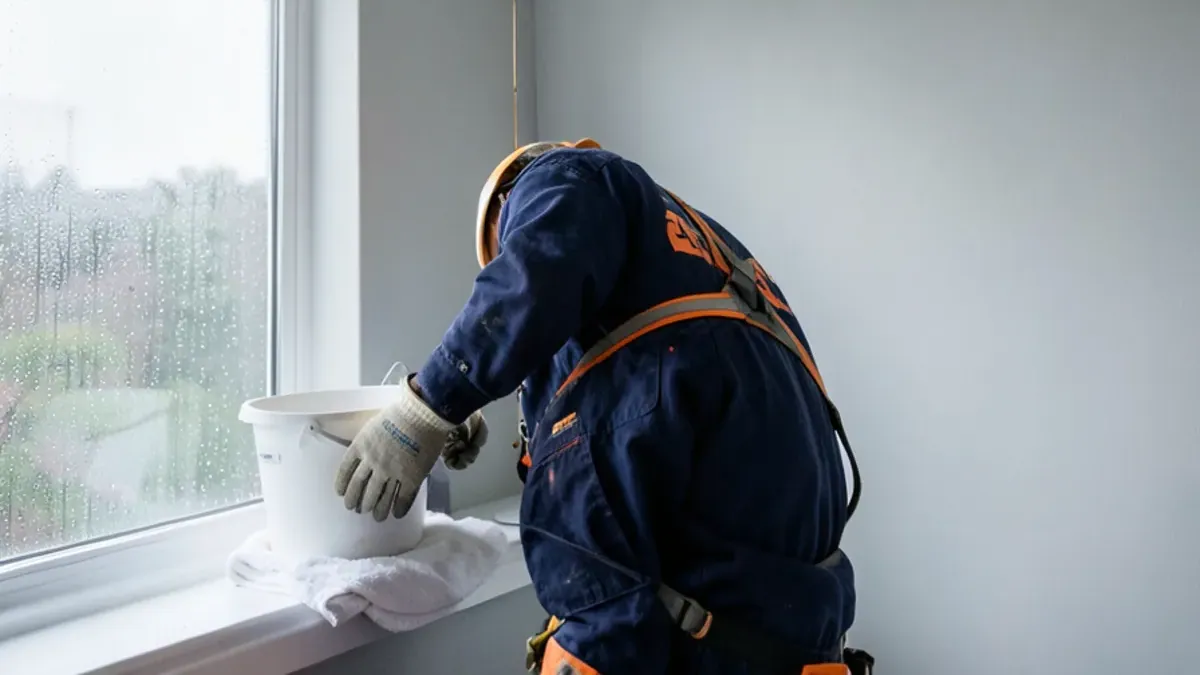
Water coming through the ceiling: the first twenty minutes
Act inside first. The roof can wait for a safe window, but the ceiling cannot.
- Turn off power to any light fixture or outlet in the wet area at the breaker.
- Put a bucket under the drip and a tarp or plastic sheet under the bucket.
- If the ceiling bulges, make a small hole at its lowest point over a bucket. A sagging ceiling that releases water is less damage than one that collapses.
- Move furniture and rugs out of the room or to its dry side.
- Photograph the stain and the room. Put a date on it.
- Call us, and tell us how long the water has been coming in and where the stain sits.
Do not go onto a wet roof to find the leak. Most falls from roofs happen in exactly that moment.
Active roof leak: where it enters, and why it is not where the stain is
Water rarely drops straight through. It runs down the underlayment, along rafters and across the underside of the deck until it reaches a gap in the ceiling. The stain is the end of the path, not the start.
We trace uphill from the stain and check the usual suspects in this order:
- Flashing at chimneys, walls and valleys
- Skylight flashing and curbs
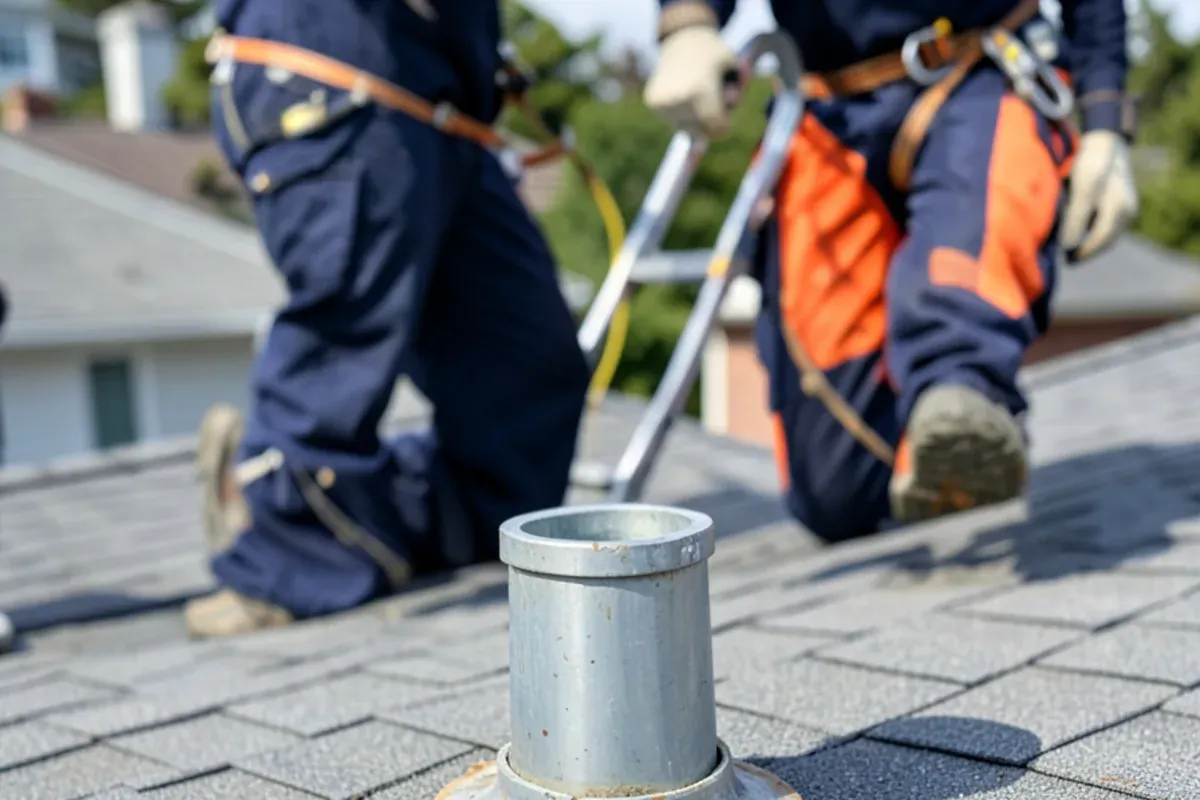
- Plumbing vent boots, which crack in sun
- Lost or lifted shingles and ridge cap
- Nail pops and exposed fasteners
- Flat roof seams, where they exist
About 22 inches of rain falls on Alameda in a year, nearly all of it October to April (BestPlaces, ZIP 94501). The first storms of the season find every weak flashing that the dry months baked. Our post on finding the source of a roof leak goes through the same sequence.
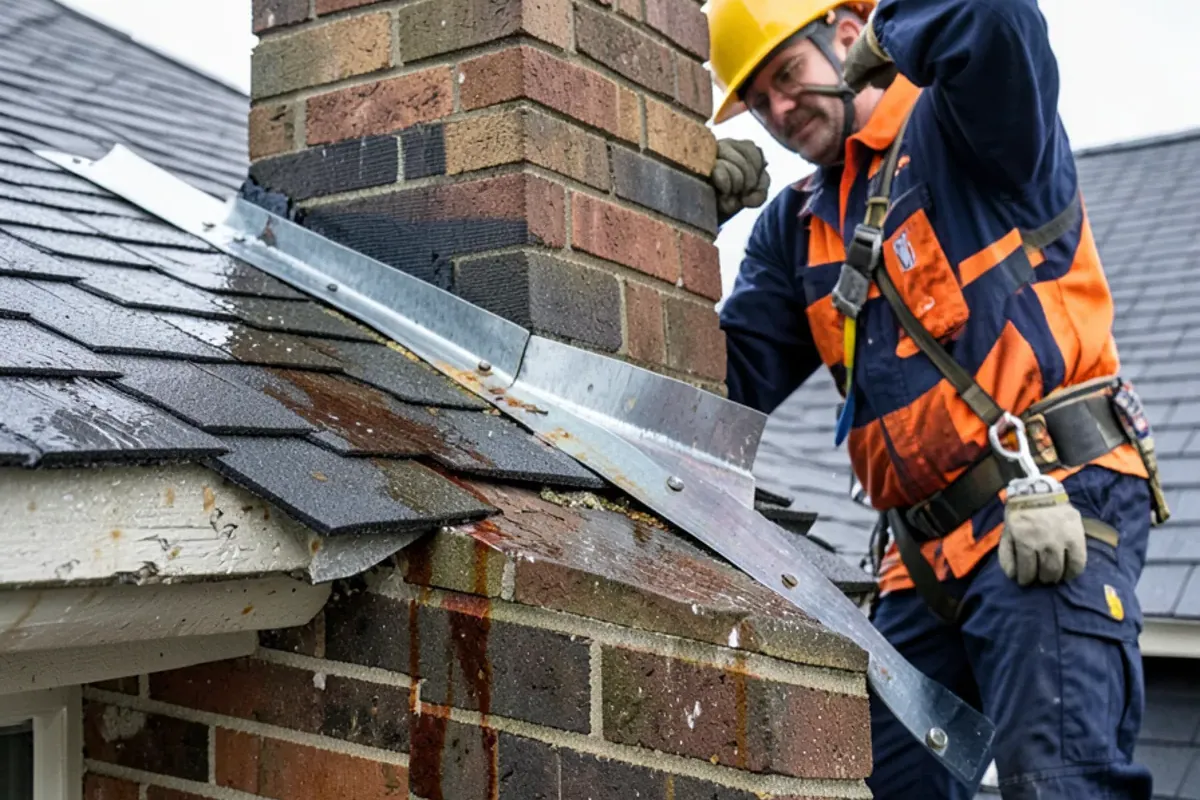
Roof leak in storm: where we are and how fast, honestly
The office is at 1910 Webster St on the West End. Timing depends on the day, so ask when you call. What Alameda customers have reported: a same-day reply to a leak call, a callback in under half an hour with a visit the same day, an inspection within a day, and a garage skylight leak patched the next day.
Heavy storms bring many calls at once, and crews go where roofs are open first. If we cannot come that day, we tell you, and help you protect the inside until we can.
Temporary roof patch: what we do at the entry point
The choice depends on what failed.
- Missing or lifted shingle: replaced or sealed down.
- Cracked vent boot: a temporary collar or sealant until it is replaced.
- Flashing gap: sealant or a membrane patch over the opening.
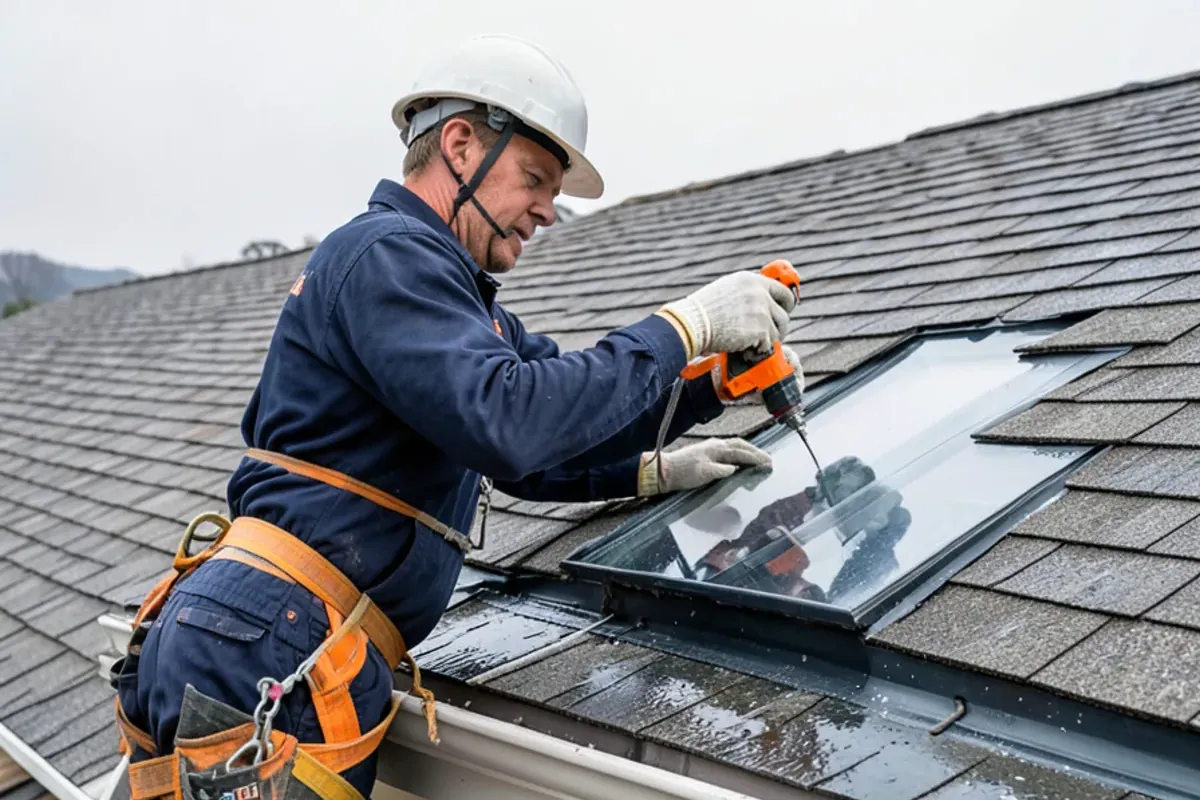
- Open skylight flashing: resealed at the corners and curb.
- Large open area: a tarp, covered on our emergency roof tarping page.
Pedro's truck-side skylight seal is one example. On another job, three skylights were resealed instead of replaced because the flashing was the fault. We choose the smallest fix that works and say what it is.
Stop roof leak now: what actually stops it
Three things stop a leak: closing the opening, giving the water another path, or covering the area. A patch closes the opening. A tarp covers the area. Neither one is permanent. A permanent repair means replacing the failed part, such as the flashing, the vent boot or the shingles, and checking the deck underneath.
The deck matters. Wet plywood or boards can be soft, and aged decking sometimes turns up once shingles come off. One Alameda customer had a change order for aged decking, explained before work continued. We raise this early so you are not surprised.
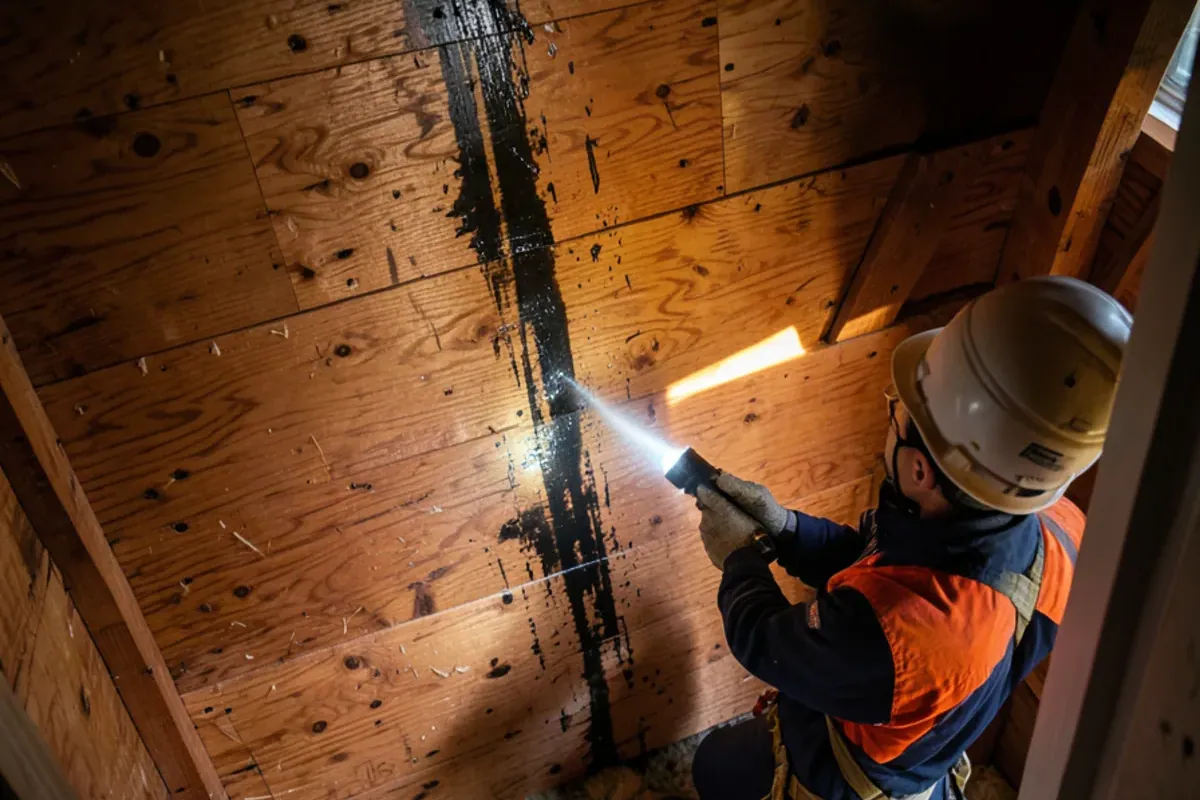
Urgent leak repair when another roofer's work is the cause
A leak right after a reroof usually points to flashing, a skylight seal or an exposed fastener. Customers have reported skylight leaks that began after another roofer's reroof. We photograph what we find and explain the cause. If the first roofer is still answering calls, you may want to contact them and give them a chance to fix their own work. If not, we step in. Details for a roof left unfinished are on our unfinished roof job rescue page.
Insurance and the leak
Your policy decides coverage. Sudden damage is usually covered and wear and tear is usually excluded. A leak from an old flashing may fall in the second group, and a leak from a wind-lifted shingle may fall in the first. Read your policy and call your insurer.
We document the damage, write the scope and meet the adjuster on site to walk it. We do not negotiate. Only the policyholder, the insurer or a licensed public adjuster does so in California. Inflating an invoice to absorb a deductible is insurance fraud (Penal Code §550).
What emergency leak repair costs
Emergency pricing is explained before work starts. These factors set it:
- How hard the leak is to trace
- Roof type, pitch and height
- Whether it is a quick patch or a larger covered area
- Weather and safety conditions
- The permanent repair that follows, which is a separate estimate
Ask for the price on paper before the seal goes on. Emergency repair contracts requested by the consumer are an exception to the usual three-day cancellation rule; check any roofer's license at cslb.ca.gov before you pay.
Permits and licensing for leak work
For urgent repairs inside the city, the Alameda Permit Center page sets the application deadline at the next working business day; ask who files it and confirm there. A larger repair, over about 200 square feet, generally needs a permit (PermitFlow, third party). The $1,000 minor work exemption applies only when no permit is needed and the person employs no one (B&P §7048), so a larger leak repair belongs with a roofer whose license you have checked.
Emergency leak repair across the East Bay
We repair leaks in Alameda and cover Oakland, Berkeley, San Leandro and Hayward. Trips across the bridges and the tube are slower at rush hour, and we say so when you call.