
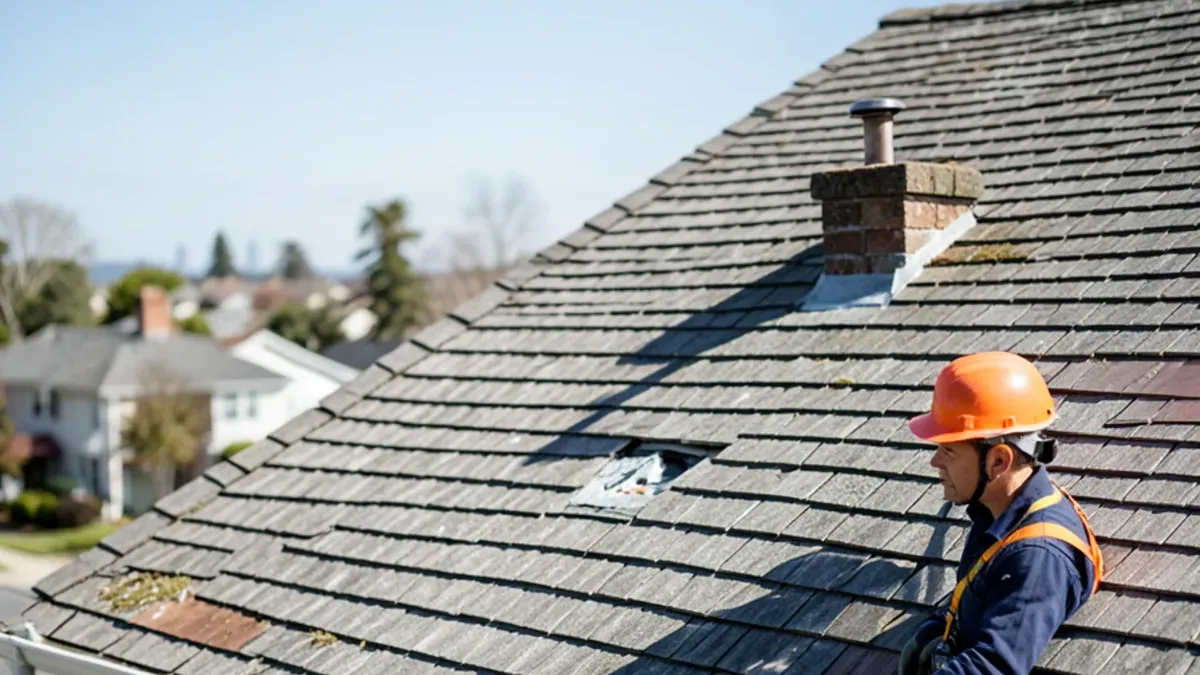
How do you decide between roof repair and replacement?
Repair when the damage is local and the roof has years left. Replace when the roof is near the end of its range, the damage is spread across it, or repairs keep recurring. Age, damage area, repair history and what is under the surface decide it, and a roofer's inspection photos should show all four.
California's contractors' board says the age of a roof is usually the major factor, that most roofs last many years if properly installed and often can be repaired rather than replaced, and that a typical residential roof is expected to last 15 to 20 years. It also says interior water damage often traces to one weathered area or to flashing, and that these problems do not necessarily mean you need a new roof.
| Factor | Points to repair | Points to replacement |
|---|---|---|
| Age | Inside its expected range | At or past the typical 15 to 20 years |
| Damage area | One spot, one slope, one flashing | Several slopes, widespread wear |
| Repair history | First or second fix | Repeat repairs in different places |
| Surface | Granules intact, tabs flat | Bare patches, curling, cracking |
| Deck | Dry and solid | Soft, stained or wet |
When is a repair the right call?
A repair is right when a defined fault explains the leak and the surrounding roof is healthy. A cracked pipe boot, a failed bead at a skylight, a few wind-lifted shingles or a bad flashing joint are all fixes, not reasons to tear off a roof.
One Alameda customer was told to wait rather than replace. Another got advice on keeping old shingles going. Three skylights on a different job were resealed rather than replaced. These were honest repair-or-wait calls, and the right answer on those roofs. A patch repair ran around $2,000 on one Alameda job, one customer's figure and not a price list.
Ask for the cause in writing and photos of the fault. A repair quote that cannot say why it leaked is a guess.
When does replacement make more sense?
Replace when patches have stopped working. The signs:
- The roof is at or past its expected range and the surface is worn
- Leaks show up in different places after each repair
- Granules are gone and shingles are curling or cracking
- The deck is soft or stained when sections are opened
- A tear-off would show layers that block new work
California's building code does not allow a new covering over a roof that already has two or more layers, so a two-layer roof means tear-off before anything else. See the shingle roof repair page for the repair side of the choice.
What about replacing only part of the roof?
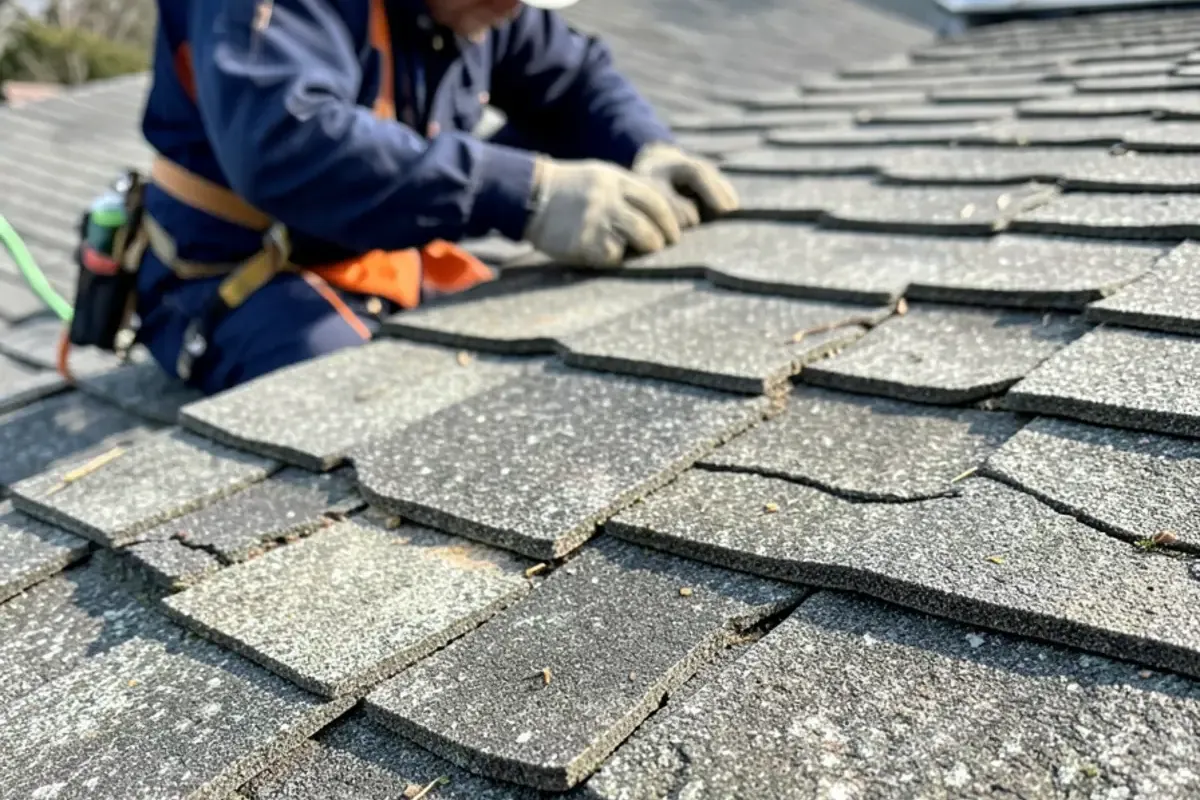
A partial replacement fits when one slope or section is damaged and the rest has life left. It costs less than a full roof, but it has limits. New shingles will look different beside weathered ones, matching a discontinued product can take a search, and a patched-in section does not extend the age of the roof around it. If the remaining roof will need replacing within a few years anyway, doing it all at once can cost less than paying for two mobilizations.
Five questions settle most cases:
- How old is the roof, and what range does the material usually reach?
- Is the damage in one place or in several?
- How many repairs has it already had, and were they in the same spot?
- Is the deck under the damage dry and solid?
- Do you plan to stay, sell or rent the home in the next few years?
If most answers lean toward trouble, plan the replacement. If the answers are mostly local and recent, repair and keep an eye on it.
What can you check from the attic before anyone climbs up?
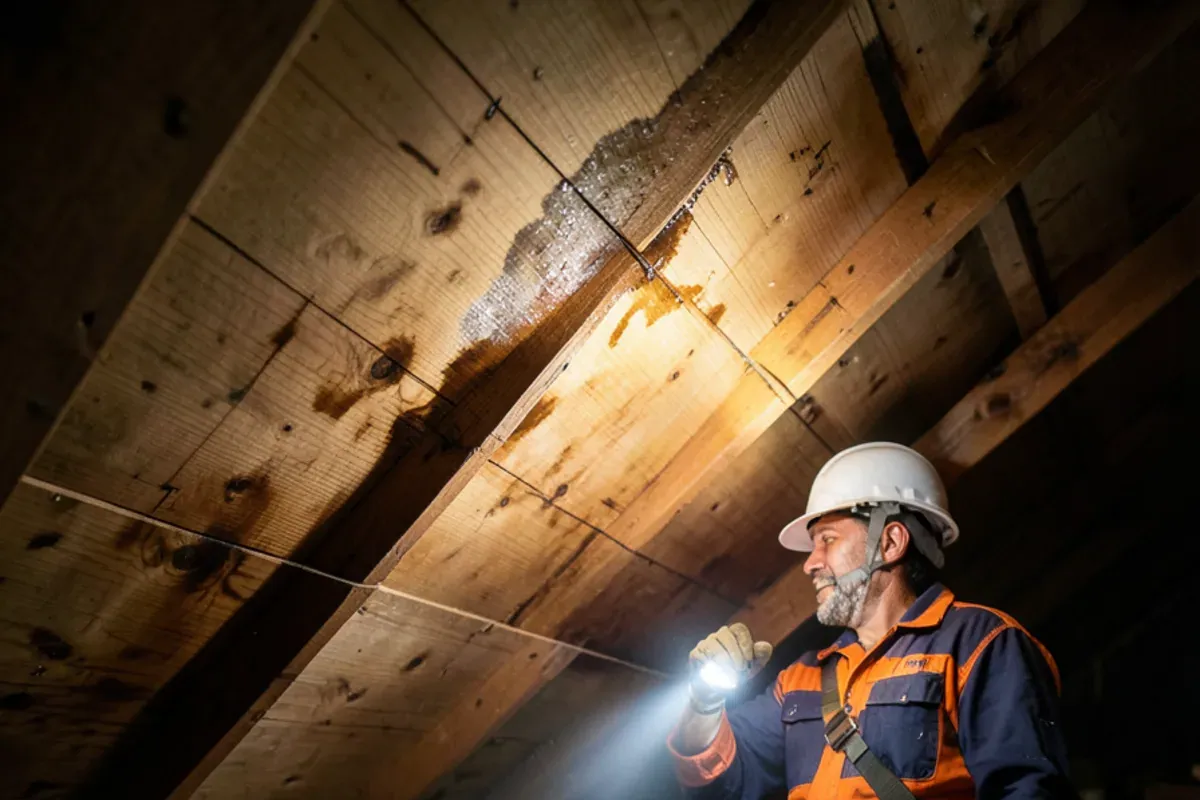
The attic tells you what the shingles hide. On a dry day, take a flashlight up and look at the underside of the roof deck, working from the eaves toward the ridge. Water leaves marks long before it drips.
- Dark or rust-colored stains on the sheathing, especially around nails and penetrations
- Daylight showing through the deck or around a vent pipe
- Damp or compressed insulation below a stain
- Soft, spongy or sagging boards when pressed with a screwdriver tip
- A musty smell or mildew on rafters near the eaves
One stain near one flashing points toward a repair. Stains on several slopes, or boards that give under pressure, point toward replacement. Take dated photos either way and keep them with your records, since photos matter for an insurance claim as well.
Does an older Alameda home change the decision?
It can. About 31.9% of Alameda homes were built in 1939 or earlier (Point2Homes), and many of those roofs have gone through more than one covering. The decking under an old roof is often the part that decides the scope. Aged boards turned up at tear-off on one Alameda job, and the change order was explained before work continued.
That is why a replacement bid on an older house should say what happens if the deck is bad. Ask how re-sheathing is priced and how the bid handles it, so a soft board does not become a surprise. The City of Alameda says most construction work needs a permit, so ask who pulls it and confirm with the Permit Center before the tear-off starts. For older homes in Alameda, the question of repair versus replacement often comes down to the deck, not the shingles.
What does insurance change?
Insurance depends on cause. The California Department of Insurance says homeowners policies usually exclude wear and tear and generally cover water entering through a hole created by a covered event such as strong wind. It also advises waiting for the adjuster to see damage before permanent repairs, and taking reasonable steps to protect the property in the meantime.
On our side we document the damage, write the scope and can meet the adjuster on site to walk the roof; only you, your insurer or a licensed public adjuster negotiates the claim. Never ask a roofer to inflate an invoice to absorb your deductible. California treats that as insurance fraud (Penal Code section 550). One Alameda customer reroofed after an insurer cancelled over an aging roof without an inspection, which is a reminder that age alone can change coverage.
What does each choice cost?
Cost depends on size, slope, layers, access, deck condition and materials. For a sense of scale, one 2026 Alameda pricing guide puts a full roof at roughly $8,500 to $35,000 or more, while a repair costs a small fraction of that. Neither number replaces a bid. Only the figure on a written estimate binds a roofer, and a second opinion is worth having on a high quote: one customer learned a much higher patch quote was too high.
How do you get a clear answer before you spend anything?
Get the roof inspected, ask what is repairable and what is not, and ask for photos. A good inspection tells you the roof's condition, the cause of any leak and the likely remaining service life, then lets you choose.
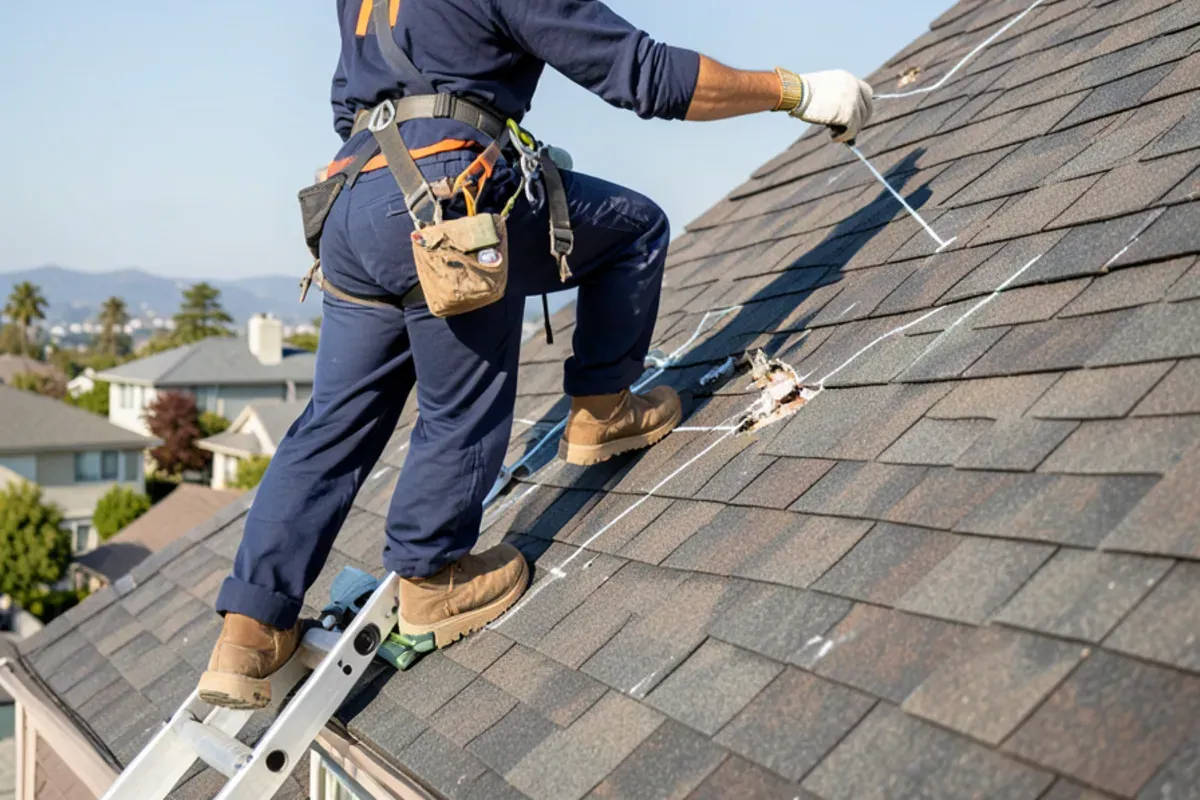
The wider roof repair services overview explains what repairs cover. If you are weighing a patch against a new roof, call us or ask for a free estimate, and we will lay out both options in writing for your Alameda or East Bay home.