
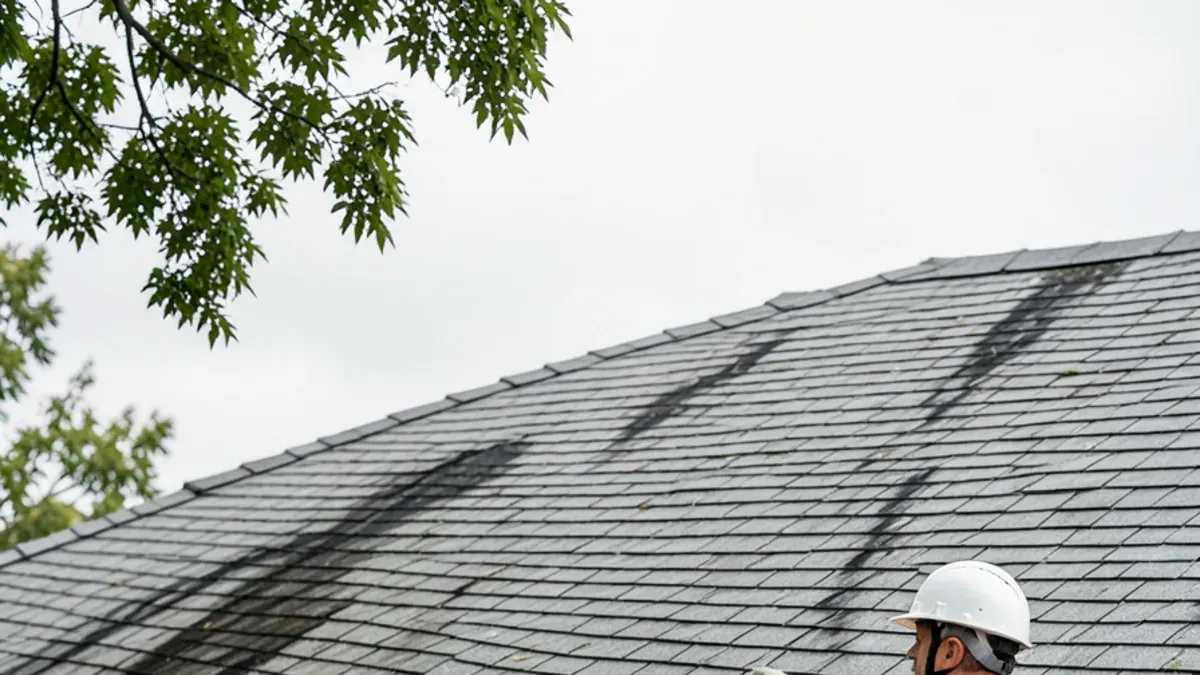
How do you know if your roof needs replacing?
Your roof needs replacing when several of these signs appear together: age near the end of its range, granule loss, curling or cracking shingles, leaks in more than one place, and sagging or soft decking. Any single sign can be repaired. A pattern means the whole surface is wearing out, and each patch buys less time than the last.
General industry ranges for asphalt composition shingles run from roughly 15 to 30 years, depending on shingle type, exposure and ventilation. Treat that as a starting point, not a verdict. Site conditions change it, and a manufacturer warranty length is not a lifespan.
What are the physical signs of an aging roof?
Walk the property and look up. You do not need a ladder for most of this.
- Granule loss. Dark grit in the gutters or at downspout outlets, and bare patches on the shingles.
- Curling or cupping. Tabs lifting at the edges or bowing in the middle.
- Cracking and missing tabs. Especially on the south and west slopes.
- Shiny or dark patches where the asphalt shows through.
- Sagging along the ridge or between rafters.
- Exposed nail heads and rust streaks.
- Daylight in the attic around vents or between boards.
- Moss or algae thick enough to hold water against the shingles.
Check the attic as well. Dark streaks on the underside of the decking, damp insulation and rusty nails all say the roof has been leaking, even if the ceiling looks fine.
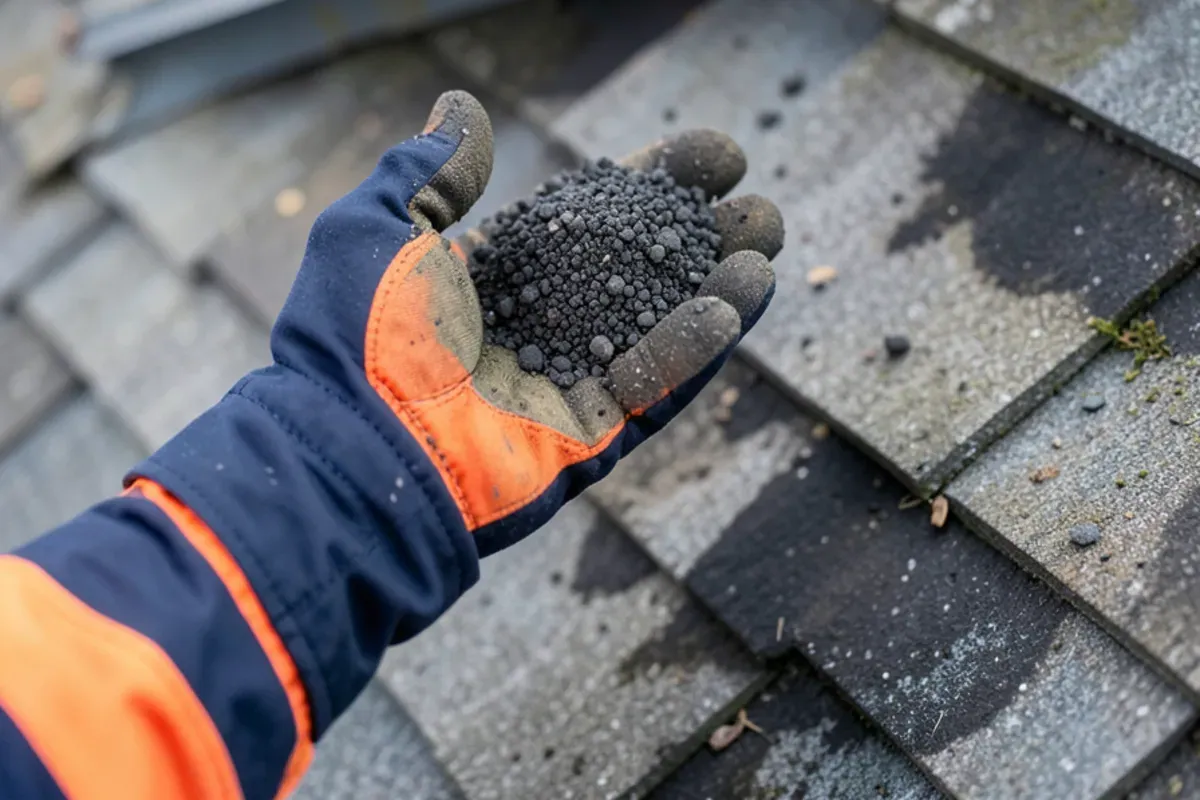
Repair or replace: how to decide
Use the table to weigh the signs.
| What you see | Usually points to |
|---|---|
| One leak at a pipe boot or flashing | Repair |
| A few lifted or missing shingles after wind | Repair |
| Granules in the gutters across the whole roof | Replacement soon |
| Curling on most slopes | Replacement |
| Leaks in several places, or return after repair | Replacement |
| Soft or sagging decking | Replacement, with decking repair |
| Two layers already on the roof | Tear-off, if you reroof |
The two-layer line is a code rule, not a preference. California Building Code reroofing rules in Chapter 15 do not allow a new covering over a roof that already has two or more applications. Three layers is never an option.
Why do repeated leaks mean a new roof?
Repeated leaks mean the roof is failing at many points rather than one. Shingles that have lost their granules and flexibility crack at nails and lift in wind, so each repair pulls up neighboring shingles that are brittle. A roofer can fix a vent boot in an hour, but if the next storm finds three other weak points, the repair bills keep stacking up on a roof that is nearly done.
Count the repairs in the last few years. If the same slope has needed attention more than once, ask for an inspection that includes the attic and a plain recommendation on repair versus replacement.
What does a roofer test that you cannot see from the ground?
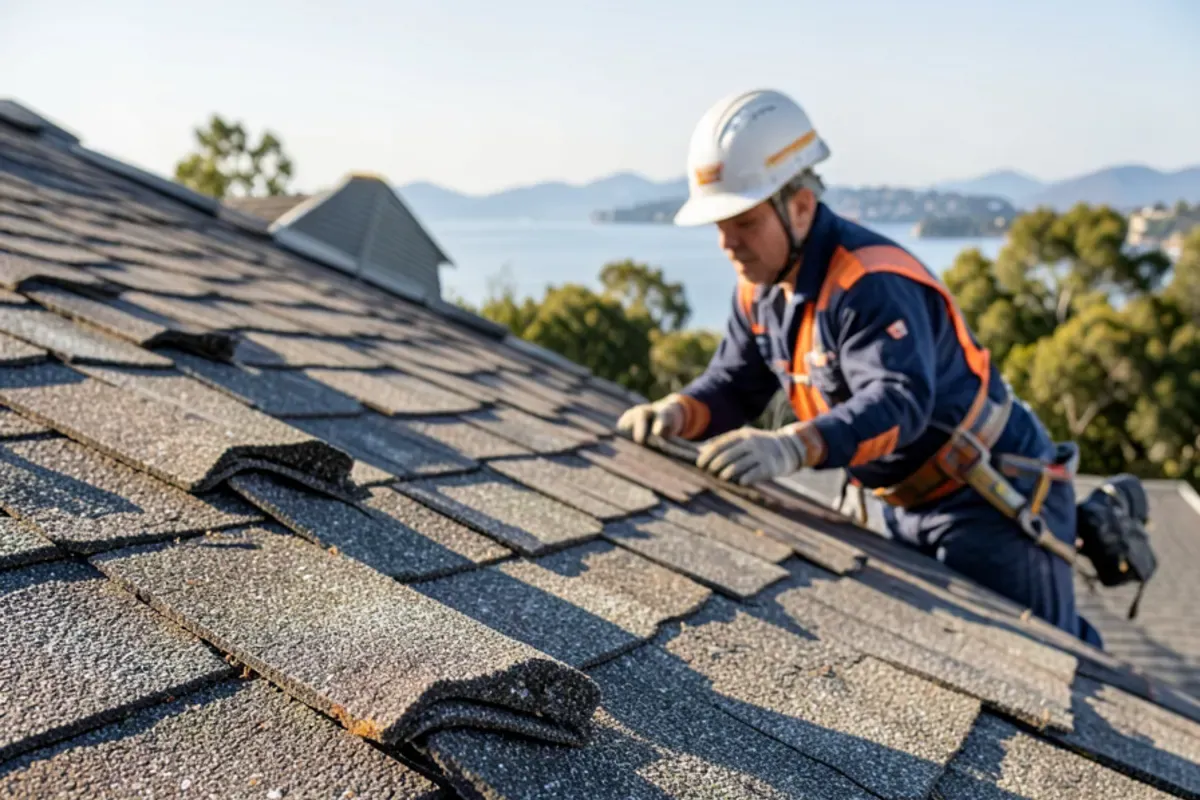
An inspection adds touch and structure to what you saw from below. A roofer does four things you cannot do from the yard:
- Lifts tabs to see whether the shingle bends or cracks, which shows brittleness
- Checks the nail pattern and sealant strips for lift
- Walks the slopes to feel for soft decking and sag between rafters
- Inspects flashing, vent boots and valleys, which often fail before the shingle field does
The test that matters most is the nearest to the failure point. A roof with sound shingles and failed flashing is a repair job. A roof with brittle shingles on every slope is a replacement, even if the flashing is fine. The honest recommendation separates the two and says which slopes are worse, because sometimes the south and west sides are done and the north side has years left.
That split is the trade-off to ask about. Replacing only the worn slopes can save money, but it leaves a roof with mixed ages and mixed colors, and matching materials can be hard. Replacing everything costs more now and gives one start date, one set of warranty papers and one set of flashing. One Alameda customer had matching materials tracked down and delivered for a partial shingle repair, which shows it can be done when the roof is mostly sound.
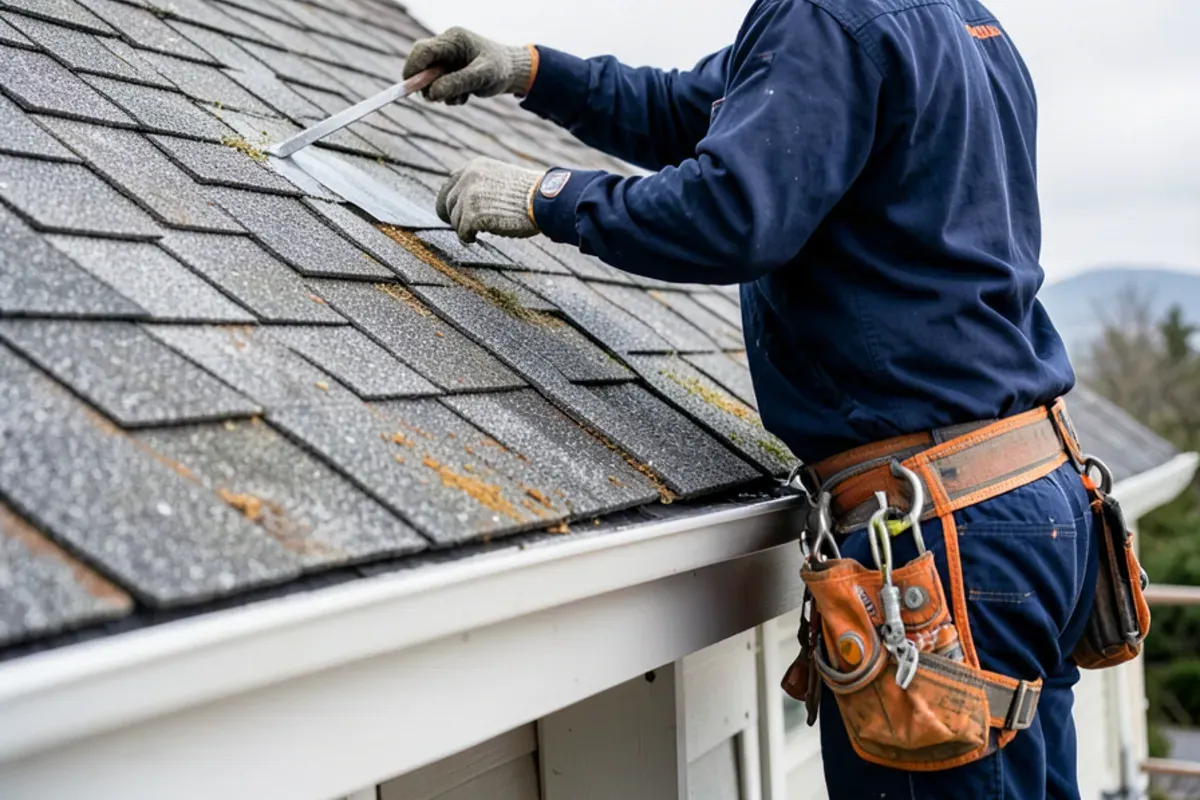
When should you schedule a replacement in Alameda?
Book before the rains and aim for a dry-season tear-off. ZIP 94501 gets about 22 inches of rain a year, almost all of it from October through April (BestPlaces), and an open deck should not sit through a storm. Crews also fill up before October. If an inspection says the roof will not last another winter, treat that as a deadline, not a suggestion.
If the roof is old but holding, a summer inspection gives you the full dry season to plan, compare estimates and order materials. Customers have reported reroofs finished in one day on several homes and about 10 hours on one, though the time depends on roof size, decking and weather. See new roof installation for how a tear-off and install day runs.
What we tell Alameda homeowners about waiting
Replacement is not always the answer. We once advised an Alameda customer to hold off on replacing. Another got advice on keeping old shingles going a while longer. A roof that is old but still sound can sometimes be maintained with careful repairs, as long as the decking is solid and there is a plan.
Insurance can force the question. One customer's policy was cancelled over an aging roof without an inspection, and the customer reroofed. Another reroofed partly to reduce homeowners insurance costs. Ask your insurer what they look at, because roof age and condition can shape coverage.
When the answer is replacement, the choice of material comes next. See roof replacement for the full process and asphalt shingle roofing for composition roofs.
What can you check yourself in ten minutes?
A short walk-around can tell you whether to call a roofer now or in a year. Do it on a dry day from the ground and the attic.
- Count the repairs over the last five years and note where they were
- Look at the gutters and downspout outlets for grit
- Scan each slope with binoculars for curling, cracks and bare spots
- Check the ridge and hips for missing or cracked caps
- Go into the attic and look for stains, daylight and damp insulation
- Photograph anything that looks different from the rest of the roof
Compare slopes against each other. The side facing the afternoon sun often ages first, so a roof can look fine from the street and be worn out on the back.
Keep the photos and a note of the roof's age if you know it. Records from a previous roofing job, such as the date and the type of shingle, help any contractor judge what you have.
If you find two or three of these signs, book an inspection while the decking is probably still sound. Waiting until water is coming through the ceiling adds decking and interior problems to the bill.
What happens next after the inspection?
A good inspection ends with photos, a plain statement of condition and a written estimate. Compare the estimate for tear-off, decking allowance, underlayment, flashing and drip edge. The total on that written estimate, not a rule of thumb, is what you plan around.
Start at the home page if you are in Alameda, then call the office and ask for a free inspection. An inspection can end in "wait" as easily as "replace."