

How often should you clean gutters under big trees?
Clean them at least twice a year, and add a third pass when large trees overhang the roof. For most homes that means a pass after the main leaf drop in late fall and another in late winter or early spring, with a quick check after any heavy storm. A house under a mature canopy on an East Bay street should plan on three or four passes a year, not two.
NRCA, the roofing contractors' association, recommends inspecting a roof system at least twice a year, preferably spring and fall, and paying special attention to valleys, gutters and roof drains, where debris builds up and restricts drainage. The State of California's contractor board makes the same point in its roofing guide: leaves in valleys and clogged gutters can push water back under the shingles at the eaves.
| Situation | Starting schedule |
|---|---|
| Few or no overhanging trees | Spring and fall |
| One large tree near the roof | Spring, after leaf drop, and after the first big storm |
| Several large trees, or needle-shedding conifers | Every two to three months from October through April |
| Rental you do not see often | Same as above, on a calendar reminder |
These are starting points, not rules of physics. Watch what your own gutters collect and adjust.
Why does the season matter in Alameda and the East Bay?
The rain falls in one stretch. Alameda gets about 22 inches a year, almost all of it from October through April (BestPlaces), so a gutter that is full on the first storm of the season spills for months. Clearing before the rains start is the pass that counts most.
Leaf drop timing varies by tree, so a street of mixed species can feed gutters from October into December. A single early clean can be buried by the next wave. If your street is lined with the same large tree, time the second pass for when it finishes shedding, not by the calendar.
What are the signs your gutters need attention sooner?
Look from the ground after a rain. Any of these means the schedule above is too slow for your house:
- Water sheeting over the front edge instead of running to the downspouts
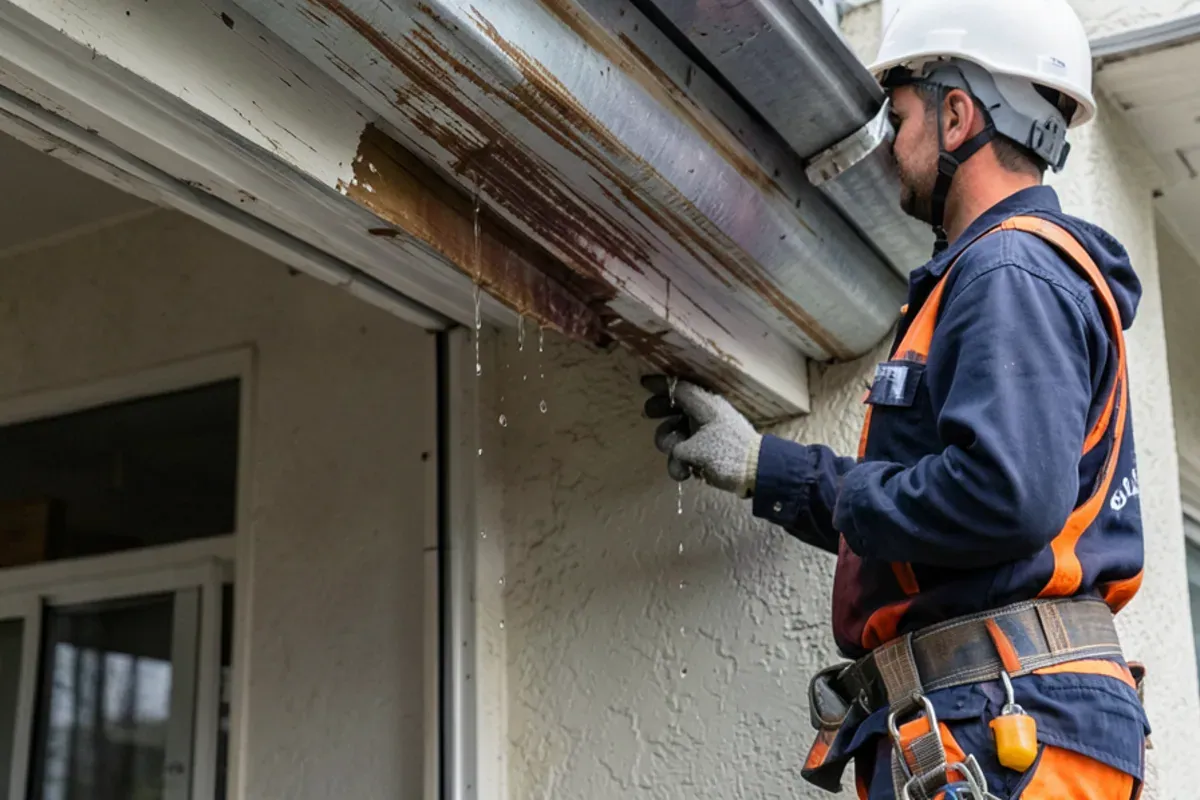
- Stains or streaks down the siding or fascia behind the gutter
- Plants or seedlings growing out of the trough
- A downspout that trickles, gurgles or dumps at the elbow
- A run that sags or pulls away from the fascia
- Soil washed out or pooled at the foundation under a downspout
A downspout clog is the usual culprit behind overflow, and the quick test is to flush it with a hose at the top and watch the bottom. Standing water in a run tells you the pitch has shifted or a downspout is blocked.
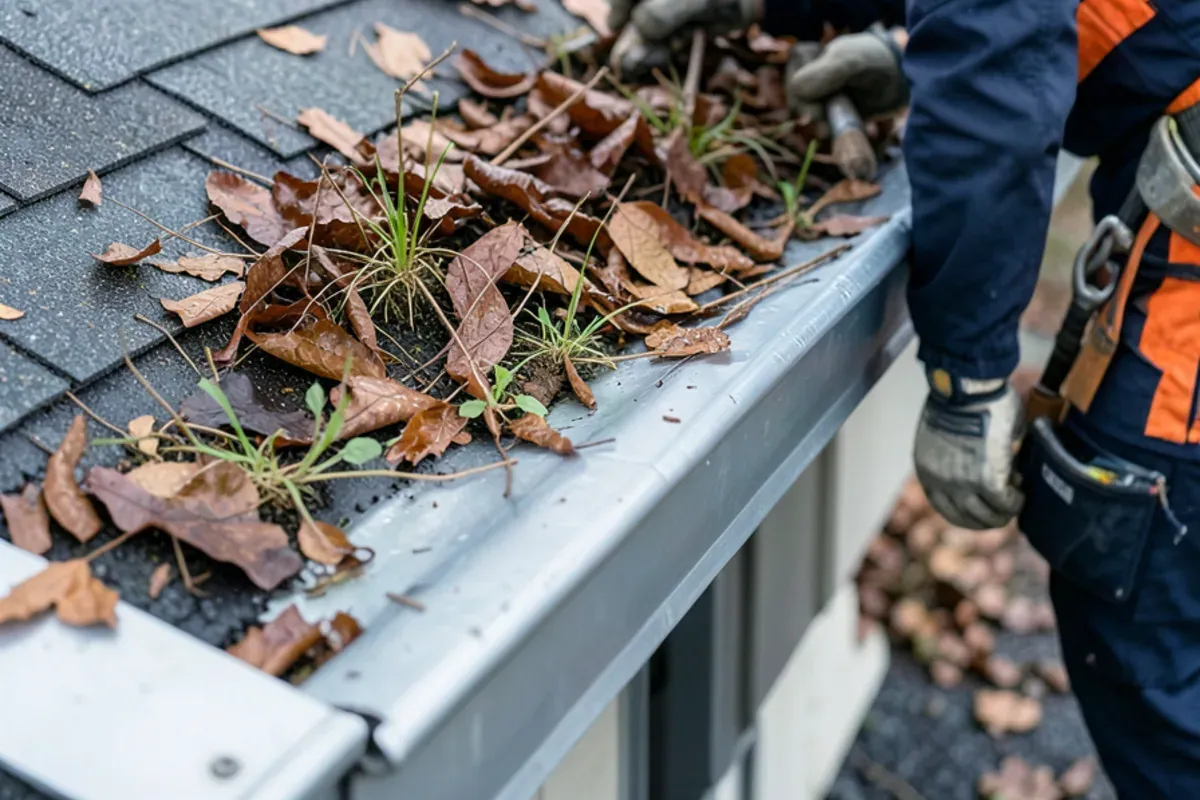
What does a year of gutter care look like under street trees?
Plan the year around the rain, because the first October storm is the deadline. This calendar suits a house with one or two large deciduous trees overhead. Shift it a month either way to match your species.
| When | What to do |
|---|---|
| September | Clear the run and flush downspouts before the first storm |
| Late November to December | Second pass once the main leaf drop is finished |
| After a heavy storm | Walk the house during the rain and look for overflow |
| February to March | Check hangers, seams and fascia, then clear spring seed debris |
| Late spring | Look at the roof valleys and trim branches that touch the roof |
Walking the house during a downpour is the best free test. Water that sheets over the front lip, or pours out of a corner joint, shows you exactly where the system fails.
What happens when clogged gutters sit for months?
Water backs up behind the trough and soaks the fascia board, and the damage starts where you cannot see it. The CSLB roofing guide warns that leaves in valleys and clogged gutters can push water back under the shingles at the eaves. A fascia that stays wet rots, and rotted fascia cannot hold a gutter, so the run starts to pull away.
The cost curve is steep. A cleaning visit is a small job, while rotted fascia and soffit mean a carpentry repair before the gutter goes back up. If you find a soft board, see our notes on fascia and soffit repair.
Does debris in gutters matter for fire safety too?
Yes, for homes near the hills. CAL FIRE's Ready for Wildfire guide says the roof is the most vulnerable part of a home, and it recommends removing leaves, pine needles and other debris from the roof and keeping gutters free of plant debris. It also suggests noncombustible gutter covers.
Alameda itself is a flat island, so this is not a local hazard here. It does matter for owners of rental or family properties up in the Oakland, Berkeley or Piedmont hills, where dry needles and leaves pile up by late summer. The September pass in the calendar above does both jobs.
Are gutter guards worth it?
Sometimes. Guards cut the rate at which leaves collect, which helps most under heavy canopy and on rentals nobody checks. They do not remove the need to look. Fine debris still lodges on top, and a guard can hide a clog until the overflow shows. Compare the cost against what the gutter-cleaning visits cost over a few years. The gutter guard page explains the types.
What we see on gutter jobs in Alameda
During one Alameda reroof, the crew cleared junk out of the customer's gutters as part of the visit, and the same job later added gutters after the new roof went on. Another Alameda owner had deeper gutters fitted around a whole house, and one owner with three rental homes had gutter work done across those properties. The common thread is that gutters are easy to forget until a roof job exposes what has been collecting for years.
Rentals deserve their own line. A tenant will not climb a ladder, and an out-of-sight clog can run for months before water stains show up inside. Put the dates on a calendar and have the cleaning done on a fixed schedule. For homes under street trees in Piedmont, about 18 minutes from our Webster St base, we cover that area; see the Piedmont service area.
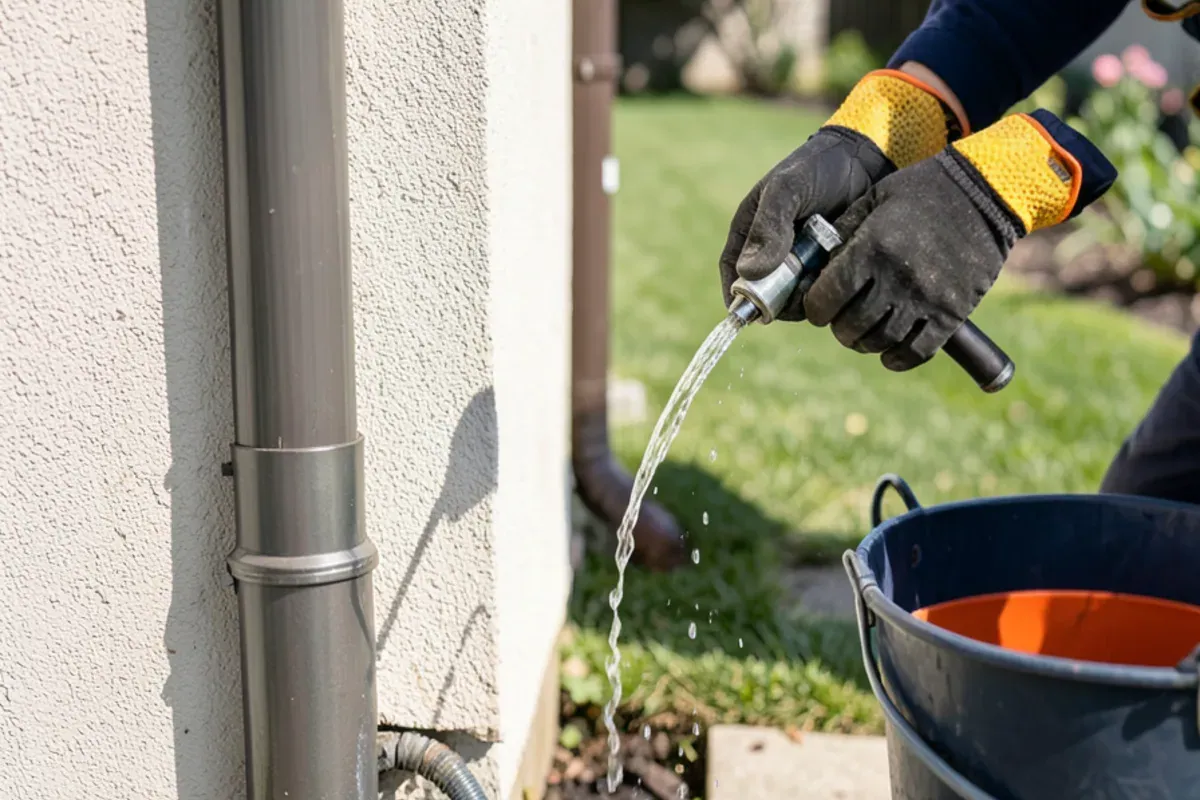
Should you clean them yourself or hire it out?
Do it yourself only from a stable ladder on a single-story eave, with gloves and a helper to foot the ladder. Skip it on a second story, on a steep lot, or when the eave sits above a hard surface. NRCA also advises that inexperienced people stay off roofs, so the gutter job stops at the ladder; anything past the eave goes to a roofer.
A paid visit should cover the whole run, not just the visible leaves. Ask that it include flushing every downspout, checking the hangers and seams, and a note of any fascia that looks soft. The gutter cleaning page lists what a visit covers. A soft fascia board means water has been sitting behind the gutter, and that is a repair, not a cleaning.
Gutter cleaning checklist
- Clear the gutter by hand or with a scoop, working toward the downspout.
- Flush each downspout with a hose and check the outlet.
- Look for loose hangers, open seams and low spots that hold water.
- Check that water leaves the splash area and moves away from the foundation.
- Note the date and what you found, so the next pass is faster.
For the wider picture on gutter repair and replacement, start at the gutters overview. If you would rather hand the job off, call us or ask for a free estimate and we will look at the run and the downspouts.