
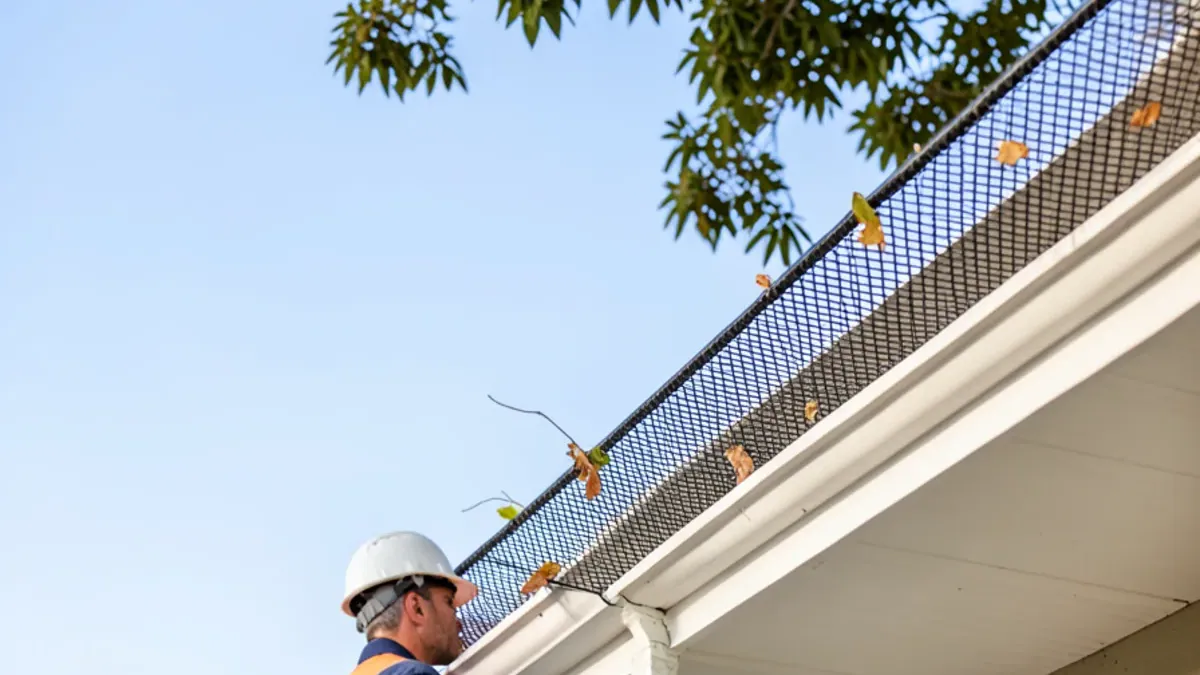
Do you need gutter guards, or just a cleaning schedule?
Guards earn their place where debris falls faster than you will clean. If you can clear the gutters twice a year without trouble and they stay clear, a cleaning schedule costs less. If your gutters clog by midwinter, if a limb overhangs a long roof plane, or if the gutters are two stories up and a ladder is a real risk, guards make sense.
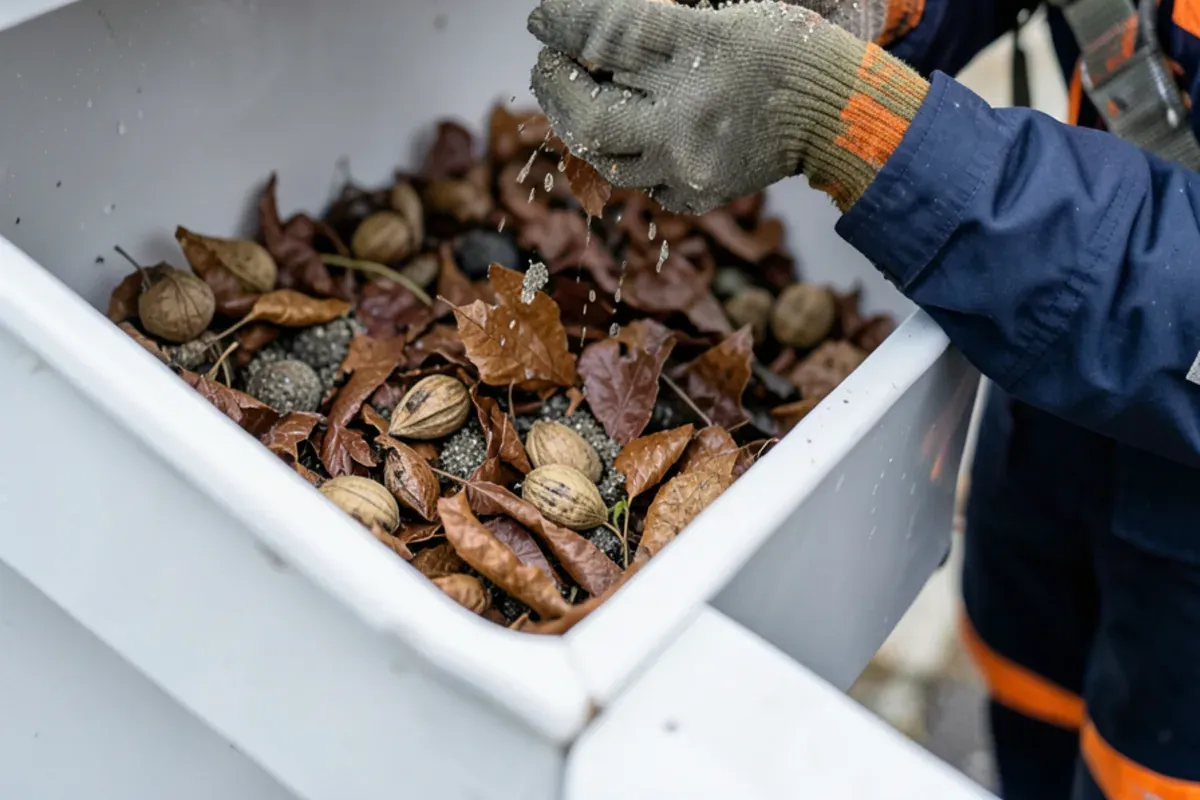
We start by looking at what is in your gutter now. Leaves, needles, seed pods and shingle grit each call for a different guard, and the roof tells us how hard the water will come.
What gutter guard installation includes
A guard installation is a defined list, not just a clip-on:
- A visit to look at the gutter, pitch, fascia and the roof edge
- Cleaning and flushing the gutters and downspouts first
- Repairs to hangers or seams that would hold the guard crooked
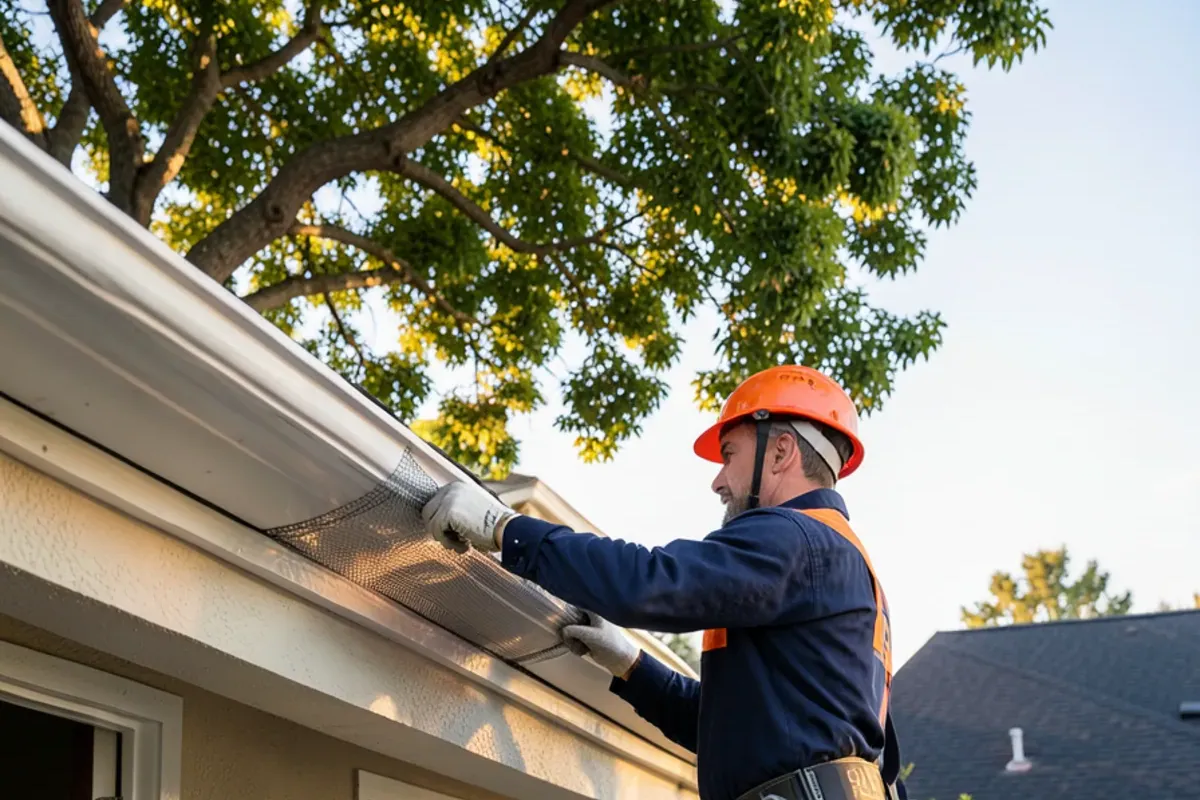
- Guard fitted to each run, cut to length, fixed per the design
- A water test to confirm flow into the gutter
- A written note of what was installed and how, kept with your estimate
Installing over a dirty or sagging gutter traps the problem under a screen. We clean first.
How a guard installation runs
- A visit is booked, often within a day, and the estimate is written with photos.
- We pull a sample of what is in the gutter and note which trees it came from.
- Gutters and downspouts are cleaned and flushed, and weak hangers or seams are fixed.
- The guard is cut and fixed run by run in the design we agreed.
- We run water through to confirm it enters the gutter and does not overshoot.
- Debris is hauled off, photos arrive the same day, and warranty paperwork follows.
Leaf guards, mesh gutter guards and gutter screens compared
There are four common types.
- Perforated or louvered screens. Metal or plastic with holes. Low cost. Leaves stay on top, but fine debris and shingle grit get in.
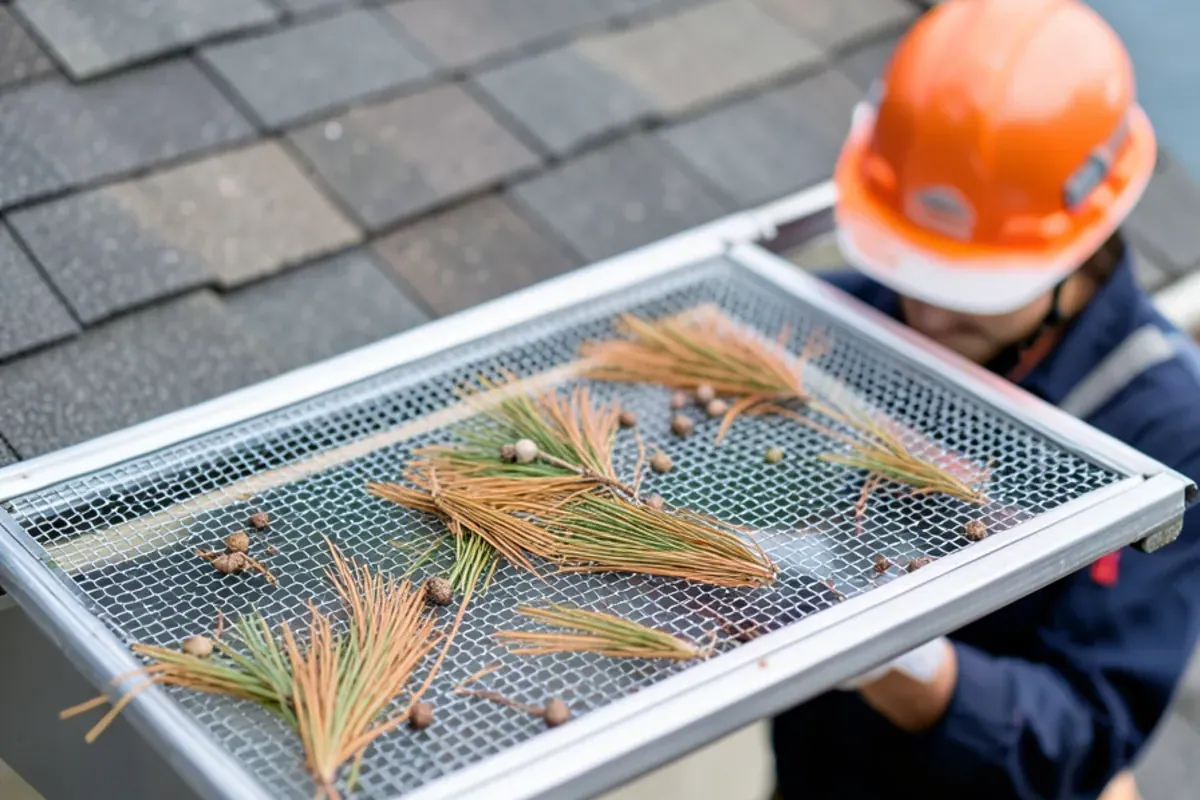
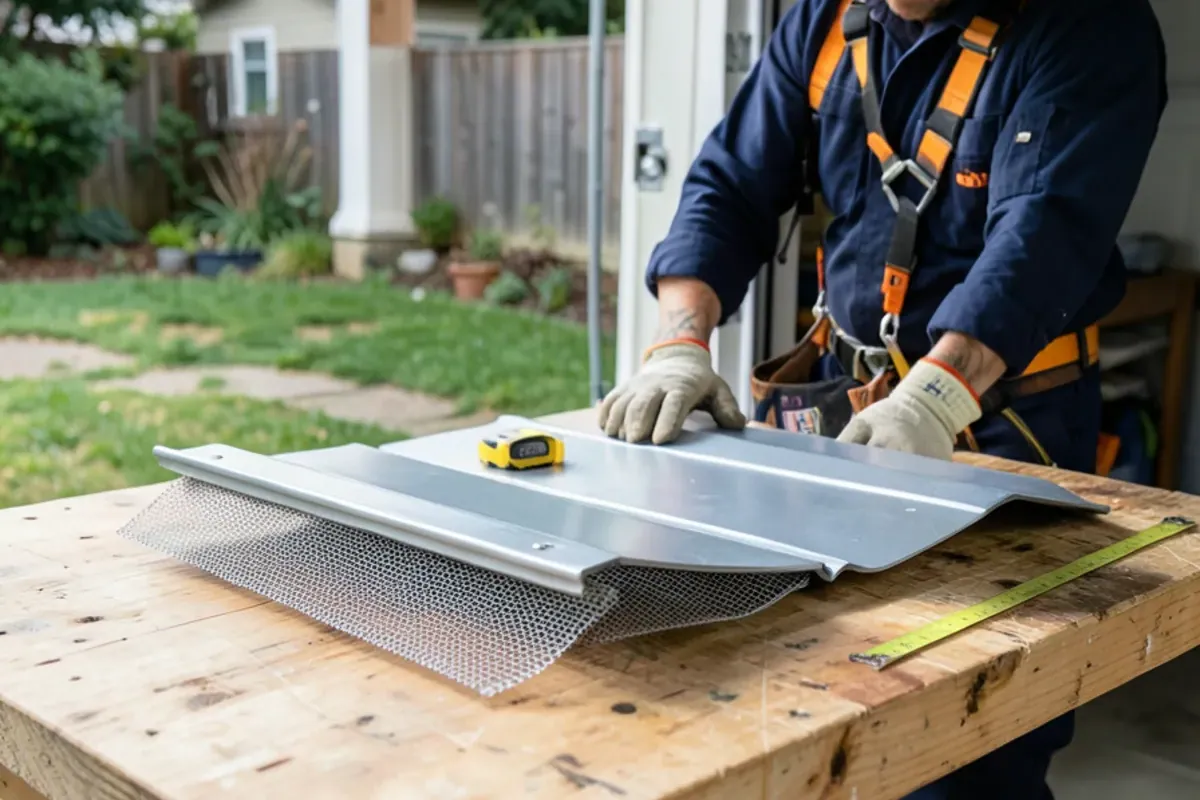
- Mesh gutter guards. A fine screen, usually stainless steel, held in a frame. Fine debris stays out. Pine needles lie on top instead of dropping through the holes. More cost, and the mesh needs an occasional brush-off.
- Reverse-curve or surface-tension covers. A solid hood that water clings to and curves into the gutter. Debris slides off the front. These depend on enough pitch, and in a downpour they can send fast water over the front lip.
- Foam or brush inserts. Cheap, easily fitted, and they hold wet debris. They tend to need replacing sooner.
Best gutter guards for pine needles and fine debris
Fine micro-mesh handles pine needles best, because the openings are smaller than a needle's width. Coarse screens let needles lay across the openings and slip through endwise. Where pines or other conifers overhang the roof, mesh is the usual answer. A brush across the surface once or twice a year keeps it clear.
Fine seed fuzz and pollen build a film on any mesh over time. Rain washes much of it away, but not all. This is why guards reduce cleaning and do not end it.
How we decide which guard to use
Roof pitch, roof plane size, tree type and gutter size decide it.
- Steep pitch, large plane: the guard must not send fast water past the gutter. Mesh in a frame is safer than a solid hood.
- Low pitch: surface-tension covers may not pull water in at all.
- Heavy fine debris: micro-mesh.
- Few large leaves only: perforated screen may be enough.
- Undersized gutters: upsizing the gutter may be better than adding a guard.
We also look at how the guard attaches. Some designs slide under the first row of shingles. That can raise questions with the roof manufacturer's warranty, so ask what your warranty says, and let us know before we choose. The terms for any guard and workmanship go in your contract in writing.
Gutter covers cost: what drives it
We do not quote prices without seeing the roof. Costs depend on:
- Linear feet of gutter to cover
- Guard type, with fine mesh at the upper end and foam at the lower
- Story height, and whether ladders or staging are needed
- Gutter condition, since repairs add to the job
- Whether the gutters are cleaned and flushed first
Guards can look cheap per foot and become costly on a large house. Get the estimate in writing and compare footage, type and fastening method. Hold the quote to what it spells out in writing.
Rules for gutter guards in fire-hazard areas
In mapped wildfire areas, California's building code has required roof gutters to have a means to keep leaves and debris out (R337.5.4 in the 2022 code, per the City of Los Altos Hills summary), and later editions may renumber it. CAL FIRE's Fire Hazard Severity Zone viewer shows whether your parcel is mapped. Look your parcel up, and confirm the current section with your building department before picking a material.
Where guards fail
Guards fail when they are fitted to the wrong gutter, installed over a clog or left alone for years. A guard clipped into a sagging gutter makes a crooked screen that holds water in the wrong place. A guard over a downspout that is already clogged just hides the clog.
If the gutter is the problem, fix it first. Our gutter and downspout repair page explains how we handle sagging, leaking and loose runs.
Gutter guard installation for rentals and older homes
Owners with several properties often ask for guards on gutters they would otherwise clear every fall. One customer had gutter work done on three rental homes. A guard only makes sense there if it is low-maintenance and the gutters are sound. On older homes, check the fascia first. About 31.9% of Alameda homes were built in 1939 or earlier (Point2Homes), and original fascia can hide rot. Our fascia and soffit repair page covers when to replace wood before attaching anything.
Gutter guard installation across the East Bay
We install guards in Alameda and cover Oakland, Berkeley, Hayward and San Leandro. Our office is at 1910 Webster St on the West End. Bridge and tube traffic changes drive times, so we confirm the visit window when you book.