
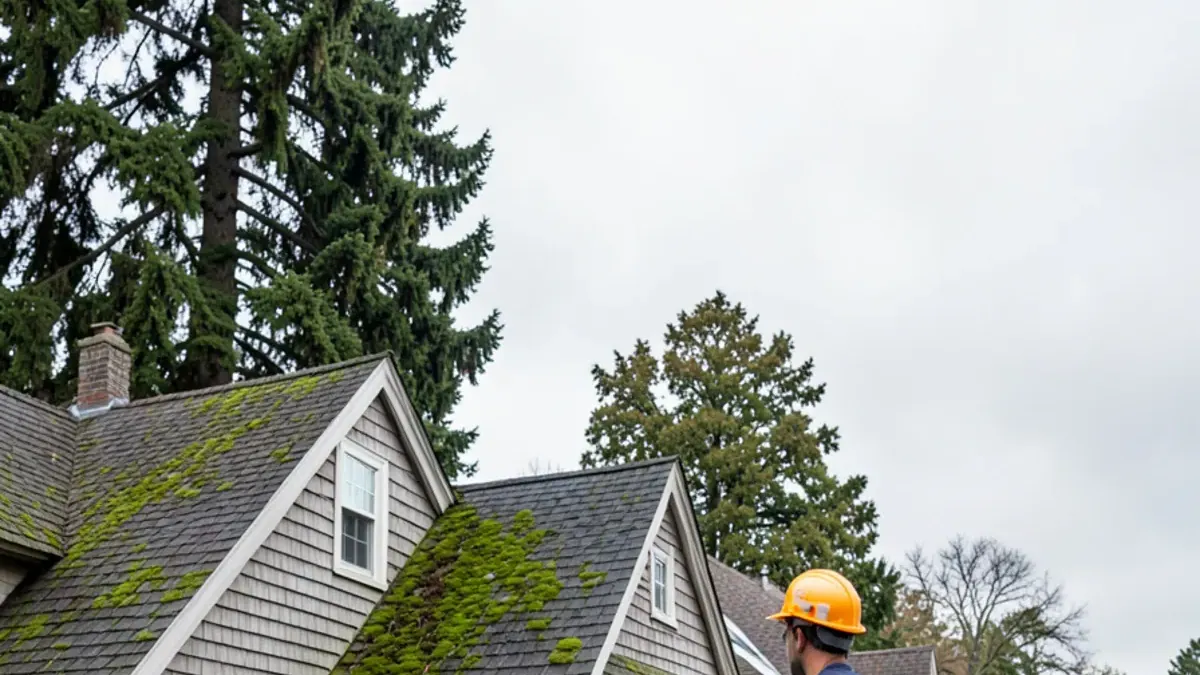
What is the difference between moss and algae on a roof?
Moss is a plant that grows in thick green cushions and can damage shingles. Algae is a thin brown or black streak that stains them. Treat the two differently: moss needs removal and a fix for the shade or debris feeding it, while algae usually needs nothing urgent. Gentle hand removal beats a pressure washer in every case.
ARMA, the asphalt shingle manufacturers' association, says moss can lift the edges of shingles, which raises the risk of wind blow-off, and in severe cases lets water move sideways under the shingles to the deck. It says algae is mostly a cosmetic stain.
| Moss | Algae | |
|---|---|---|
| Look | Raised green or brown cushions | Flat black or dark brown streaks |
| Where | Shaded slopes, gutters, valleys | Often the north side, below ridges |
| Harm | Lifts edges, holds water | Mostly stains |
| Action | Remove and fix the cause | Clean if you want, no urgency |
How do you remove moss from a roof safely?
Remove it from the ground when you can and hand anything that needs a roof climb to a roofer. NRCA does not recommend that homeowners or inexperienced people walk on a roof without the right experience and equipment.
ARMA's method for asphalt shingles is a 50:50 mix of laundry-strength liquid chlorine bleach and water. Spray it on, leave it 15 to 20 minutes, rinse with low-pressure water and never let it dry on the roof. The moss loosens over days and a leaf blower clears it. Oregon State University adds a gentler option: scrape or sweep with a dull putty knife or a stiff-bristle brush. Severe cases need more than one round.
- Cover or wet down plants below, since runoff is harsh on landscaping.
- Apply the solution from a ladder-safe position or leave this step to a roofer.
- Wait for the timing above, then rinse gently.
- Let dead moss release and blow it off dry.
- Check the tab edges for lifting once the surface is clean.
Why is a pressure washer the wrong tool?
A pressure washer strips the protective granules off asphalt shingles. ARMA states that high-pressure washing causes granule loss and likely premature failure of the roof system. Oregon State likewise advises against it on roofs, because it damages shingles.
The harm is not always visible that week. Bare, shiny patches appear later and the shingle ages faster. Read the shingle manufacturer's warranty before any cleaning, because the terms control what treatment is allowed.
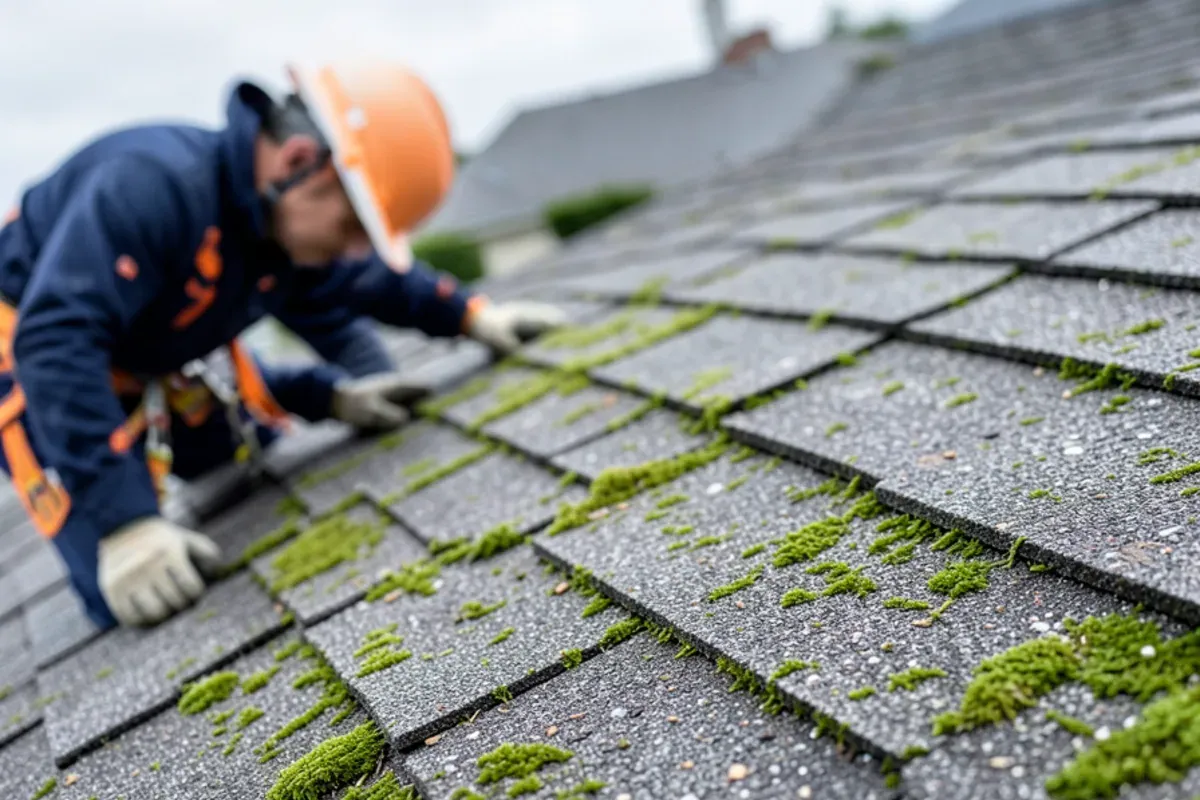
Can a moss killer do the job instead?
A moss killer kills growth but does not stop it coming back, and you still have to remove the dead material. Oregon State University lists soap-type active ingredients such as potassium laurate and ammonium salts of fatty acids as home-use options in Oregon, and warns that products containing zinc or copper are corrosive and toxic to people, pets, plants and aquatic life.
Timing matters. Oregon State says not to apply a mossicide when rain is expected within 24 hours, because it washes off and can reach waterways. In the East Bay that rules out most of November through March, so spring and early fall are the practical windows. Read the label for your state before you buy.
Can you spot trouble from the ground?
Yes, and it is the safest first check. Stand across the street or in the yard with binoculars and look at the shaded slope before anyone climbs a ladder.
- Green cushions packed into valleys and along the lower edge of the slope
- Shingle tabs that stand up or curl at the corners
- Granules piled in the gutter or at the downspout outlet
- A downspout from an upper roof that empties onto the lower roof instead of into the gutter
- Sagging or overflowing gutters under the mossy section
ARMA recommends routing a downspout from an upper roof into the lower gutter, because water landing on the shingles keeps that slope wet. If you see any of these, an inspection is cheaper than guessing.
When does moss mean repair instead of cleaning?
Clean when the shingles lie flat and the surface is intact. Call a roofer when any of these show after the moss is off:
- Tab edges that stay curled or lifted
- Bare, shiny patches where granules are gone
- Cracked or missing shingles along valleys and eaves
- Brown stains on attic sheathing or ceilings below the shaded slope
Each of these means water has been getting past the surface. A shingle repair or a section replacement costs far less than the deck damage that follows if the water keeps coming. The roof maintenance page explains what a yearly visit covers.
Would a different roof material avoid the problem?
A metal roof sheds moss better than shingles do. Oregon State notes that moss does not root easily on metal, though the higher upfront cost is a trade-off, and debris and shade still hold moisture at the seams and valleys. For shingles, ARMA points to algae-resistant products, including copper-granule shingles, which are worth pricing at the next replacement. They resist algae and moss, but they do not remove the need to trim branches and keep gutters clear.
Do zinc strips keep moss away?
Not reliably, and not on an existing roof. ARMA treats zinc or copper strips as an option to include when a new roof goes on. It does not recommend adding them to an old roof, because installation means exposed nails that can leak over time or a broken sealant bond that invites wind damage. Oregon State does not recommend them either, since the strips are nailed in place and metal washes into runoff that harms aquatic life.
What we see on shaded roofs around the bay
Moss rarely arrives alone. It sits where shade, leaf litter and a clogged gutter keep a slope damp, and the water it holds is what matters. On one Alameda job, a customer with an older roof asked how long it could go, and the answer was advice on keeping the existing shingles going and waiting, not a quote for a new roof. On another, aged decking turned up at tear-off and was explained as a change order before work continued.
That second job is the reason to look under the moss. Surface growth is cheap to treat. Wet sheathing is not, and you only learn which you have when someone checks the shingle edges and the attic side. Alameda gets about 22 inches of rain a year, almost all of it October through April (BestPlaces), so a slope that stays shaded through that stretch stays wet. We cover wooded hillside streets too. Orinda is roughly 29 minutes from our Webster St base, longer in Caldecott Tunnel traffic. See the Orinda service area for what we cover there.

What does a moss visit look like on a shaded roof?
It starts with the edges, not the cushions. A roofer checks whether tabs lie flat, looks for bare patches, probes the valleys and then looks at the attic side under the shaded slope for staining. Photos of each problem area go into the written estimate, so you can see what we saw.
The usual outcomes are three. A clean roof with sound shingles needs removal and a branch trim. A roof with a few lifted or cracked shingles needs a shingle repair alongside the cleaning. A roof with soft decking under the moss needs a larger scope, and the estimate says so before work begins.
How do you keep moss from coming back?
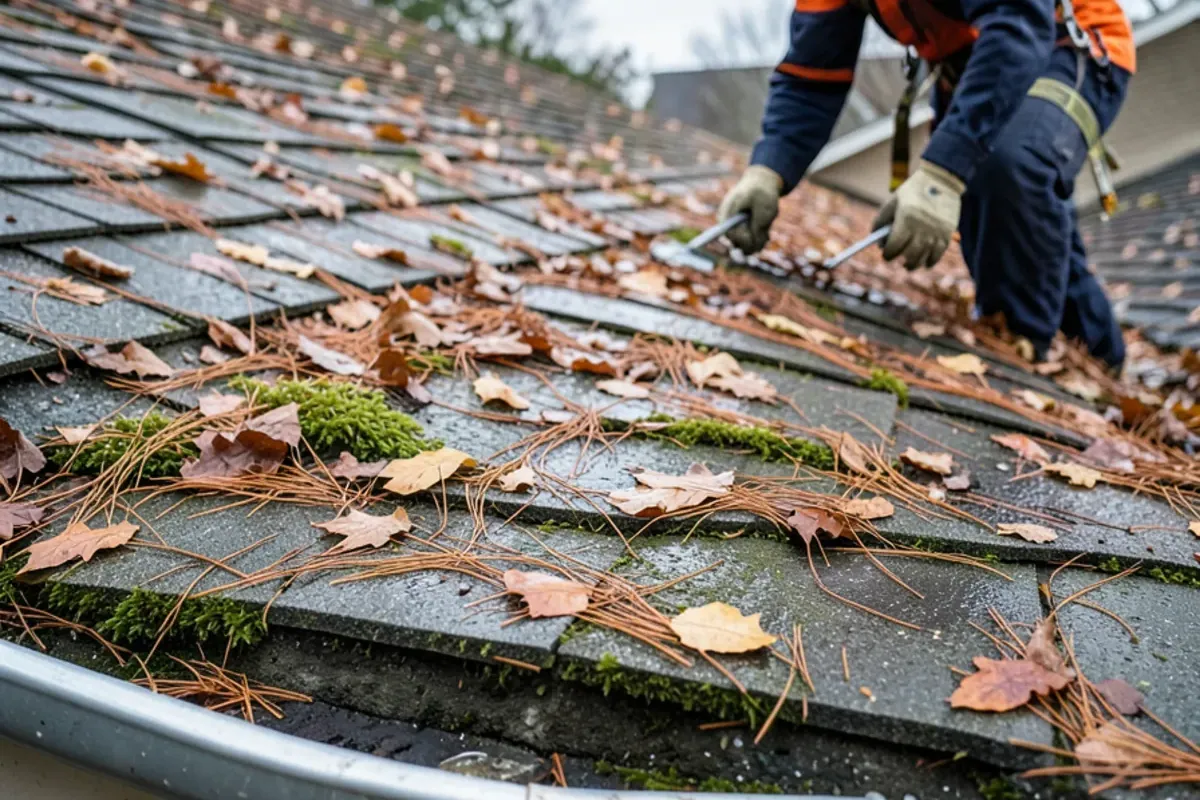
Remove what feeds it. ARMA says shade and debris hold moisture and feed moss, so trim branches back so sun reaches the roof and less litter collects. Oregon State's list adds clearing leaves and conifer needles before the rains.
- Trim overhanging branches so the slope gets sun.
- Clear valleys and gutters every fall.
- Sweep dry debris off slopes with a soft broom.
- Get a roofer's eyes on the roof once a year; NRCA suggests inspecting at least twice, spring and fall.
- Ask about algae-resistant shingles at the next replacement; ARMA points to them for prevention.
- Route any upper-roof downspout into the lower gutter so it does not soak the shingles below.
- Remove dry debris before the first rain; Oregon State also notes that dried moss and debris are flammable.
If the roof is thick with moss and you are not sure what is under it, call us or ask for a free estimate and we will look at the edges, valleys and attic side.