
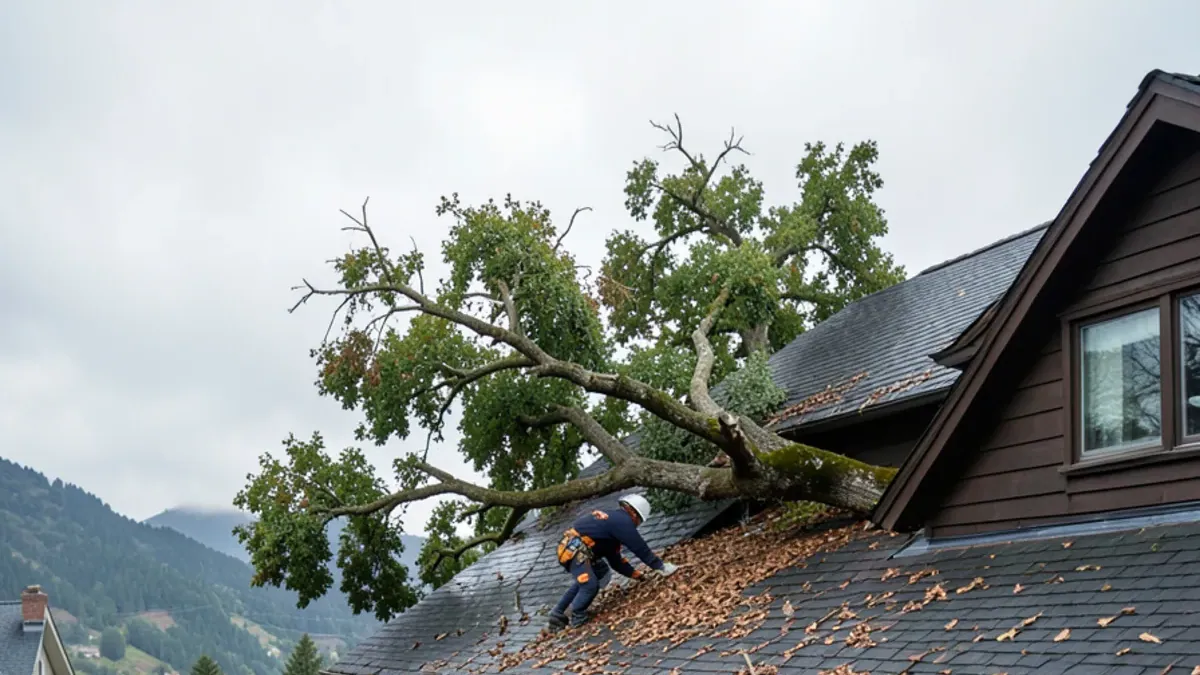
If a tree fell on your roof, get everyone out of the house if you see structural damage, stay clear of anything near power lines, and do not climb up. Then photograph the damage, report it to your insurer, and have a tree service and a roofer make the area safe in that order. The first 24 hours are about safety, evidence and keeping water out.
What should you do right now when a tree falls on the roof?
Check people first, then the building. This list covers the first hour.
- Count everyone and move out of rooms under the impact.
- Look for sagging ceilings, cracked drywall, doors or windows that stick, and sounds of creaking.
- If the structure looks hurt, go outside and call 911.
- Look for wires on or near the tree and keep well clear.
- Turn off power at the main breaker if water is entering near wiring and you can reach the panel safely.
- Photograph everything from the ground.
The CDC says to treat fallen power lines as live and to report them to the power company, never to touch them. That includes a tree resting on a line. Do not move or cut the tree until a utility crew has made the lines safe.
What are the signs of structural damage?
Roof framing is designed to carry shingles and ordinary weather loads, not a falling limb. A tree that lands on a rafter or ridge can crack it without breaking the roof surface. Look inside the attic if you can reach it without stepping on the ceiling joists.
| Sign | What it can mean |
|---|---|
| Sagging ridge or roof plane | Rafters or ridge beam bent or broken |
| Cracks in ceiling drywall | Load shifting through the frame |
| Doors or windows sticking | Wall framing moving out of square |
| Daylight in the attic | Sheathing and shingles punctured |
| Wet insulation | Water is entering through the opening |
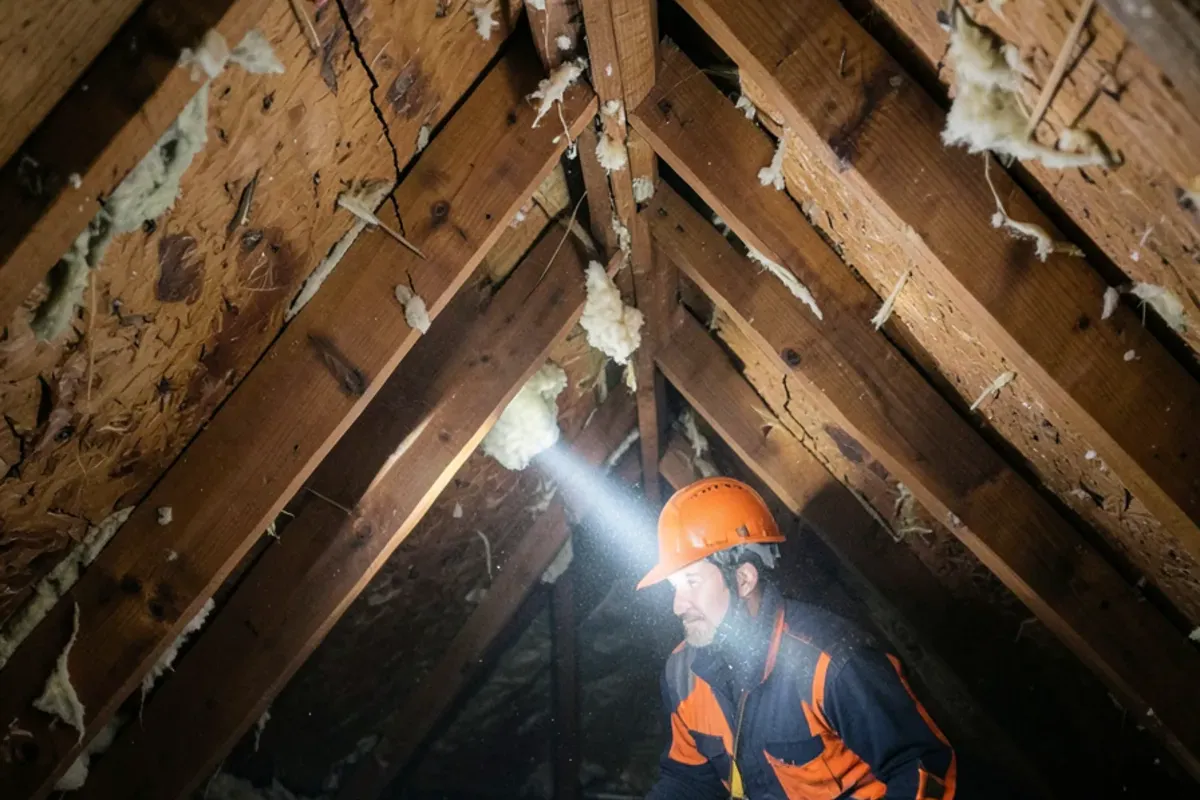
If you see any of these signs, ask a roofer or structural professional to inspect before anyone sleeps under the damaged area. Insurers can reimburse reasonable emergency protection and temporary repairs.
Who do you call first, and in what order?
Call your insurer to open the claim, then a tree service to make the tree safe, then a roofer to cover and repair the roof. The tree comes off before the roofer works, because a roofer should not stand under a limb that may roll.
The California Department of Insurance says to report the loss to your agent or company, protect the property from further damage, keep receipts, and wait for the adjuster before extensive permanent repairs. It also says insurers pay reasonable protection costs, which count toward the settlement.
Be careful with offers from people who show up unasked after a storm. CSLB advises avoiding door-to-door repair offers, getting three bids and a written contract, and not paying in cash. A down payment on a home improvement contract cannot exceed 10 percent of the price or $1,000, whichever is less.
Do you need a permit to remove the tree?
In Alameda, most private-property trees need no permit, but protected trees do. The City of Alameda's tree removal FAQ says most private-property trees need no permit, with exceptions for protected trees, which include coast live oaks measuring 10 inches or more across at 4.5 feet above ground. It also says the City Building Official may approve an emergency removal when there is clear evidence of imminent danger, and the owner must still apply for a Certificate of Approval and meet replacement rules. The FAQ was last revised in 2019, so confirm the current rules with the Planning, Building and Transportation Department.
Street trees are the City's responsibility, so a limb from a tree in the public right of way goes to Public Works, not your tree service. Other cities set their own rules. Before any cut on a hillside lot in a city like Piedmont, call that city's public works or planning office to ask what applies.
How do you pick a tree service for the emergency cut?
Pick a tree contractor who can show a CSLB tree classification and a certificate of insurance. CSLB's Tree and Palm bulletin explains that the older D-49 tree service classification closed to new applicants on January 1, 2024, and new applicants use the C-49 Tree and Palm classification, with existing D-49 licenses still valid. Check the number at cslb.ca.gov, then work through this list:
- Ask for the license number and look it up before anyone starts a saw
- Ask for a certificate of insurance and confirm the roof is not excluded
- Get the price and scope in writing, including cleanup and hauling
- Ask how they will take the weight off, in sections, with ropes or a crane
- Tell the tree crew to leave the roofing work alone, so the roofer can document the damage
Our guide on storm damage roofing covers the wider storm context.
How do the tree crew and the roofer work together?
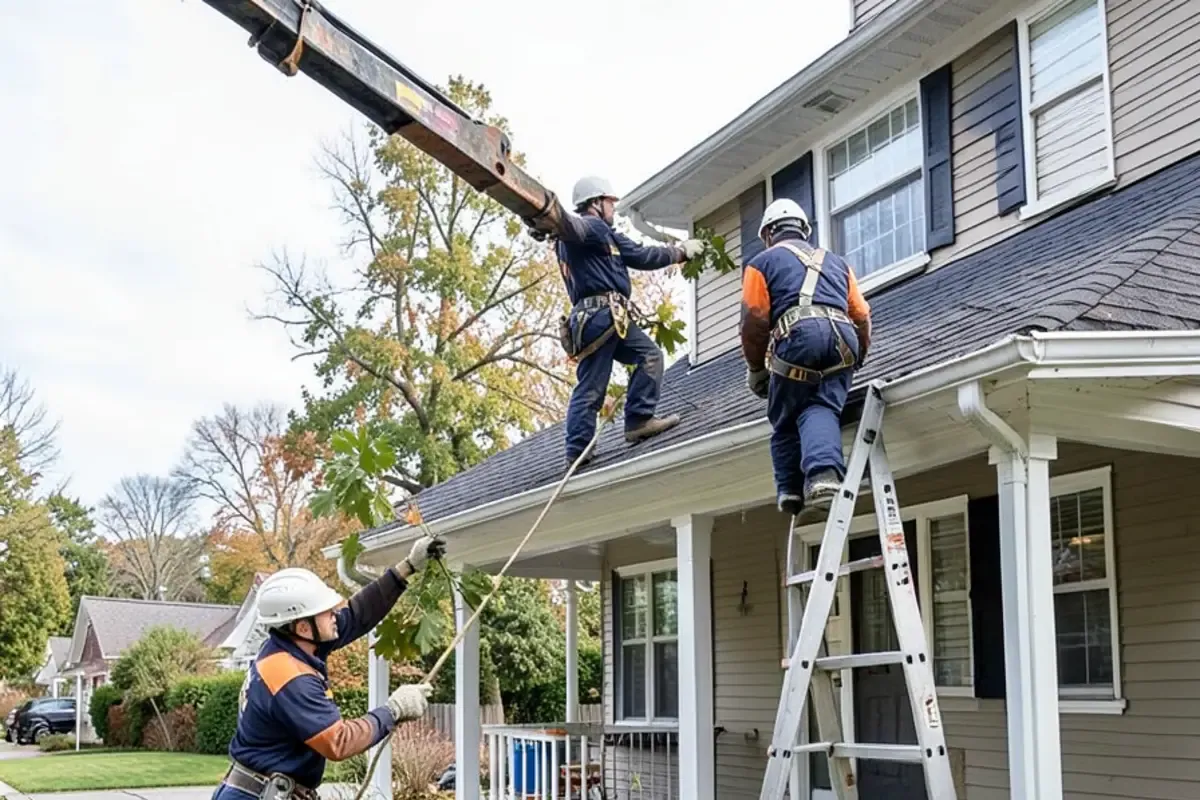
The tree crew makes the tree safe, and the roofer protects what is under it. Cutting from the top down in sections keeps weight from dropping onto cracked rafters. Once the limbs are off, the roofer checks the framing from the attic, removes broken sheathing and shingles, and covers the opening with a tarp anchored to solid framing.
The trade-off is speed against certainty. A quick tarp over the impact area stops water that night, but the full extent of the damage is not known until the sheathing and rafters are exposed. On tree jobs the repair list often grows when the first layer comes off, and a change order should explain it before work continues, as on the Alameda job with aged decking. If your claim is open, roof insurance claims covers how the roof is documented for the adjuster.
What should you photograph for a tree damage claim?
Photograph the tree, the point of impact, the roof from several angles, interior stains and the attic. Shoot before anything is cut. Include the trunk base to show whether the tree was healthy, since policies can treat a dead or decayed tree differently, and keep any pieces that were removed until the adjuster signs off.
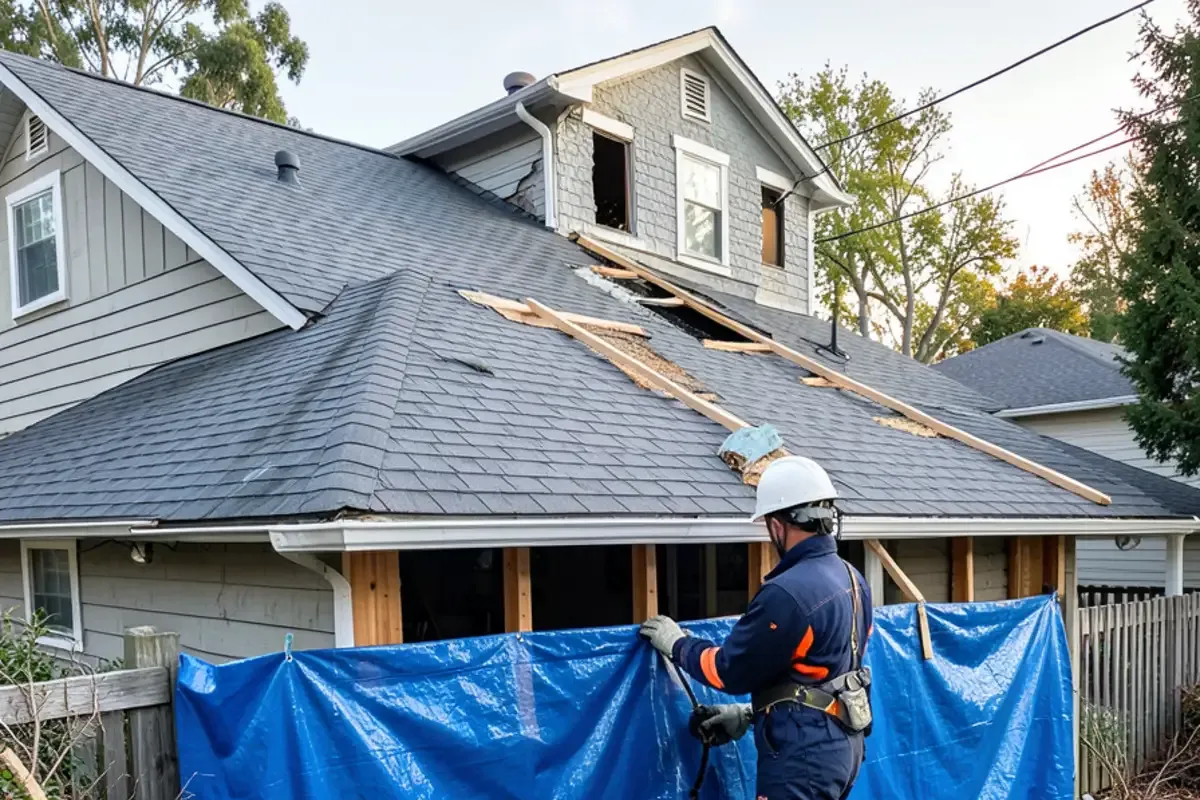
For a claim, we photograph the damage, write the repair scope and walk the adjuster across the roof. We do not negotiate, because California reserves for the policyholder, the insurer or a licensed public adjuster. We also do not cover deductibles, and an invoice padded to absorb a deductible is insurance fraud under California Penal Code section 550.
What tree jobs look like in the field
Tree damage often reaches beyond the shingles. One Alameda customer filed a tree-damage claim that covered the roof, gutters and siding together, so the visible hole was only part of the repair list. We handle the roof and gutters, and the other trades are separate.
A tree strike can also expose old problems. Aged decking found at tear-off on one Alameda job led to a change order that was explained before work continued, and a damaged section often needs sheathing replaced before new roofing goes on. Ask for any added cost in writing before the work continues.
Hillside neighborhoods add access questions. Piedmont is about 18 minutes from the Webster St office, and its steep streets can make truck and crane placement the first thing to plan. Our tree damage roof repair page explains the repair steps, and the storm damage roofing section covers wind and claims. A tree on an Alameda house is handled from the Webster St base, and the home page shows how.
If a tree is on your roof now and you need the opening covered, call the office or request a free estimate and tell us the tree has not been removed yet. Photos help us plan the day.