
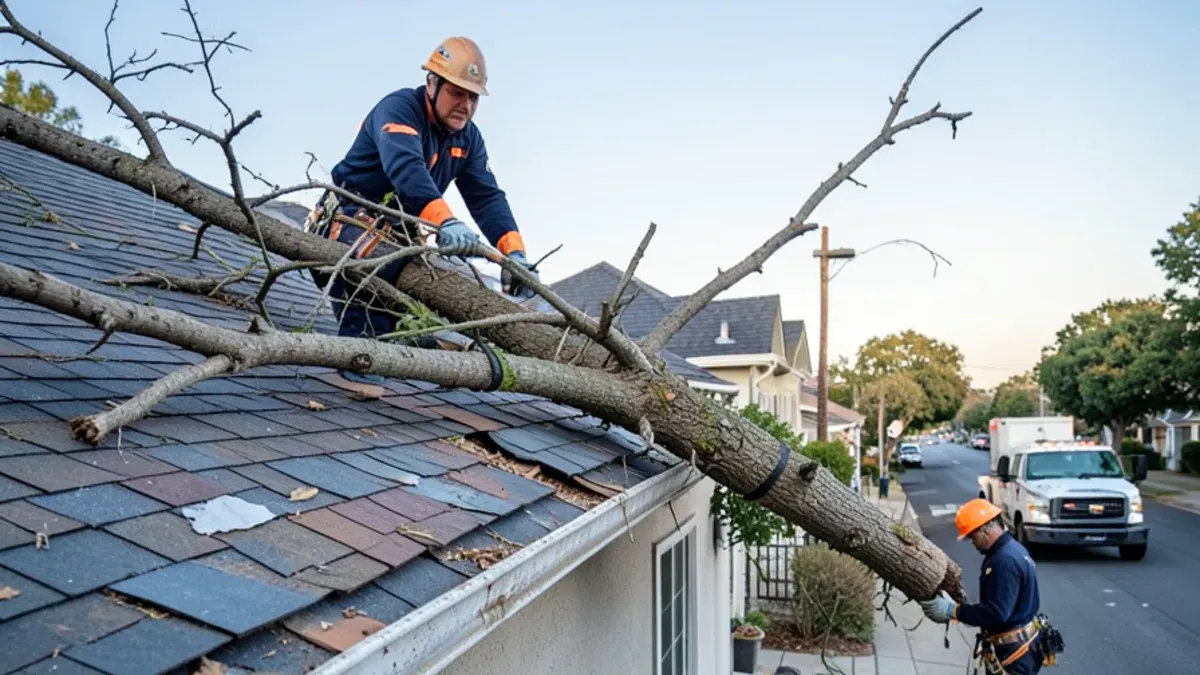
When a tree on your house is an emergency
Any tree contact that opens the roof, cracks framing or hangs over the house is an emergency. A branch that scrapes shingles and lands on the lawn is not. A limb through the sheathing, a trunk on the ridge or a split rafter overhead is.
Many Alameda blocks have mature trees, and winter storms bring wind and soaked soil together. Rain falls on about 66 days a year in ZIP 94501, almost all October through April (BestPlaces), so a hole left open in October will see rain for months.
What makes a tree fall on a roof?
Saturated winter soil, strong wind and trees with shallow roots, dead limbs or past storm damage are the common causes. A tree can fail days after a storm as soil dries and loosens. Photograph any lean or cracked limb near your house and ask a tree service to assess it before the next front.
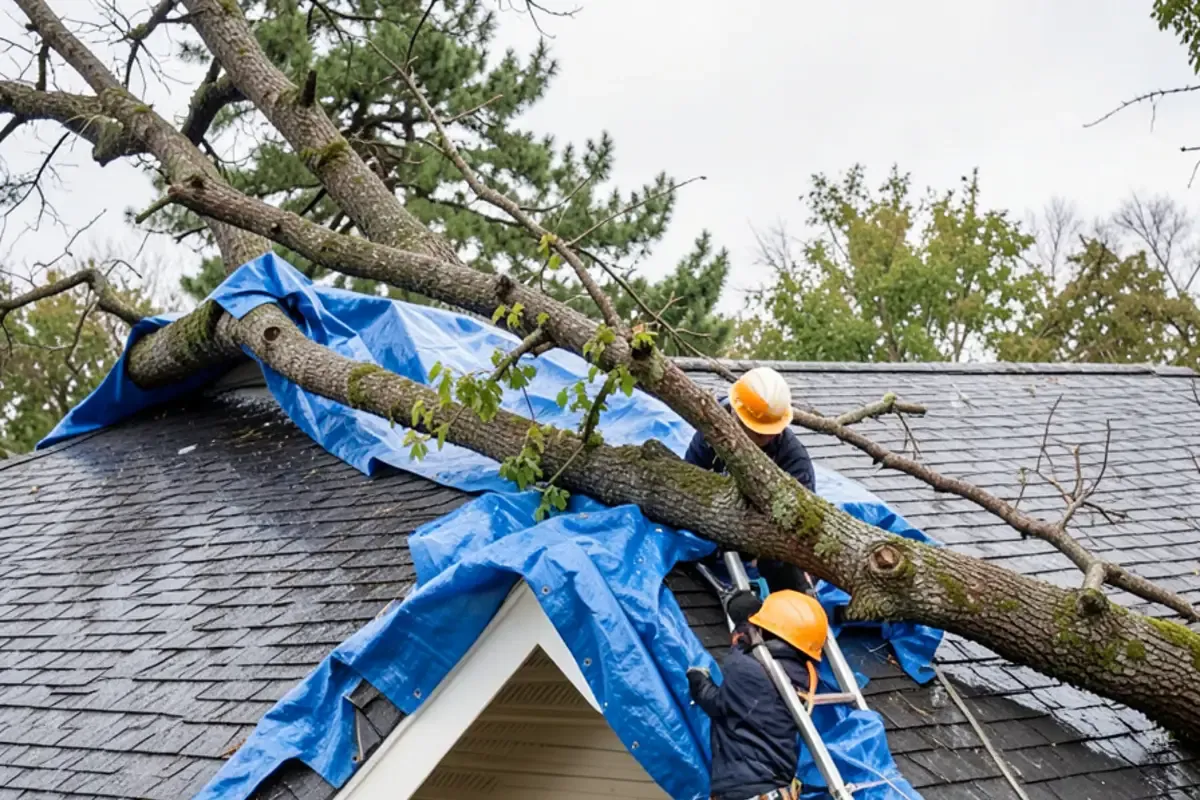
Steps to take while the tree is still down
- Get everyone out of rooms under the damage. Ceilings sag before they fall.
- Call 911 for downed power lines, fire or injury. Stay back from any wire touching the tree.
- Photograph the tree and the roof from the ground. Include wide shots and close ones.
- Do not climb on the roof or cut the limb. The tree may be holding damaged framing in place.
- Call a tree service and a roofer. Both need to see the damage, and you will need invoices from each.
- Call your insurer. Report the loss and note the claim number.
- Keep every receipt. Emergency tree work and tarping may belong in the claim.
Where and how fast
We work from 1910 Webster St on the West End of Alameda. After windstorms, customers have reported a same-day stop to tarp lost shingles and a visit within 24 hours to waterproof. We cannot promise a time, because a storm that drops trees across the island means many calls. When the tree is lifted, tell us, and we can often fit the tarping in soon after.
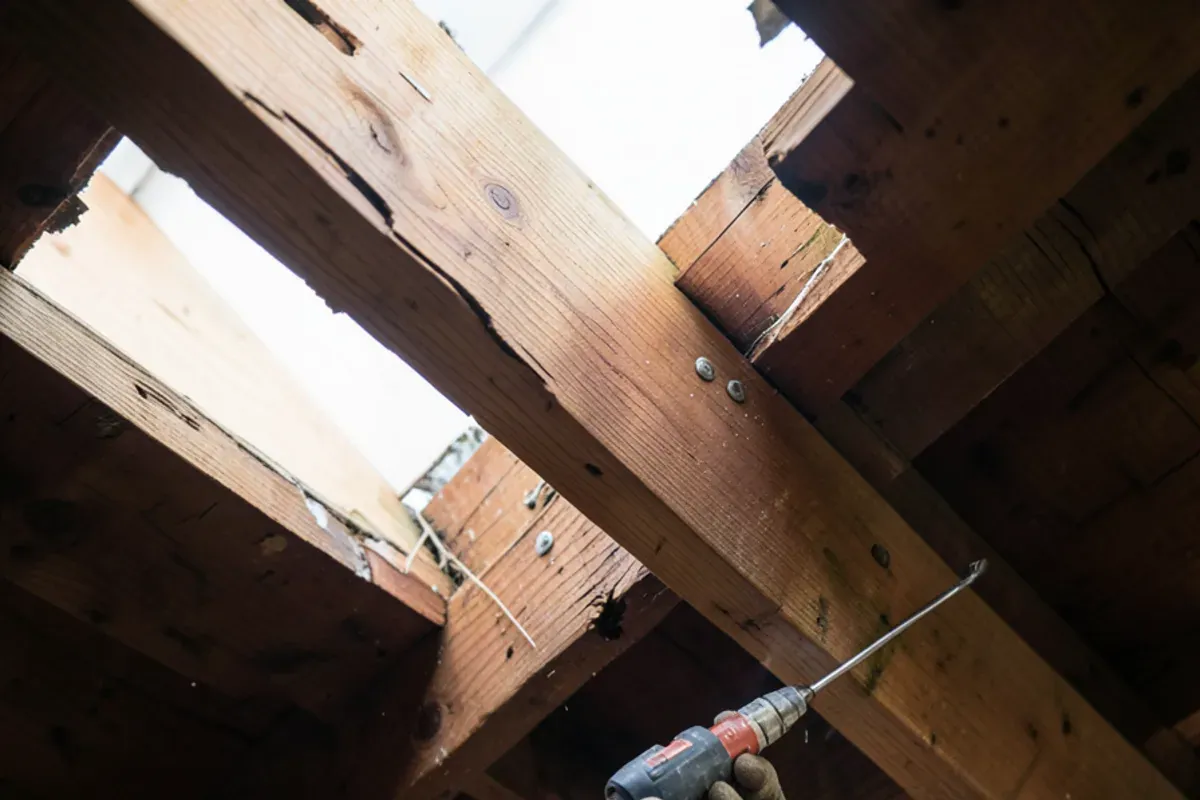
On arrival: the roof, not the tree
Our crew deals with the roof, not the tree. Wayne or Pedro often does the first look.
- Safety check of the roof, with the tree already removed or secured
- Temporary protection over the opening, extending past the damage and tied off at the ridge
- Damage mapping of shingles, decking, framing, flashing and gutters, with photos
- Attic check for broken rafters, wet insulation and daylight
- Written scope you can hand to your insurer
You get photos by text or email, often the same day.
Fallen limb roof damage: repair sequence
Here is how a typical tree repair runs after the tree is cleared.
- Inspection and scope. We open the damaged area and document it.
- Adjuster visit. If you file a claim, we meet your adjuster on site to walk the damage.
- Framing repair. Cracked rafters are sistered, and broken boards are spliced or replaced.
- Decking. Damaged sheathing is cut out to sound wood and replaced.
- Dry-in. New underlayment and flashing close the area.
- Roofing. Shingles or other roofing are installed, with matching materials tracked down where possible.
- Roofline. Gutters, fascia and soffits damaged by the limb are replaced.
- Walkthrough. A site supervisor checks the work, and you get photos and warranty paperwork.
Roof framing repair: can it be fixed?
Most tree-damaged framing can be repaired without a full teardown. Sistering fixes a cracked rafter, and short splices fix broken hips or ridge boards. If the trunk hit a bearing wall or several rafters failed, the City of Alameda Permit Center may require plans, and an engineer may be needed. We tell you when a repair needs one, and we do not guess about structure. Confirm permit rules with the Permit Center, since the estimate states who pulls the permit.
Roof repair here is also a good moment to look at the rest of the roof. Matching shingles may be hard to find on an older roof, and on one Alameda job the crew tracked down matching materials and delivered them.
Permits, engineers and licensing for tree damage repairs
Structural repairs may need a permit and sometimes plans, so ask the City of Alameda Permit Center before framing is closed up, and read the estimate line that names who pulls it. California requires a C-39 Roofing classification from the Contractors State License Board for roofing work. The California Department of Insurance consumer line can help if a claim stalls.
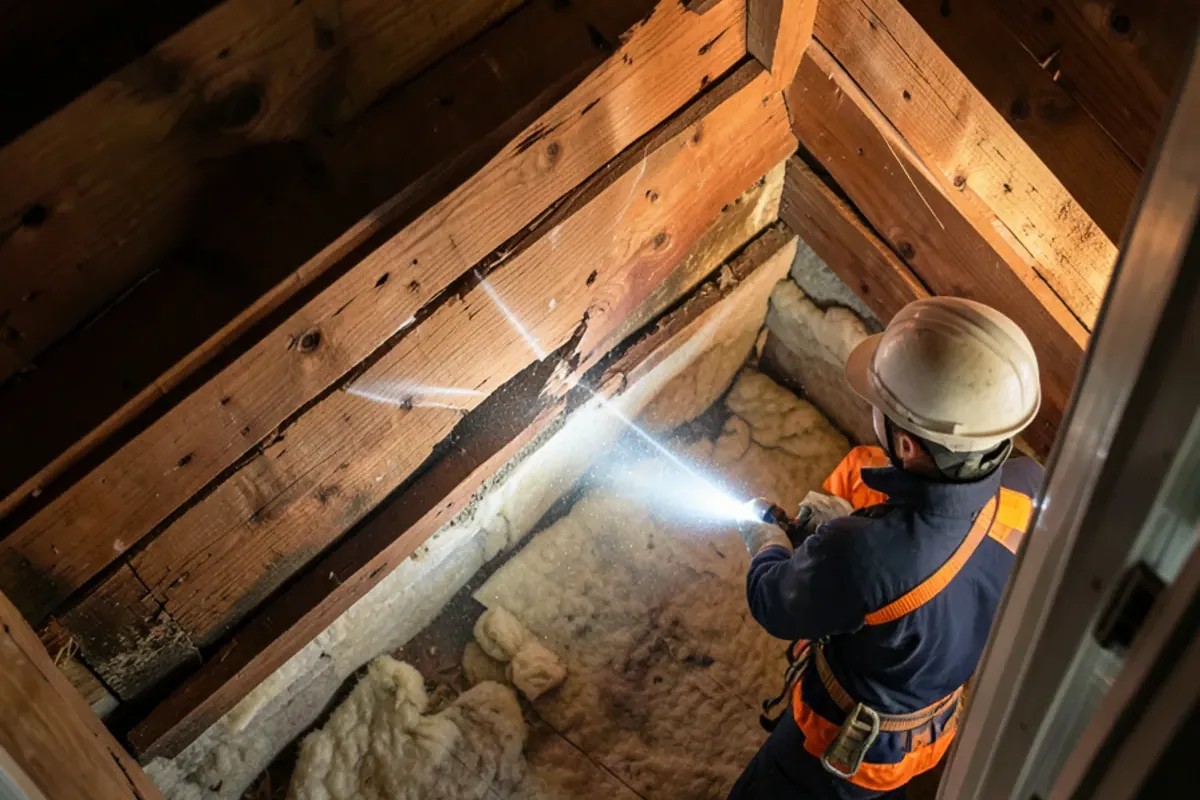
Tree damage insurance claim: what we do and do not do
On a claim we photograph the damage and walk it with your adjuster. Only the policyholder, the insurer or a licensed public adjuster negotiates a California claim, so we do not negotiate, and we never promise what your insurer will pay. Do not let anyone inflate an invoice to cover your deductible, since that is insurance fraud under Penal Code section 550. We do not offer to cover deductibles. If you want to see how the paperwork flows, read roof insurance claims.
If your insurer then questions the age of your roof, roof replacement for insurance renewal covers that path.
What does tree damage repair cost?
Pricing is explained before work starts. Tarping is priced for the visit, and permanent repair is priced from a written scope. What moves the number:
- Size of the hole and number of damaged rafters
- Structural engineering or permit needs
- Decking and underlayment replacement
- Roofing material and matching
- Gutter, fascia and soffit damage
- Access, since a tree on the ground can block ladders
The written estimate, not a phone figure, is what you hold us to. Ask each contractor to put tree removal, tarping, repair and roofline work on separate lines.
Where we repair tree-damaged roofs
Oakland is about 12 minutes from our office, Berkeley about 18, San Leandro about 24, Hayward about 31 and Castro Valley about 35. Those are estimates, and bridge routes run long after a storm.