
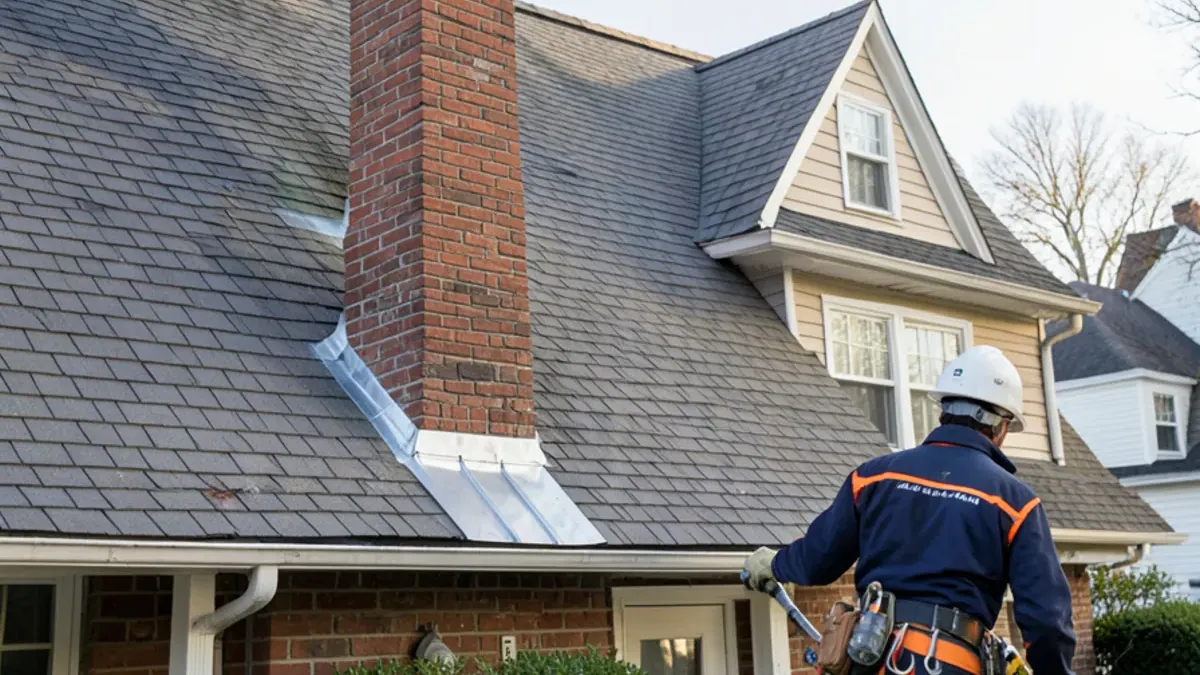
Why does roof flashing fail?
Flashing is thin metal bent to carry water over a joint, and it fails because the joint keeps moving. Houses expand, shift and settle, and the sealant that locks the flashing in dries out. Metal can also corrode where it meets masonry, and nails through its face leak over time.
Age is the main reason in Alameda. About 31.9% of local homes were built in 1939 or earlier (Point2Homes), and those roofs often have flashing that has been reset, caulked and recaulked. Rain falls on about 66 days a year in ZIP 94501 (BestPlaces), so every weak joint gets tested.
How do you know your flashing has failed?
The signs are specific. Check these before climbing anywhere.
- A stain on the ceiling or wall beside a chimney, skylight or roof-to-wall joint
- Rust, gaps or lifted edges in the metal
- Sealant that is cracked, peeling or crumbling
- Shingles that are wavy or lifted where they meet a wall
- Dark attic boards or damp insulation beside those spots
A leak that comes only in wind-driven rain nearly always points here, because the water is pushed up behind metal that would shed it in a gentler storm.
Chimney, step and wall flashing repair
These three are one family: metal that turns water away from a vertical surface.
Chimney flashing has two parts. Base flashing sits under the shingles, and counterflashing is cut into the mortar joint above it and laps over the base. A back-side cricket sends water around the chimney. Failure is typically at the counterflashing, where the mortar has eroded, or at the uphill side with no cricket.
Step flashing is a series of small metal pieces, one at every shingle course, running up a roof-to-wall joint. If it is one long strip or caulk alone, it fails. Replacing it means lifting each shingle course and siding trim above it, then weaving new pieces in.
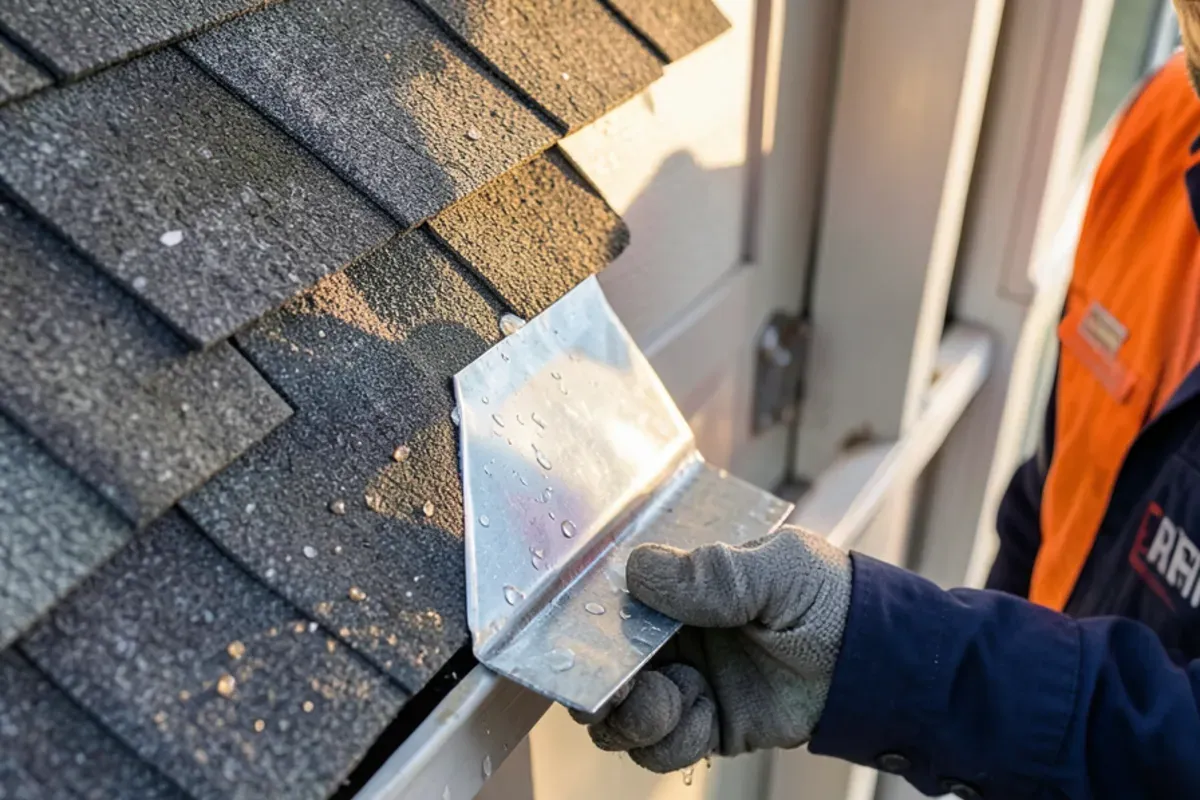
Wall flashing leak repairs also include kickout flashing at the bottom of a roof-to-wall line, which sends water into the gutter instead of down the wall. A missing kickout can rot sheathing for years before anyone sees it.
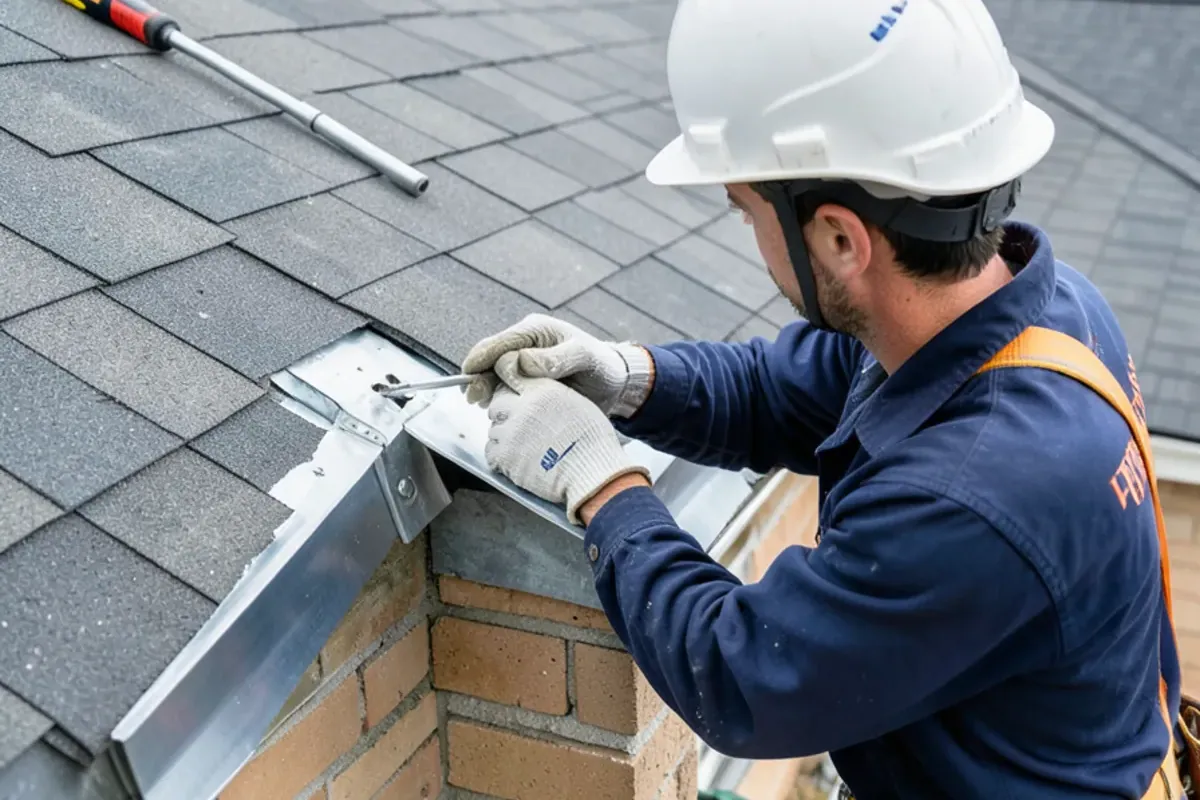
Valley, vent pipe and skylight flashing repair
Valley flashing carries the most water on the roof, since two slopes empty into it. Open metal valleys fail from pinholes and rust; closed valleys, covered with shingles, from debris and cracked shingles over the center line. A clogged valley sends water over the edge and under the shingles.
Vent pipe flashing is a rubber or metal collar around each plumbing pipe. The rubber boot eventually cracks in the sun and is often the cheapest leak on the roof to fix. Replacement is usually quick.
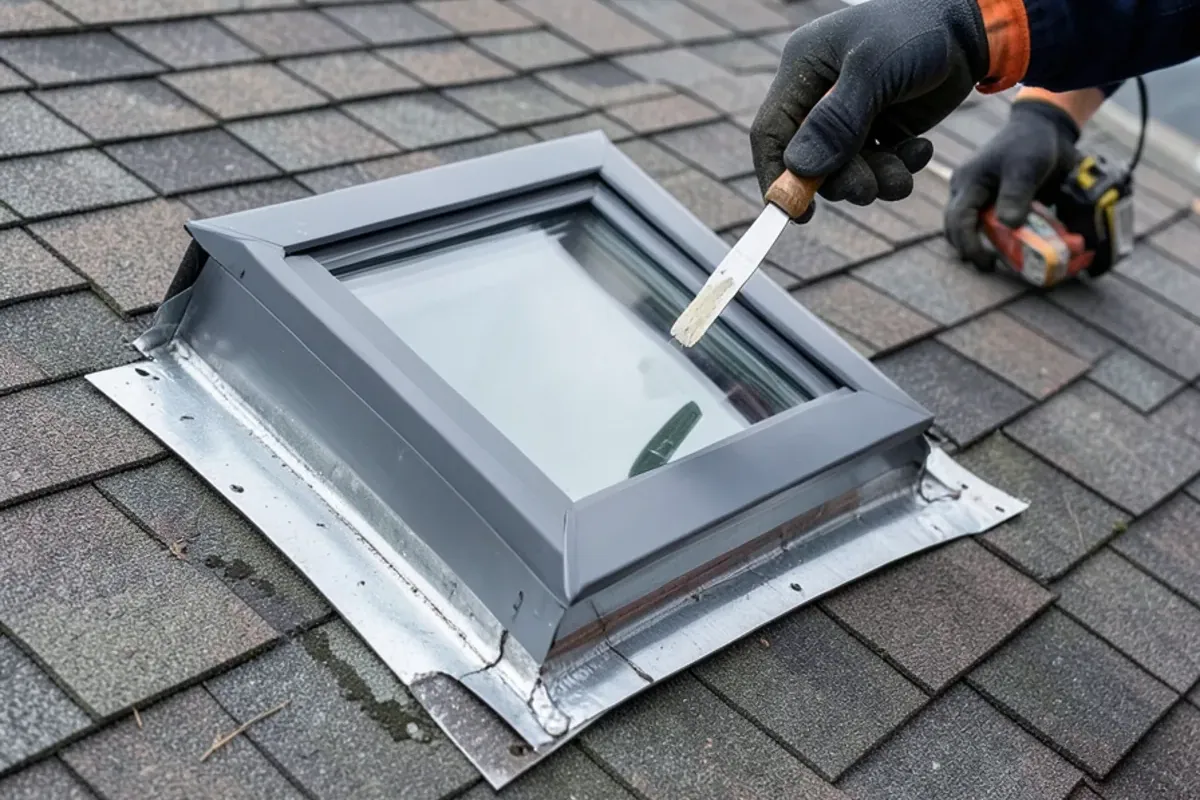
Skylight flashing repair is where resealing works well. One Alameda owner had three leaking skylights resealed at the flashing instead of replaced. Another had a skylight begin leaking after a different roofer's reroof, which pointed to the flashing, not the glass.
For the attic side of roof vents and why condensation sometimes mimics a leak, see attic venting repair.
Reseal or replace: how we decide
There are two repairs, and each has a limit.
- Reseal: New sealant and fasteners over sound metal. Quick and low cost, right when the flashing is intact and the failure is the sealant. It will need to be done again.
- Replace: Remove the old metal, lift surrounding shingles and install new flashing correctly lapped under the roof covering. Lasts as long as the roof around it.
We reseal when the metal is sound. We replace when it is rusted, bent, reused or sealed with caulk alone. If the roof itself is close to the end of its life, we tell you that replacing it together may cost less than doing flashing twice. Two layers of covering already in place means a tear-off, since the building code allows no third layer.
Why does flashing fail after a roofing job?
It happens when flashing is left out, reused or sealed instead of lapped. A roof can look new and still leak at the first heavy rain from a single missed piece. If a workmanship warranty is still running, call that installer first.
A roof that leaks within a year of installation points to a detail, not the shingles. The earlier crew's flashing and gutter mistakes were the fault on one Alameda roof, and they were corrected during a single visit.
Flashing repair visit, step by step
- Call. You describe where the stain is and whether it rains in.
- Inspection. We check every roof-to-wall joint, chimney, valley, vent and skylight, plus the attic.
- Photos. The failed flashing is photographed, so you see what we see.
- Written estimate. It lists each flashing point, the method and who pulls any permit. Confirm the permit question before signing.
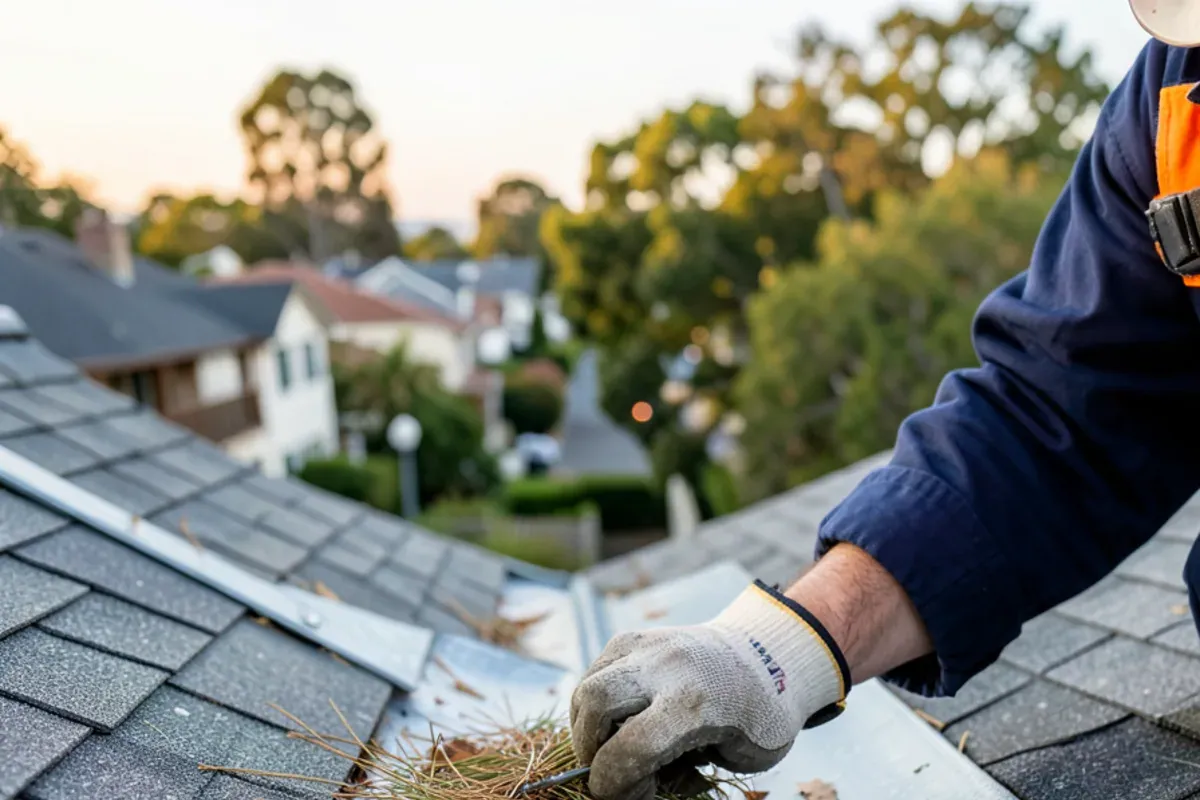
- Repair. Failed flashing is resealed or removed and replaced, with surrounding shingles lifted and relaid.
- Check. The area around the repair is examined for the same fault.
- Cleanup and finished photos. Debris comes off the roof and the photos reach you.
What does flashing replacement cost?
Price follows the number of points, the material and how much of the roof covering has to be lifted. A single vent boot is a small job. A chimney with a cricket, or a long wall run of step flashing under siding, takes much more labor.
Access also matters: a tall house needs staging. Because flashing sits under the roof covering, the amount of work is not visible until it is opened. If we find rot, we explain it as a change order before continuing. We do not quote flat prices for flashing. Ask for the written estimate itemized by flashing point, because that document is the real price.
If you are weighing this against a leak search, roof leak repair explains how we trace the water.
Permits and licensing for flashing work
Resetting flashing at one chimney or wall is usually far below the roughly 200 sq ft where a third-party county guide says roof permits generally begin (PermitFlow), but ask the City of Alameda Permit Center. The estimate should name who pulls any permit. Roofing needs a C-39 classification from the CSLB, and you can look up any contractor at cslb.ca.gov.
Flashing repair around the East Bay
Flashing repair in Oakland starts roughly 12 minutes from Webster St, with Berkeley about 18 minutes and Hayward about 31. Treat those as estimates, because bridge routes shift them.
The Oakland, Berkeley and Hayward pages list coverage for each.