
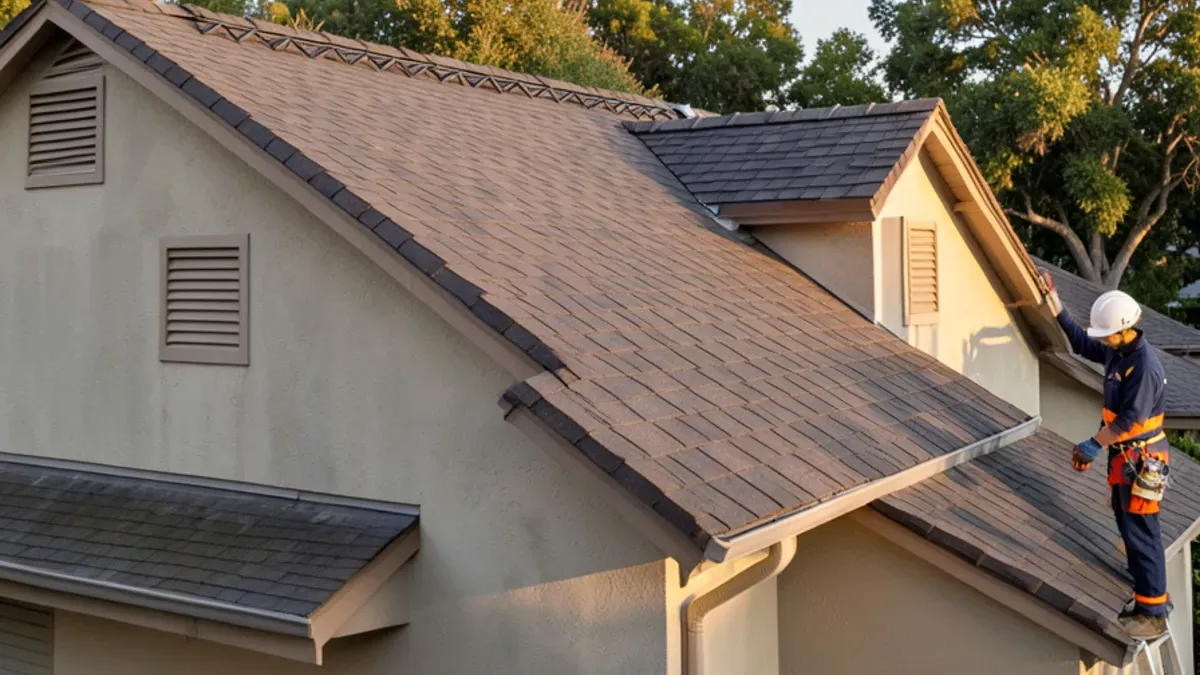
How do you know your attic is not venting properly?
A hot upstairs in summer is the common sign. Others are damp insulation or rusty nail tips in winter, a musty smell when you open the attic hatch, and shingles that curl or crack long before they should.
Alameda's climate is mild, California Climate Zone 3, so people often assume attics do not need much air. They do, in both directions. Summer sun heats the roof from above, and winter rain, cooking, showers and heating bring moisture up from the house into the attic.
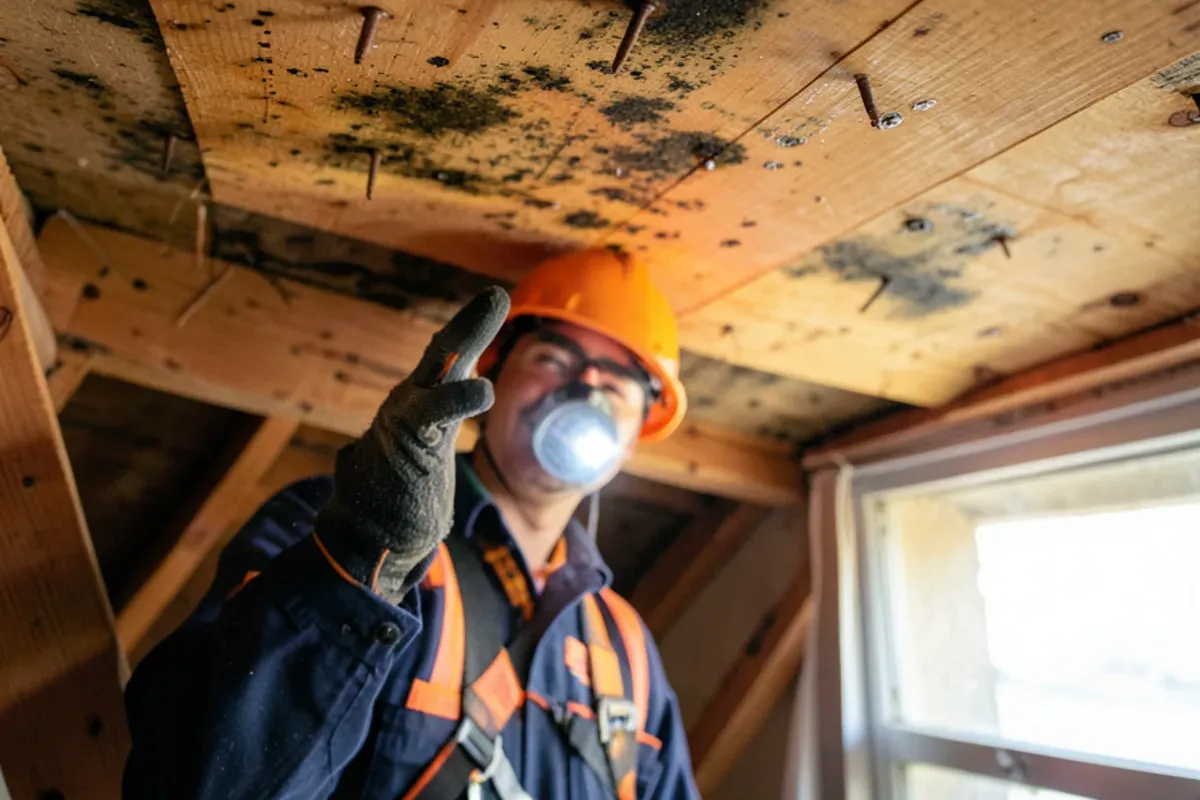
How do intake and exhaust vents work together?
An attic vents properly when air enters low and leaves high. Cooler air comes in through vents in the soffits under the eaves, rises as it warms and leaves through the ridge vent or high roof vents. This movement carries heat and moisture out.
The two sides have to match. Too much exhaust with too little intake pulls air through any gap it can find, including cracks in the ceiling below. Too much intake with no exhaust leaves the air sitting. The building code sets a minimum amount of vent area relative to the attic floor, and we check the proportions rather than add vents at random.
Roof vent repair and replacement: what each type needs
Roof vents come in several forms, and each fails differently.
- Box vents (static vents): Square metal or plastic units over a cut opening. Fail at the flange, the sealant or the housing.
- Turbine vents: Wind-driven spinners. Bearings wear out and they get noisy.
- Ridge vents: A continuous slot along the peak, covered with cap shingles. They fail from torn caps or a slot that was never cut.
- Gable vents: Louvers in the end walls. They work with wind and rarely replace roof exhaust.
- Powered vents: Electric fans with a thermostat. They need power and sufficient intake.
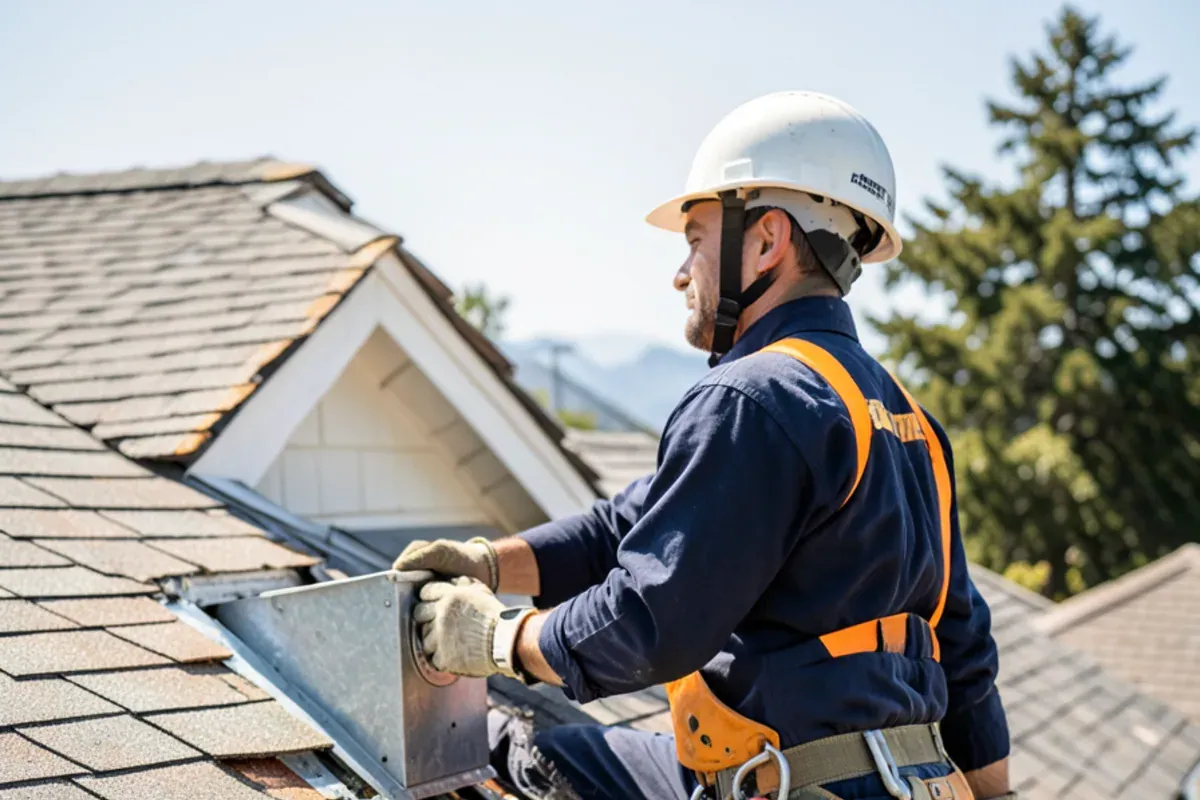
For a roof vent repair we first ask if the vent leaks or just underperforms. A leaking vent needs its flange or flashing fixed. A vent that is simply too small or too few needs more of them. Roof vent replacement is quick when the opening already exists. For the shingle side of a vent replacement, see shingle roof repair.
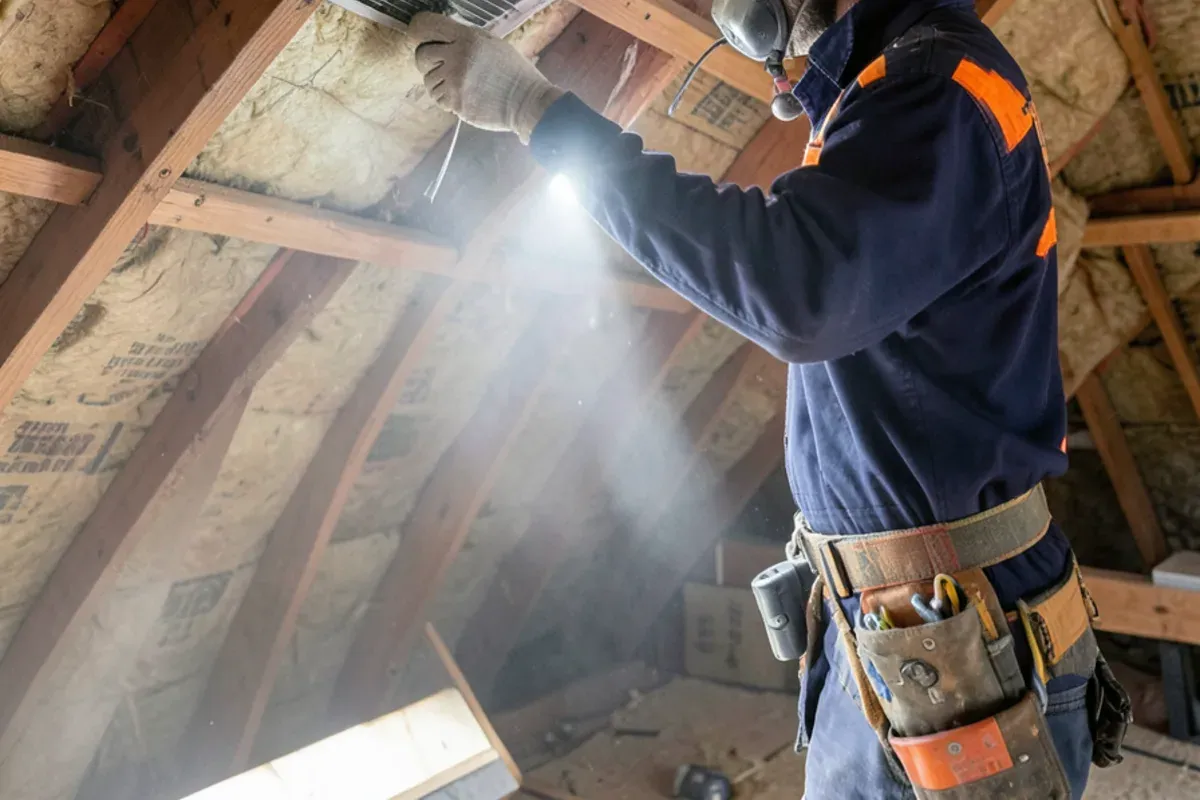
Soffit vent repair and blocked intake
Soffit vents are the part homeowners rarely see and often find blocked. Insulation is pushed over them, paint seals the screens, or an older house has solid soffits with no vents at all.
We clear intake paths and fix or replace damaged soffit vents. When insulation is stuffed against the eave, a baffle keeps a channel open above it. Insulation work itself is separate from ours, but we point out where it blocks the air.
Roofline repairs, such as rotted soffit boards, were part of one Alameda ranch home job that also replaced fascia and gutters. If your soffits are rotted, the repair belongs with the vent work.
Hot attic fix, ridge vent installation and attic fans
If your attic runs hot, the fix is intake and exhaust first, a fan only after. Ridge vent installation replaces the old exhaust with a continuous slot, which pulls air evenly along the whole peak and is quiet. It suits roofs with a long unbroken ridge. Short, hipped roofs and complex rooflines may rely on box vents instead.
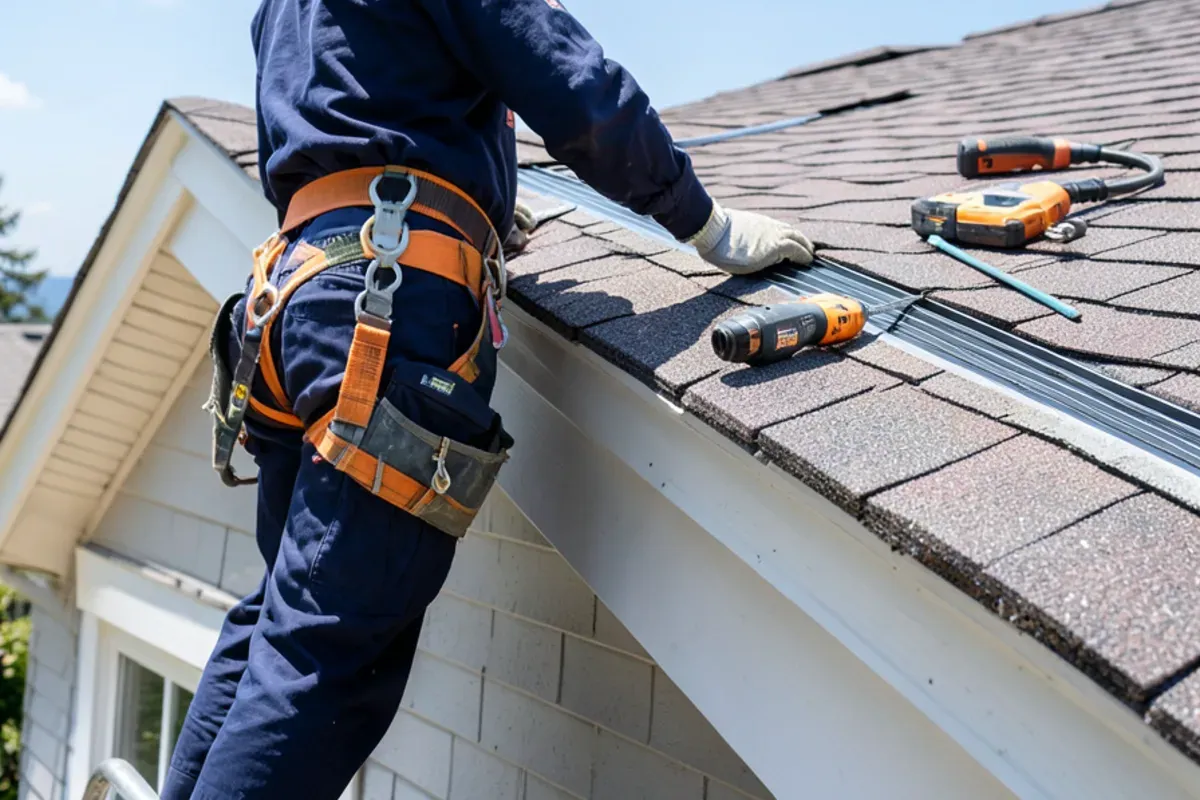
Attic fan installation is a trade-off. A fan can cool the attic faster, but it pulls air from the house through ceiling gaps if intake is short, and it needs power. We treat it as a last step and say so when you ask.
Attic insulation and ventilation: where they overlap
Insulation keeps heat in the living space, and ventilation keeps the attic itself dry and cooler. They work together. If insulation is thin, the attic heats from below. If vents are blocked, moisture collects in the insulation and it stops working.
We check that it sits clear of the soffit vents and does not cover recessed lights or flues. One Alameda customer was advised to use a lighter roof color to keep a sunroom cooler. Roof color is a separate decision, and in Zone 3 a cool roof is optional for single-family reroofs.
What happens during an attic venting repair visit?
- Call. You describe the heat, dampness or leak and where it shows.
- Attic inspection. We look at the underside of the decking, the insulation, the soffits and the existing vents.
- Roof inspection. Vents, flashing and the ridge are checked from above.
- Written estimate. It lists each vent to repair or add and who pulls any permit. Confirm the permit question before you sign.
- Repair. Vents are replaced or added, soffit intake is cleared and flashing is sealed.
- Check. Airflow paths are confirmed open from soffit to ridge.
- Cleanup and photos. Debris comes off the roof and photos of the finished work are sent the same day.
What does attic venting repair cost?
Cost depends on the number of vents, the type, how much roofing has to be lifted and how hard the attic is to reach. Replacing one box vent is a small job. Cutting a continuous ridge slot and capping it takes more, and a steep or tall roof adds labor.
If a vent leaks, the work often overlaps with roof leak repair, which can change the scope. We do not publish flat prices for this work. The itemized written estimate is the figure to hold us to.
Permits and licensing for vent work
Swapping a vent on an existing opening is small work, while cutting a new ridge slot is part of the roof and can sit under the permit rules the City of Alameda Permit Center applies to roofing. The California building code also sets minimum vent area for an attic. Roofing needs a C-39 classification from the CSLB, and you can check any contractor at cslb.ca.gov.
Attic venting repair near Alameda
We cover Oakland in roughly 12 minutes from Webster St, Berkeley in about 18, San Leandro in about 24 and Castro Valley in about 35. Bridge and tunnel congestion can add to those estimates.
Each place has its own page: Oakland, Berkeley, San Leandro and Castro Valley.