
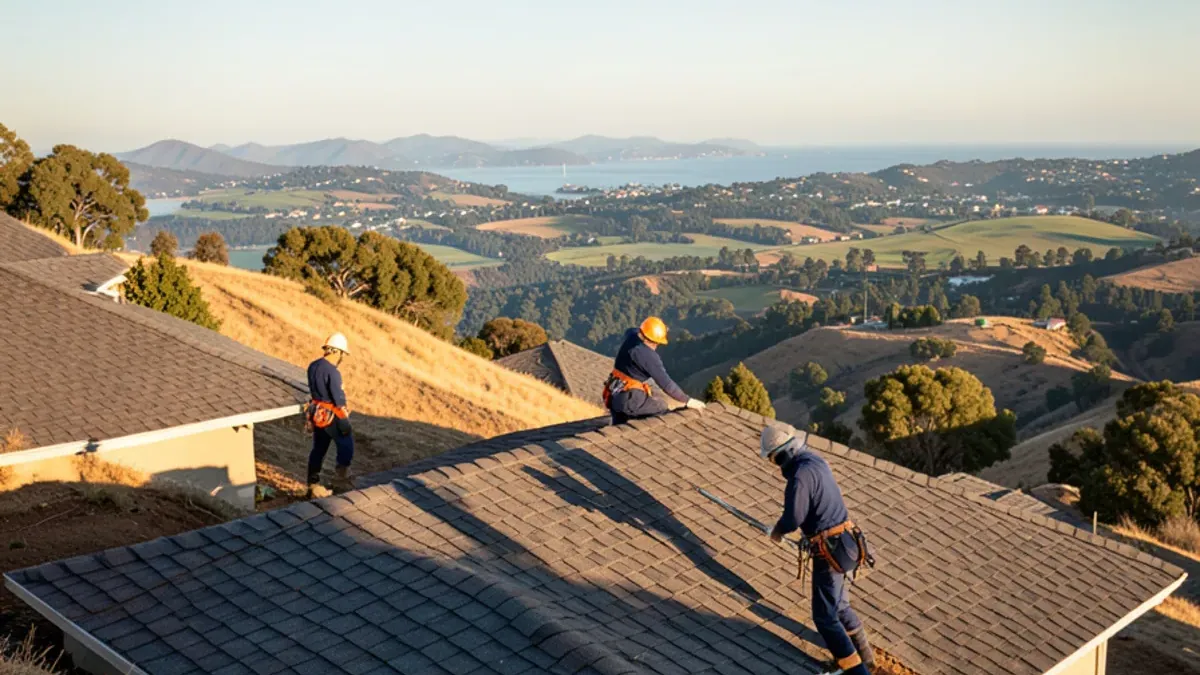
Slopes, sun and a stable owner base
About 84% of the occupied homes here are owner-occupied (Wikipedia, East Foothills), so most roofs belong to people planning to stay. That changes the math: a better reroof pays back over many years. The area covers only 2.1 square miles, which also means roofs of similar age and exposure sit close together.
The 2020 census counted 2,240 housing units, with 2,170 occupied, at a density of about 3,196 people per square mile and an average household of 3.1 (Wikipedia, East Foothills). About 16% of those homes are rented, and a rental owner needs the same dated inspection photos as an owner who lives in the house.
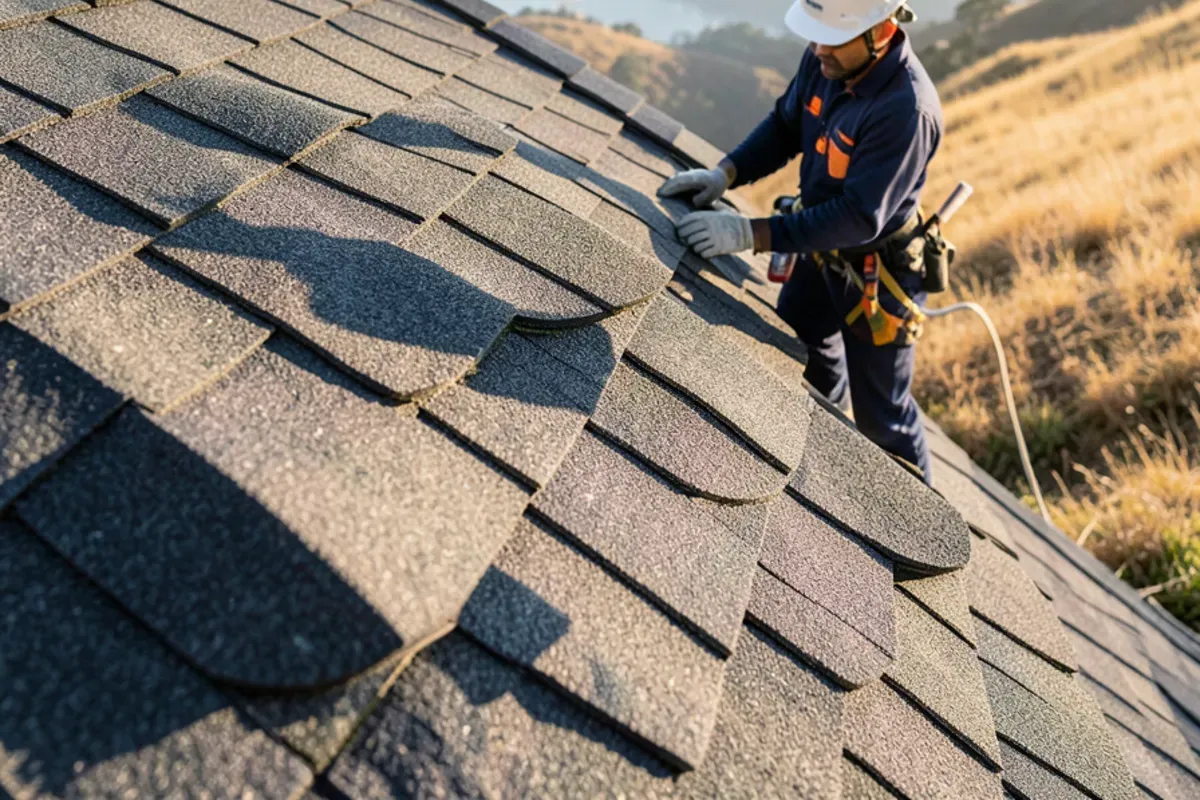
Slope and orientation matter most. A south or west face baking in afternoon sun ages faster than the shaded side. We check each face of the roof separately and rank the work.
County land next to San Jose
East Foothills is a census-designated place in Santa Clara County next to San Jose, not an incorporated city. Unincorporated parcels are generally permitted by the County of Santa Clara, while annexed ones use San Jose; ask which applies to yours.
Four miles from downtown, 351 feet up
East Foothills lies about 4 miles east of downtown San Jose at an elevation of 351 feet, in a census area of 2.13 square miles (Wikipedia, East Foothills). It is compact, and the line between county land and a parcel the City of San Jose permits can run close to your property. Before we book an inspection we ask for the street address and parcel number, so the estimate can name the right permit office.
The ZIP codes serving the area are 95127 and 95148.
Zone 4 on the east-side slopes
The ZIP codes covering East Foothills are in Climate Zone 4. Cross 50% of the roof on a single-family reroof and the CRRC-rated cool product rule applies. Exceptions exist, and the permit office has the final word.
Roof services on the east-side slopes
- Roof Repair
Afternoon sun dries sealant and curls shingle edges, so repairs often target flashing and vent boots. We inspect south and west faces separately, because the sunniest slope usually fails first.
- Roof Replacement
In Zone 4, reroofing over half the roof means a cool-rated product, and hillside access shapes the staging plan. With 84% of homes owner-occupied, owners tend to choose a roof for the long haul.
- Storm Damage Roofing
Exposed slopes can take wind and winter storms harder, so we document storm damage for your insurer. We photograph lifted tabs, displaced flashing and fallen limbs before any temporary repair.
- Gutters
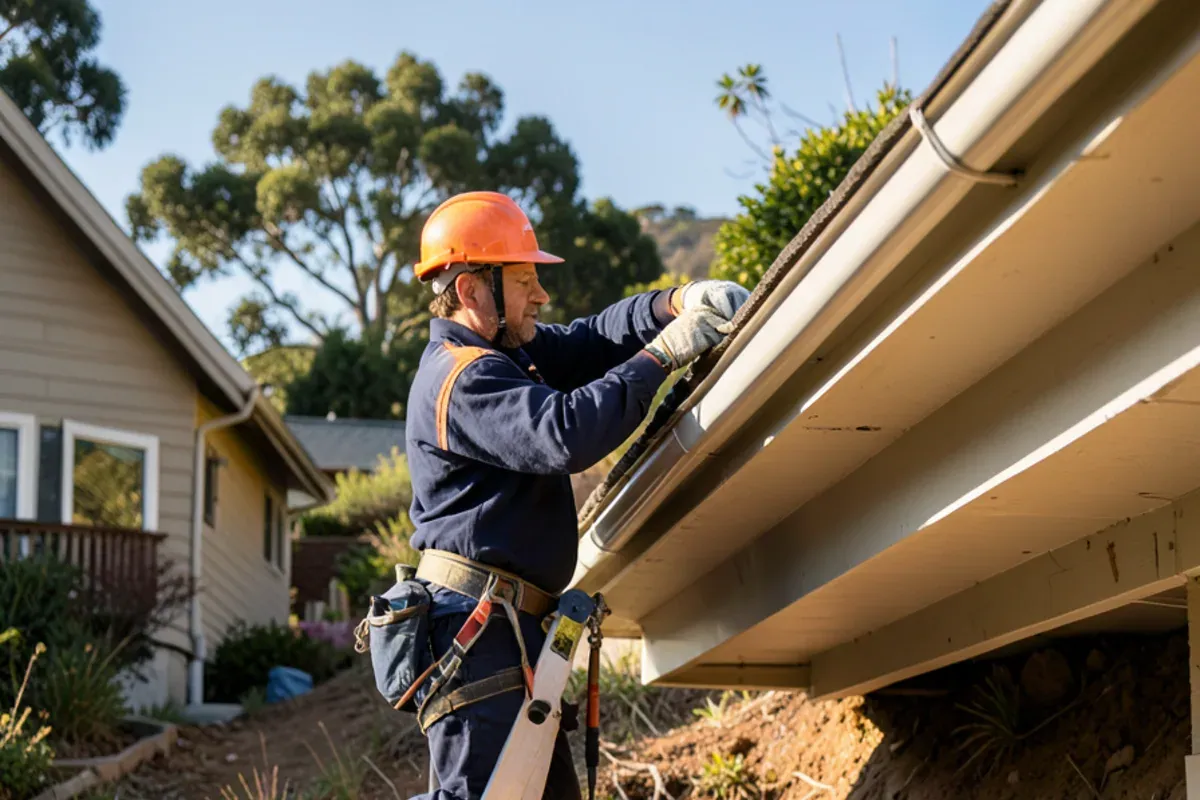
Slopes shed water fast, so gutters and downspouts need to carry it away from the foundation. We check that downspouts discharge onto a path that drains, not onto soil that sits against the house.
- Emergency Roof Repair
Phone triage and tarp advice first; arrival depends on crew availability and the drive. About 63 minutes away, we explain on the call how to protect the room below the leak.
- Roof Inspection
With about 2,240 housing units in 2.1 square miles, an inspection records which faces of the roof take the afternoon sun and what that has done to shingles, sealant and flashing.
- Roof Maintenance
Full afternoon sun is hard on sealant and vent boots, so a yearly look at the sunniest slopes and flashing, with small repairs made in dry weather, defers a reroof on a roof that still has life.
Booking for the east-side slopes
You call the Alameda office, describe the roof and we set an inspection. A written estimate follows. We group visits with nearby San Jose areas to cut the trip, and cannot promise quick arrival for urgent leaks.