
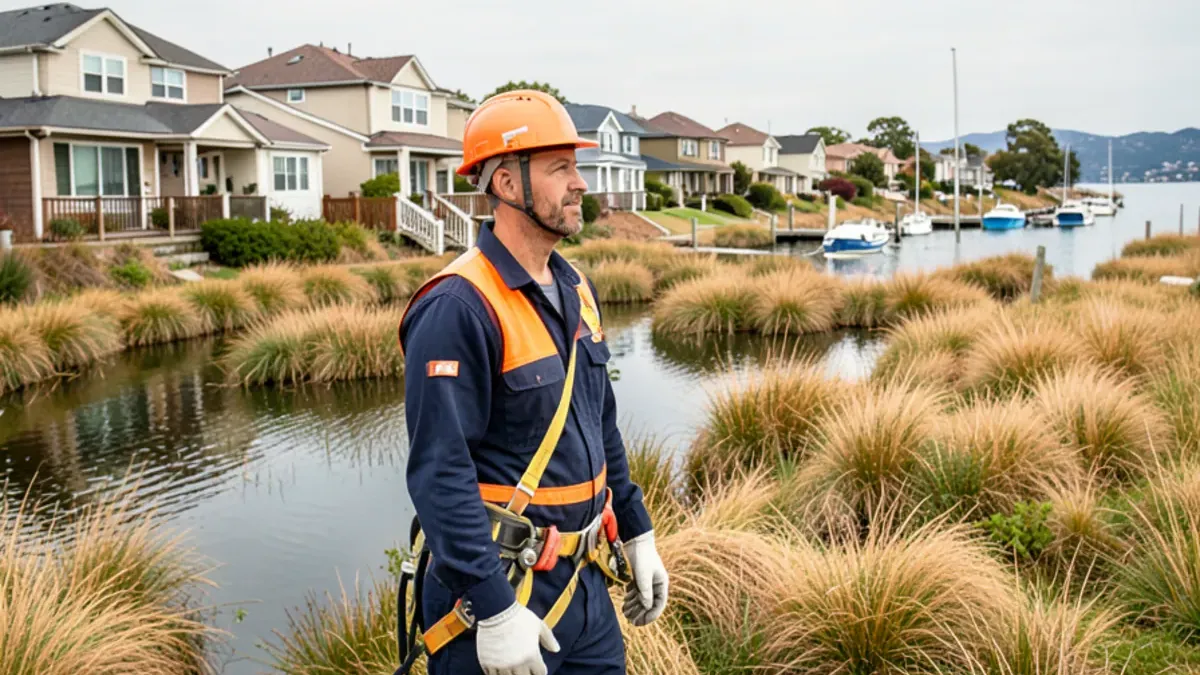
A sea-level town beside Suisun Marsh
At 6.6 feet above sea level, next to a vast tidal marsh (Wikipedia, Suisun City), roofs here stay damp longer after rain. Moss grows on shaded slopes, sealant softens and wood at the eaves rots from below. Our inspection starts with the damp spots: eaves, valleys and every roof penetration.
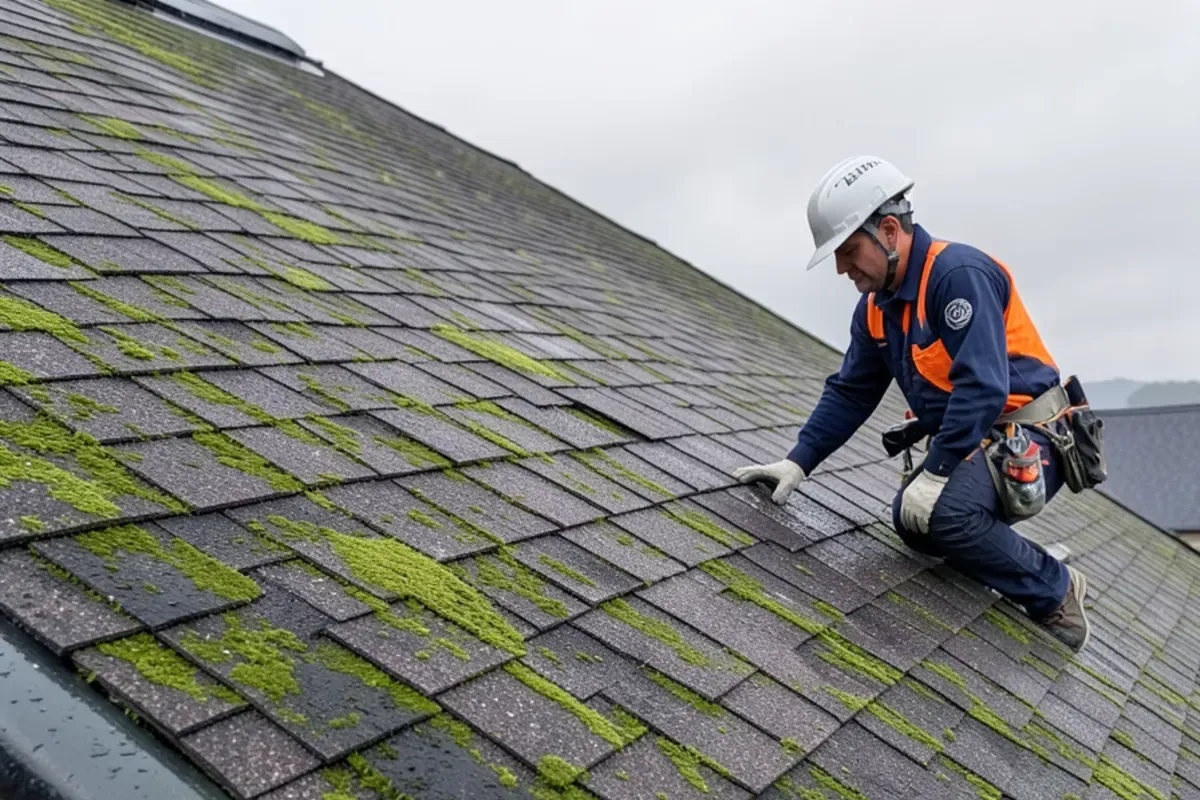
If the decking is soft, we say so, and we raise it before moving forward. Soft decking found mid-job becomes a change order that we explain before work continues.
Suisun City grew fast in the 1960s and 1970s (Wikipedia, Suisun City), so many of its 9,522 housing units are now more than 50 years old. In 2020, 67.5% of homes were owner-occupied and 32.5% rented. The covering on an older house may have been replaced while the deck beneath it is original, and damp marsh air is hard on old wood. We press-test the sheathing near the eaves and valleys during the inspection and again at tear-off.
Steady wind off open water
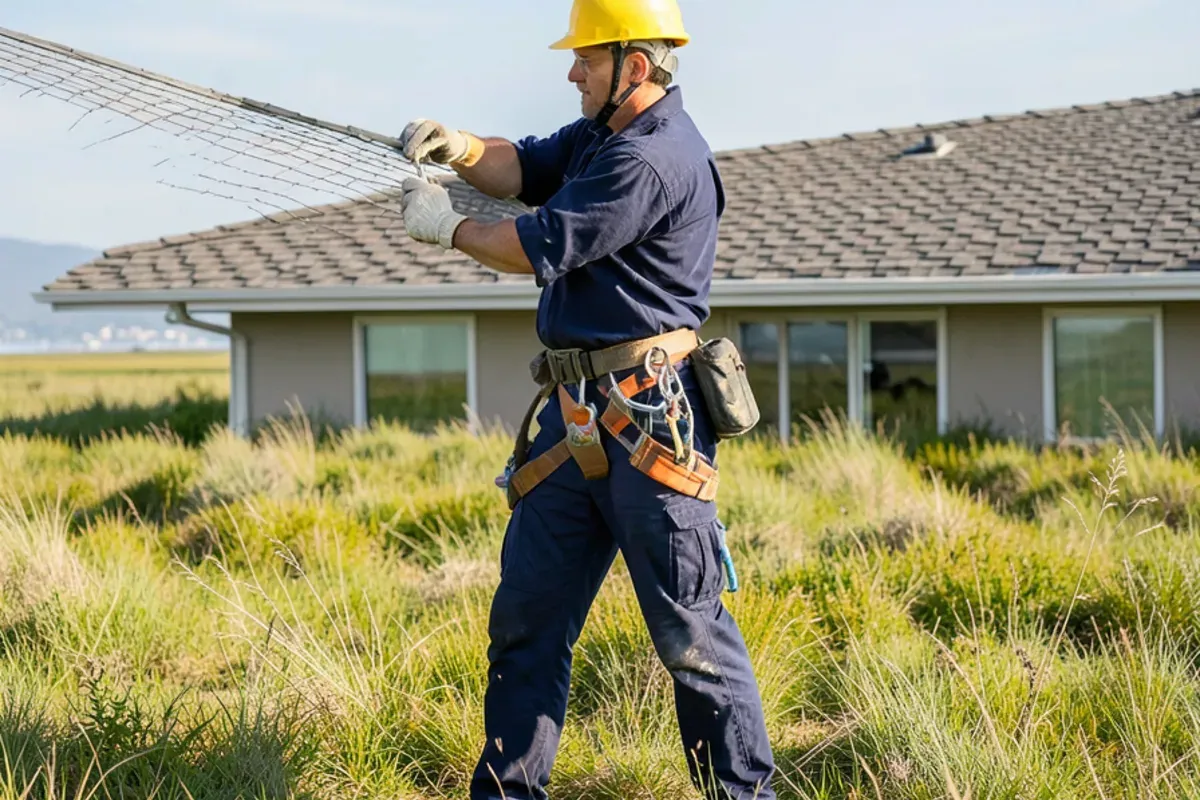
There are few windbreaks between the marsh and the houses. Ridge caps, rake edges and loose flashing take the first hit.
Harbor Plaza, the slough and the rebuilt downtown
A fire destroyed much of downtown Suisun City in 1888, and residents chose to rebuild and raised money for a waterworks system (Wikipedia, Suisun City). The city joined the transcontinental railroad at Sacramento through the California Pacific line in 1868 and 1869, and an Amtrak station still serves Suisun and Fairfield today.
The waterfront centers on Suisun Slough, with the city marina, Harbor Plaza and a harbor lighthouse. Suisun Marsh next door spans about 84,000 acres, and the city sits only 6.6 feet above sea level. Interstate 80 runs about two miles outside the city, so the last leg of any visit is on local roads. Wind, damp and low ground are the three things that decide how we plan a roof here.
Zone 12 and the permit path
Suisun City's ZIP code is in Climate Zone 12 per the Energy Commission. On a single-family home, a reroof beyond the 50% mark requires a CRRC-rated cool product. The City of Suisun City handles permits inside its limits, with the applicant named in the estimate.
Roof and gutter work around the waterfront
- Roof Repair
Moisture-loving moss and failing sealant are the usual causes of leaks near the marsh. We look at north slopes, eaves and every penetration first, then stop at the repair the roof actually needs.
- Roof Replacement
Zone 12 reroofs need a cool-rated product when more than half the roof is replaced. On a damp-edge roof, the tear-off also shows whether sheathing near the eaves has softened and needs replacing.
- Storm Damage Roofing
Wind across open marsh lifts shingles at ridges and rakes. The Patwin name for the area means where the west wind blows, and we photograph lifted edges for your insurer before any repair.
- Gutters
Gutters carry rain and wind-driven debris from the open waterfront, and need clear downspouts. Marsh air keeps leaf litter wet, so we flush the full run and check slope before closing out the roof.
- Emergency Roof Repair
Tarp advice by phone first; arrival depends on crew availability and the hour on the road. About 64 minutes from Webster St, we tell you what is realistic before you decide on temporary cover.
- Roof Inspection
With 32.5% of homes rented, a documented inspection with dated photos helps landlords and owners agree on one list of repairs, ranked by urgency, before the next stretch of wet weather.
- Roof Maintenance
Damp marsh air feeds moss and clogs valleys, so a yearly clean-out, moss check and sealant touch-up before October stretches roof life and catches rotting fascia before water reaches the sheathing.
From Alameda to the Suisun waterfront
You call the Alameda office, we book an inspection, and a written estimate follows with photos of the problem areas. The drive is long, so we schedule ahead.