
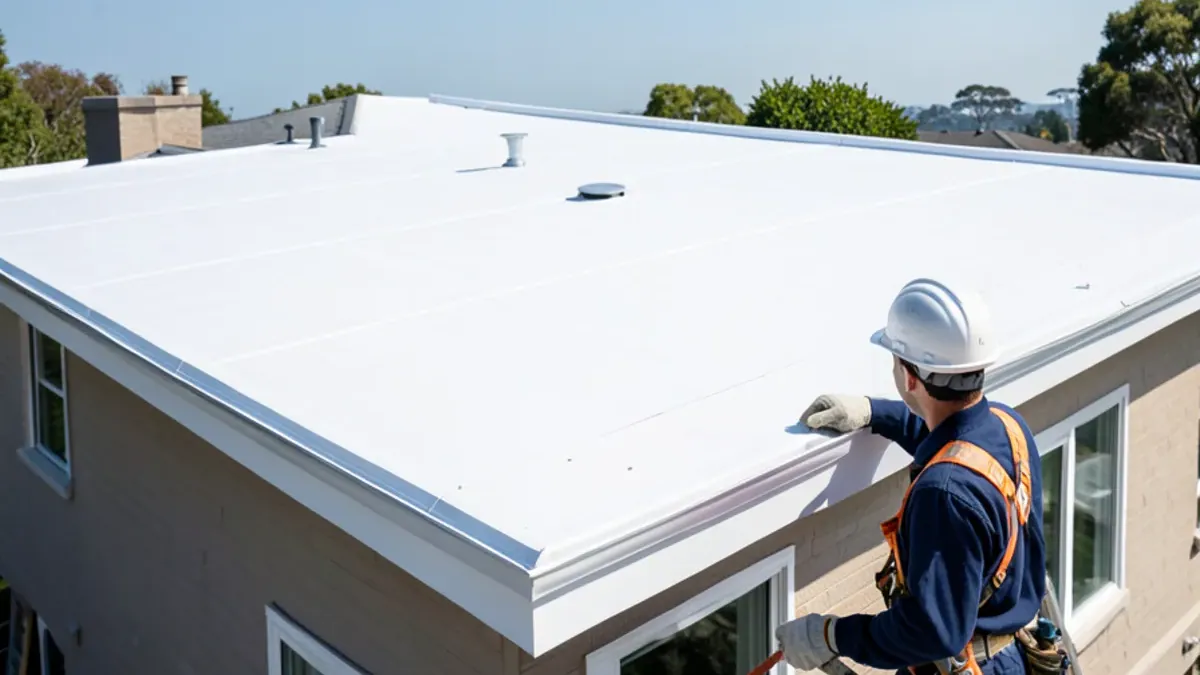
Which flat roof is best: TPO, torch-down or EPDM?
TPO and EPDM are single-ply sheets that suit most residential flat roofs, and torch-down is a multi-layer asphalt system with a fire-safety condition attached. The right pick depends on the deck, the roof traffic and how the seams are made. No one membrane wins everywhere.
| TPO | Torch-down | EPDM | |
|---|---|---|---|
| Type | Single-ply thermoplastic | Modified bitumen, multi-layer | Single-ply rubber |
| Seams | Heat-welded | Torched or cold-applied laps | Adhesive or tape |
| Surface color | Usually white or light | Granulated cap, gray or white | Usually black, white available |
| Foot traffic | Moderate | Tough | Moderate |
| Fire risk at install | Low | Highest with open flame | Low |
| Typical weak spot | Seams, flashings | Laps, flashing details | Seams, patched edges |
How does each material handle seams?
Seams are the story. TPO membrane seams are fused with hot air, which makes a continuous bond when done well. EPDM seams are glued or taped, which depends on clean, dry surfaces and careful rolling. Torch-down laps are melted into the layer below, and a missed lap is a leak path.
Install quality counts more than the material. A poorly welded TPO seam fails as surely as a badly taped EPDM one. Ask for photos of the seams and flashing at the corners and penetrations before the crew leaves.
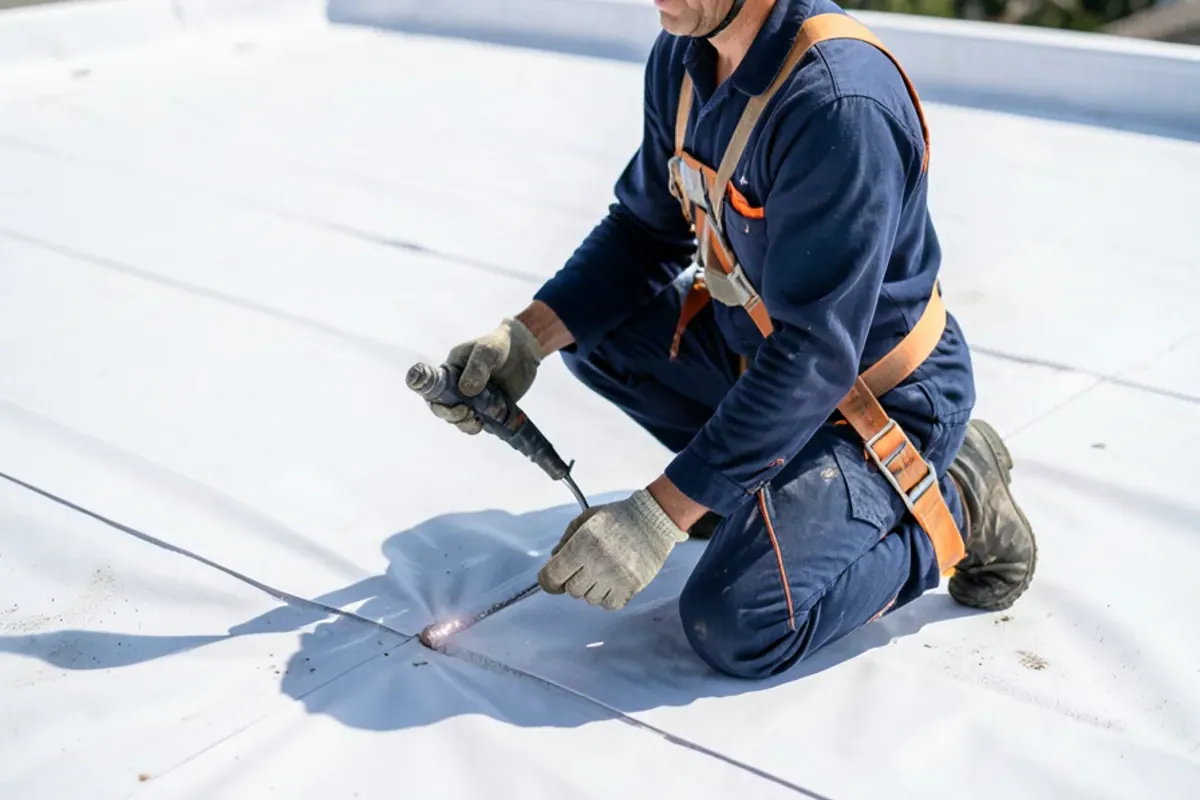
What is the fire risk with torch-down?
Torch-down uses an open flame at the roof surface, and that is its main risk. NRCA's 2019 roofing manual dropped its recommendation to specify torch-applied sheets over combustible roof decks, even with a thermal-barrier layer, because it judged the fire risk to outweigh the benefit. NRCA says alternatives such as cold adhesive application have proved successful.
Many older residential flat roofs sit on wood decks. If a bid calls for torching, ask how the deck is protected, who watches the roof after the work, and whether a cold-applied or self-adhered version is available. The torch-down roofing page covers how the system is installed.
How do they handle ponding and foot traffic?
All three struggle if water stands for long, so fix drainage first. Slope, drains and scuppers matter more than the membrane brand. A cheap membrane over a good drain outperforms a premium one over a bird bath.
Foot traffic is the next question. Torch-down's granulated cap takes wear well. TPO and EPDM work with walkway pads where people cross to equipment or a hatch. Tell the estimator how the roof is used: a deck, an HVAC pad, a satellite dish and a path to the hatch all need protection.
How is each system attached, and why does it matter?
The sheet can be fully adhered, mechanically fastened or ballasted, and the method changes the bid more than the membrane name. Ask which one is proposed.
- Fully adhered sheets are glued to the insulation or deck, which suits small roofs, many corners and parapets.
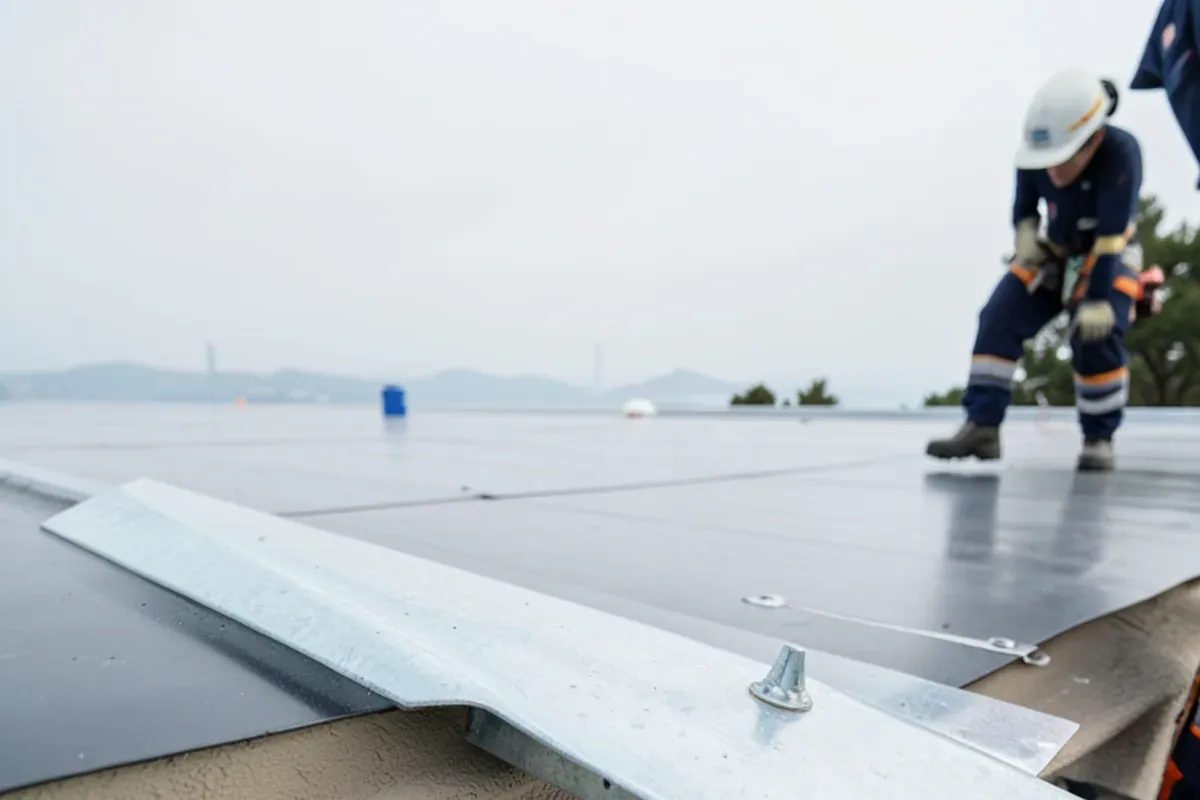
- Mechanically fastened sheets are screwed through plates along the seams, which is quicker, and every plate has to be installed on a sound deck.
- Ballasted systems hold the sheet down with stone and add weight the structure has to carry, so they rarely suit older wood-framed homes.
Torch-down is multi-layer and bonded to the layer below. Either way, the substrate under the sheet carries the system: insulation board, tapered pieces that build slope toward the drain, and the deck. If the bid does not say what goes under the membrane, it has skipped half the roof.
How are repairs done on each type?
Repairs differ, and that should shape your choice if you expect to add penetrations later. The table lists the usual patch method for each.
| Usual repair | |
|---|---|
| TPO | Clean the area and heat-weld a patch over the cut or open seam |
| EPDM | Clean, prime and apply adhesive-backed or tape-seamed patch |
| Torch-down | Cut out the blister or open lap and lay a patch with cold adhesive or heat, as the deck allows |
A patch on an old sheet only holds when the old surface is clean and sound. Aged membrane that powders, shrinks or pulls from the wall is a replacement question. The flat roof replacement page explains how that process runs, and the flat roofing overview lists every system.
What matters on an island roof?
Alameda sits on the bay, so edge metal and fasteners deserve attention beyond the sheet itself. Ask what drip edge, coping and fasteners are specified and how they resist corrosion, since the membrane usually outlasts a poor metal choice. Standing water matters too, because the island sees about 22 inches of rain a year, almost all October through April (BestPlaces). Flat townhouse roofs with low parapets and a single drain have little margin when that drain blocks. Check the drainage path in the bid for any Alameda property before comparing materials.
How do Title 24 cool roof rules apply?
Alameda is in California Climate Zone 3. According to the Cool Roof Rating Council's summary of the 2025 Energy Code, a single-family reroof of more than 50% of the roof needs cool-roof ratings for low slopes only in Climate Zones 4 and 6 through 15. Alameda is outside that list, so a cool roof is an option, not a requirement. Exceptions exist, and the building department has the final word. Products used for compliance must be rated by the CRRC.
A white TPO sheet gives a cool surface by default, and white EPDM exists too. A black EPDM roof absorbs more heat. If summer heat or the room beneath matters, ask for the product's aged solar reflectance.
How do you choose between them?
Work through four questions with the roofer on site:
- What is the deck made of, and is it dry and solid? Wood decks steer you away from open flame.
- How is the roof used? Walkways, equipment and rooftop decks change the surface you need.
- Where does water go? Confirm the slope, the drains and the overflow before choosing a sheet.
- How many walls, vents and curbs does it have? Every penetration is a flashing detail, and flashing is where roofs fail.
Then compare the install method in each written bid: weld, adhesive, torch or cold-applied. The product name matters less than who builds the details and whether the warranty terms are in your contract in writing.
What drives flat roof pricing?
Cost depends on roof size, deck repairs, the number of penetrations and walls, insulation, drainage changes, access, and whether old layers are removed. A 2026 Alameda pricing data set puts flat or built-up roofs at roughly $6,000 to $18,000. That is a range for context. The price that binds a roofer is the one in a written estimate, and three bids on the same scope tell you more than any chart.
Flat roof jobs in Alameda
An Alameda townhouse had its flat roof and bulkhead replaced. On another job, aged decking surfaced at tear-off and was handled by change order, explained before work went on. Whichever membrane is chosen, the deck, drains and flashings decide how it ages.
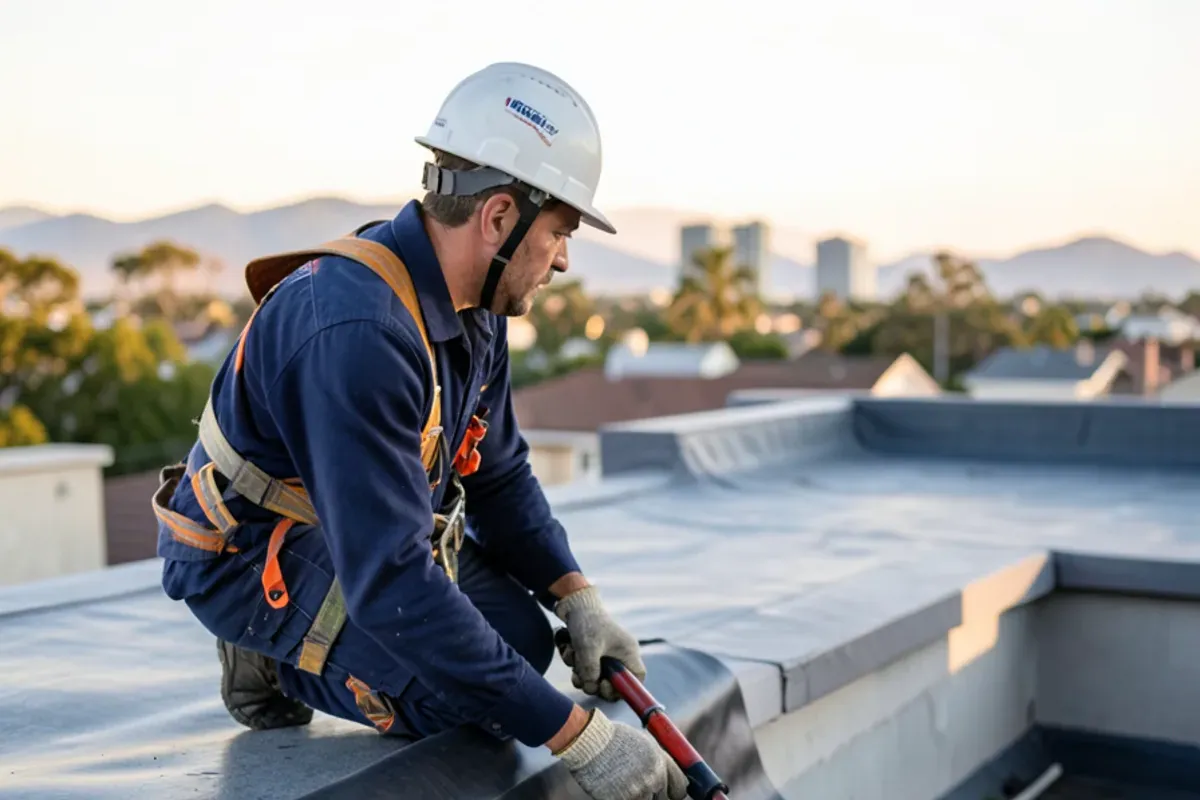
Compare the system pages for TPO and PVC roofing and EPDM roofing, then decide on traffic, drainage and install method. For a bid on your own roof, call us or ask for a free estimate.