

What TPO and PVC roofing actually is
TPO and PVC are single-ply membranes, thin plastic-based sheets rolled out across a flat roof. They are fastened or adhered to the insulation and deck, then the laps are fused with a hot-air welder. The seam becomes part of the sheet, not a glued joint, which is the main reason single-ply has taken over so many flat roofs.
Single ply roofing comes in white, tan and gray. White is the common choice in the Bay Area because it reflects heat, and the reflectance matters more on roofs over finished attics and sunrooms. Thickness is measured in mils, and you can ask the estimate to state it in writing.
TPO vs PVC roof: which fits yours?
A TPO vs PVC roof decision turns on chemicals and complexity. PVC handles grease, oils and rooftop exhaust better and tends to weld a little more forgivingly around details. TPO is more common on plain residential roofs and often costs less.
- Pick PVC when kitchen exhaust, a restaurant-style vent or equipment drips onto the roof.
- Pick TPO for a clean townhouse roof or an addition with few penetrations.
- Skip single-ply when the roof is a maze of curbs, pipes and small details. Layered sheets, as on the torch-down roofing page, flash those more easily.
- Consider rubber on a small, simple area. See EPDM roofing for that comparison.
We recommend the system after seeing the roof. A homeowner with a rooftop deck needs a different answer than one with only a skylight and two vents.
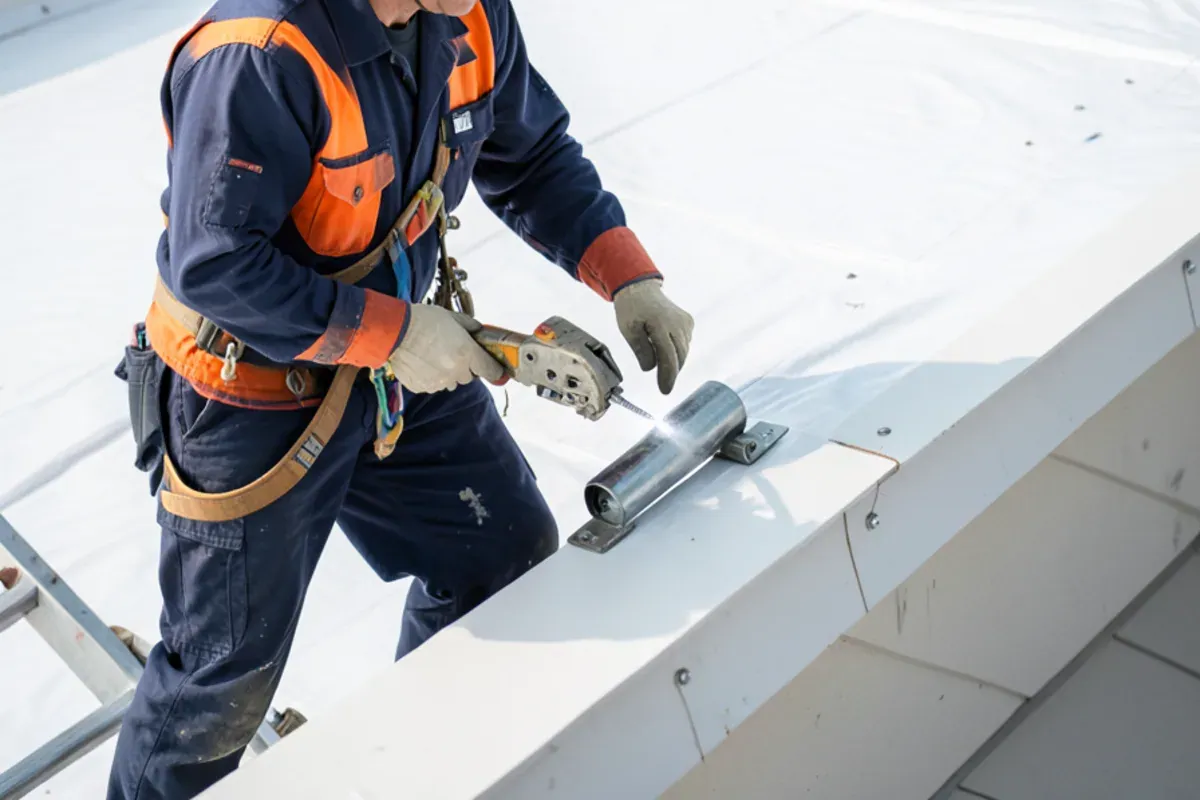
Cool flat roof: what the energy code actually says
A cool flat roof is a choice in Alameda, not a requirement. Under the 2025 Energy Code, effective January 1, 2026, single-family reroofs that replace more than 50% of the roof need cool roof ratings only in certain climate zones. Low slope roofs are required in Zones 4 and 6 through 15, according to the Cool Roof Rating Council summary. Alameda is in Climate Zone 3, outside that list.
Some exceptions apply, and the local building department decides what your project needs. If you do choose a rated product for compliance or for a utility program, it must be listed with the Cool Roof Rating Council. Check your own climate zone on the California Energy Commission's lookup if you own a home somewhere else in the Bay Area.
What a TPO or PVC roof job includes
- Tear-off, or a verified recover on a sound single-layer roof
- Deck repair and insulation, tapered where the roof ponds
- Membrane in the thickness the estimate names
- Welded laps with the seams probed
- Flashing at walls, pipes, curbs and drains
- Photos and a walkthrough at the end
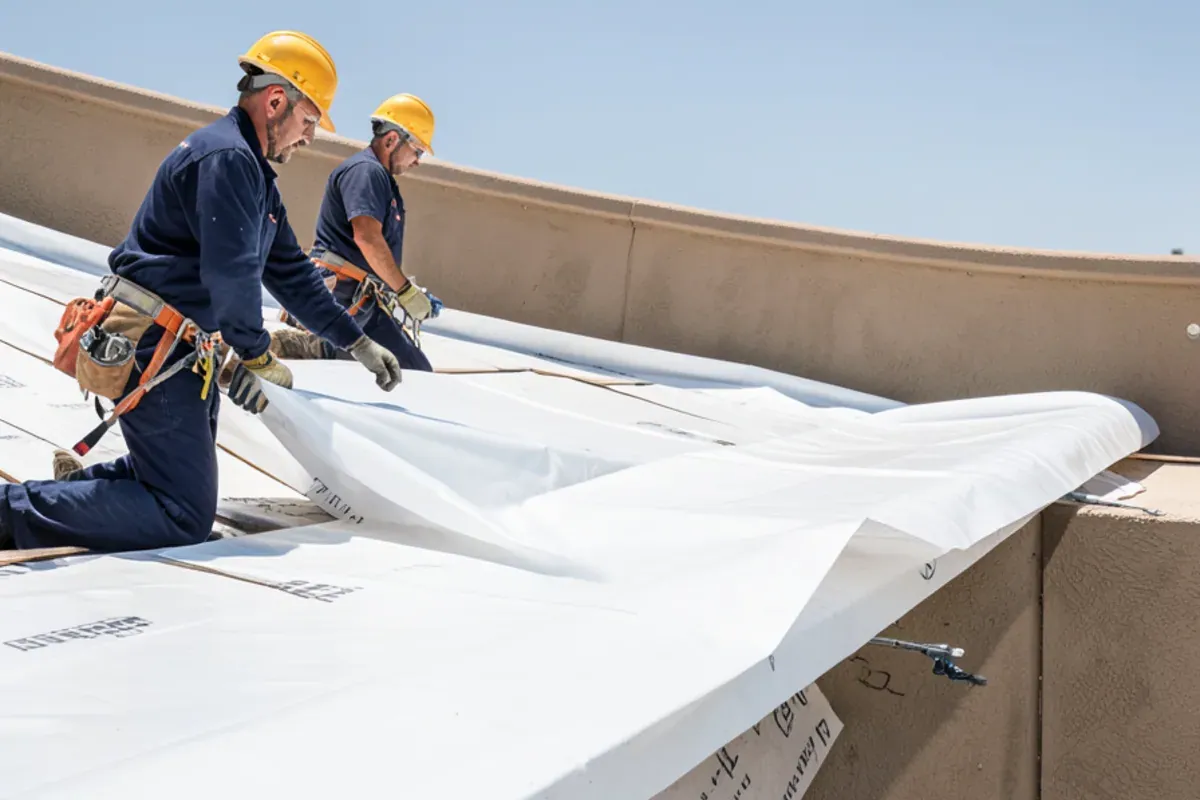
Is your roof ready for single-ply?
A cracked or blistered surface, water that stays after rain, wet insulation, and repeated patches at the same seams all point toward a new sheet instead of another repair. The inspection confirms which applies.
Heat-welded roof membrane: how the installation goes
The installation is a sequence, and each step protects the next:
- Inspect the existing roof, deck and drains, then write the estimate with the membrane thickness stated.
- Confirm who pulls the permit and whether an association has to approve the color.
- Remove the old roof or prepare it for recover if the layers allow.
- Replace damaged deck and install insulation, tapered where the roof ponds.
- Roll out the sheet, fasten or adhere it, and weld every lap with a hot-air welder.
- Probe the seams, flash the walls, pipes and curbs, and set the drains.
- Walk the finished roof, send photos and clear the site.
Seam probing is the quality check that matters, so ask whether it is in the scope.
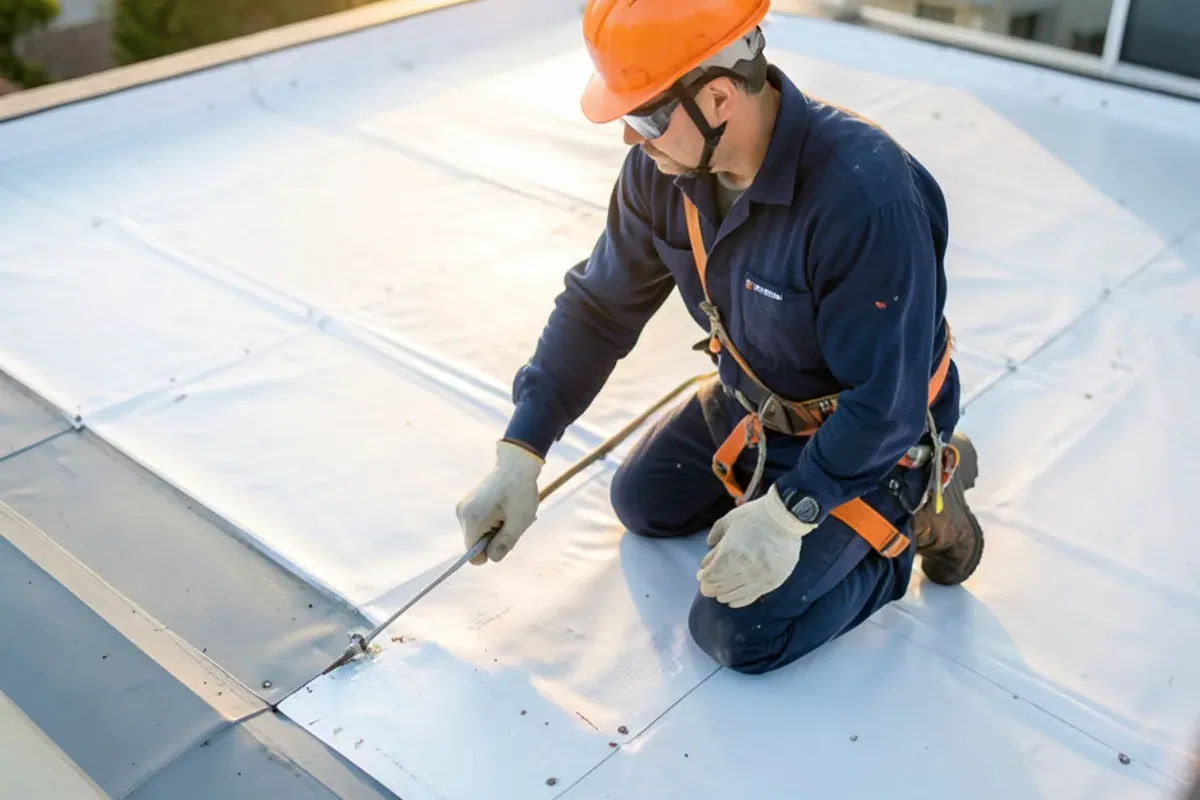
White membrane roof details that decide the result
A white membrane roof lasts as long as its weakest detail. Walls, drains and penetrations take more labor than the open field, and that is where a bid that looks cheap usually cuts. Look for these items in any estimate:
- Counterflashing or termination bar at every wall.
- Molded boots at pipes, not caulk alone.
- Walkway pads where anyone will step regularly.
- Drain bowls replaced or clamped, not just covered.
- A line for deck repair, since rot appears at tear-off.
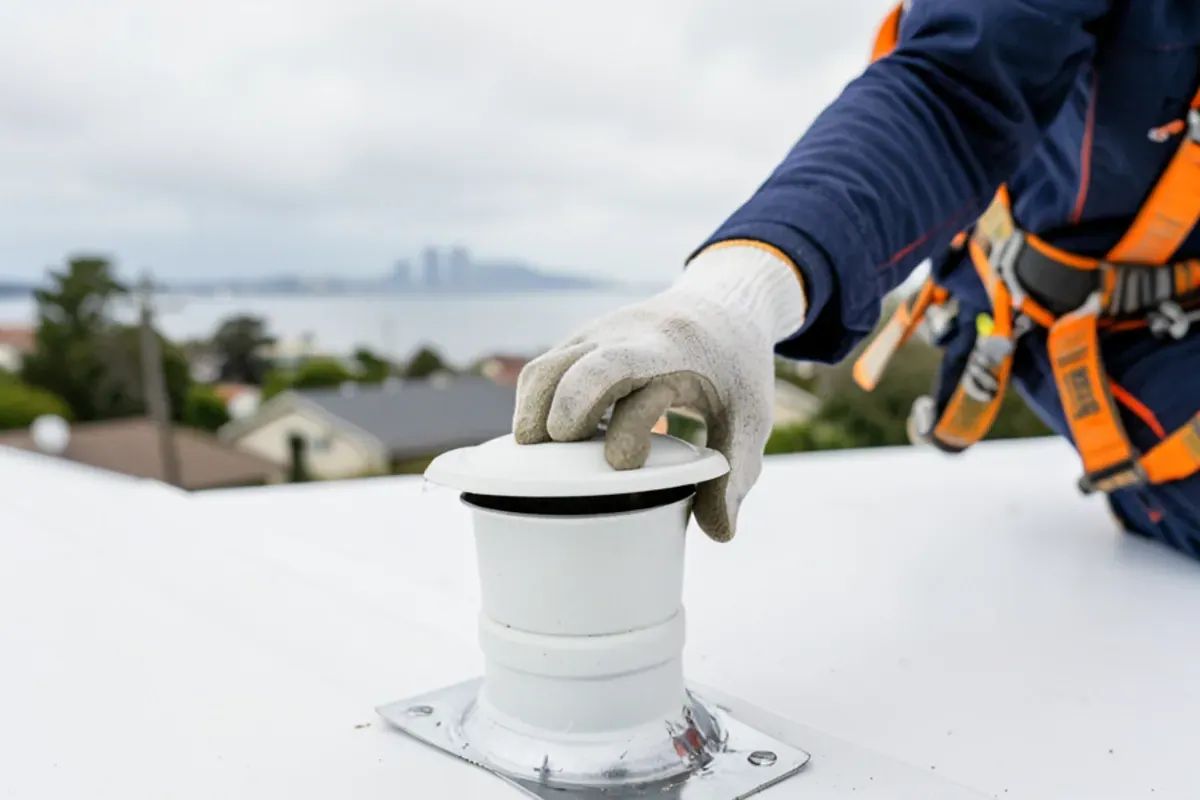
Rooftop solar needs sequencing. Panels are your solar company's work, and the roof schedule is set around their install date so that an array never lands on a half-finished membrane.
What does a TPO or PVC roof cost?
Single-ply cost depends on area, thickness, insulation, deck repair and detail count. We do not have a verified local price for single-ply alone, so we publish no number here. The broader benchmark for flat and built-up roofs in 2026 Alameda data is $6,000 to $18,000, and that range covers several systems.
The single largest swing is detail count, not square footage. A small roof with a bulkhead, three pipes and a skylight can cost more per square foot than a larger plain roof. The real price lives in the written estimate, so ask for membrane, insulation and flashing on separate lines. The flat roof replacement page lists the other factors.
Permits and licensing for a single-ply roof
A third-party Alameda County guide puts the permit line for roof work at about 200 square feet (PermitFlow), and the City of Alameda Permit Center says most construction work needs one. The estimate should name whoever pulls it. Roofing in California requires a C-39 classification from the Contractors State License Board. Look up the number at cslb.ca.gov, confirm it is active, and check the $25,000 contractor's bond on the record (§7071.6). Townhouse associations may require approval of the membrane color. For a manufacturer warranty, ask who issues it and what installation conditions it requires.
Where we install single-ply roofs
We serve Oakland, about 12 minutes from our Webster St office, Berkeley, roughly 18, and Hayward, around 31 minutes. Bay-adjacent addresses get salt-laden air and fog off the water, so we check the fasteners and metal edge for corrosion on every inspection.