
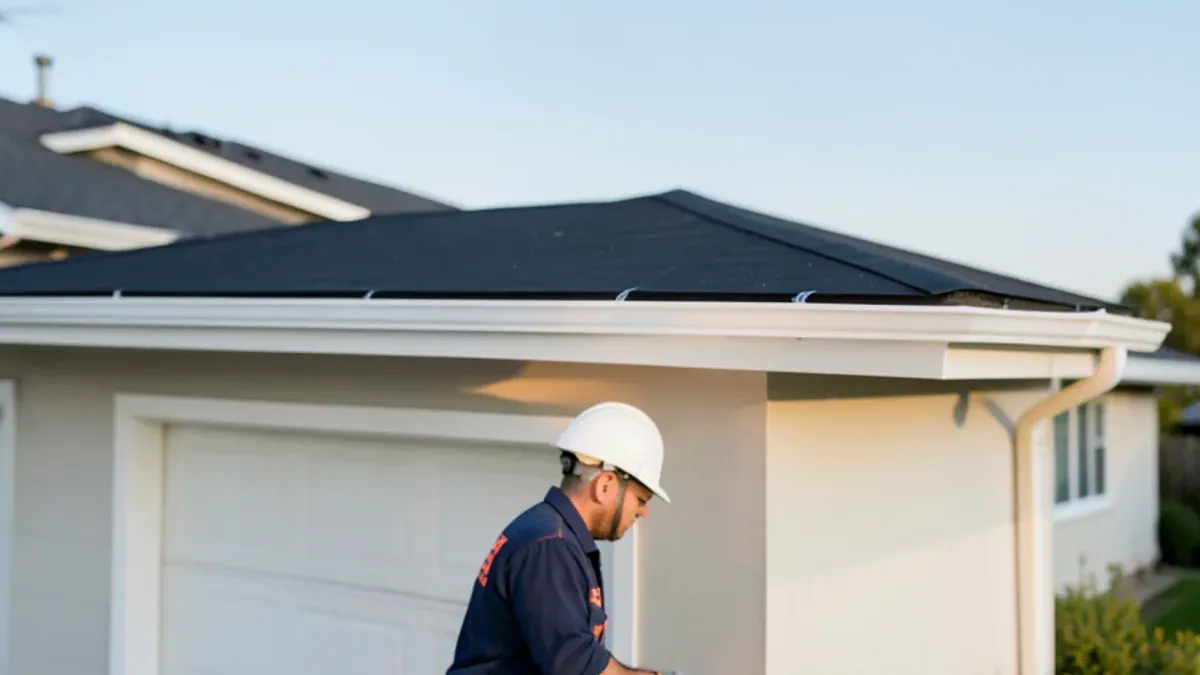
What EPDM roofing is, and where it fits
EPDM is a large sheet of rubber, and its strength is how few seams it needs. A garage roof can be one piece. A porch cover or dormer can be one piece with a flashed edge. Fewer seams mean fewer places for water to enter, and the seams that remain are taped or glued rather than welded.
Rubber roofing in Alameda fits best on small, simple, low-slope areas: detached garages, porch covers, rear additions and the flat portion of a bungalow roof. On a big townhouse roof with a bulkhead and many curbs, a layered or welded system often handles the details more easily. The TPO and PVC page covers that comparison.
How the rubber roof gets attached
Three attachment methods cover almost every EPDM job:
- Fully adhered: glued to insulation or cover board. Quiet, neat, the usual choice for homes.
- Mechanically fastened: screws and plates along the seams. Faster, with some billowing in strong wind.
- Ballasted: held down with stone. Heavy, rare on houses, and the deck must carry the load.
On Alameda homes we expect fully adhered work, because the weight of ballast is a poor match for older framing. The estimate should name the method, the sheet thickness and the type of seam tape or splice.
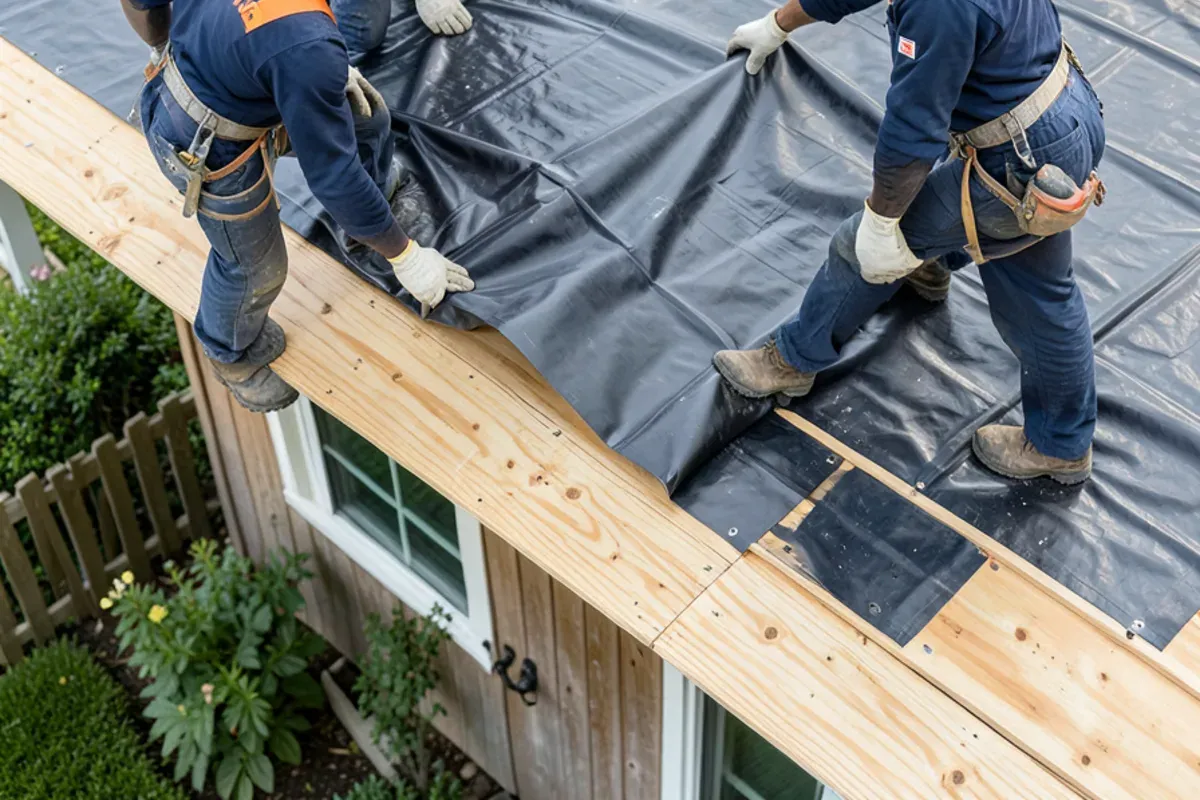
What an EPDM roof job includes
- Moisture check and inspection of the deck, drains and walls
- Tear-off where the roof has two or more coverings or a wet deck
- Deck repair and insulation, tapered where water collects
- One rubber sheet in a named thickness and attachment method
- Formed rubber flashing and seam tape at walls, pipes and corners
- Edge metal, drains, photos and cleanup
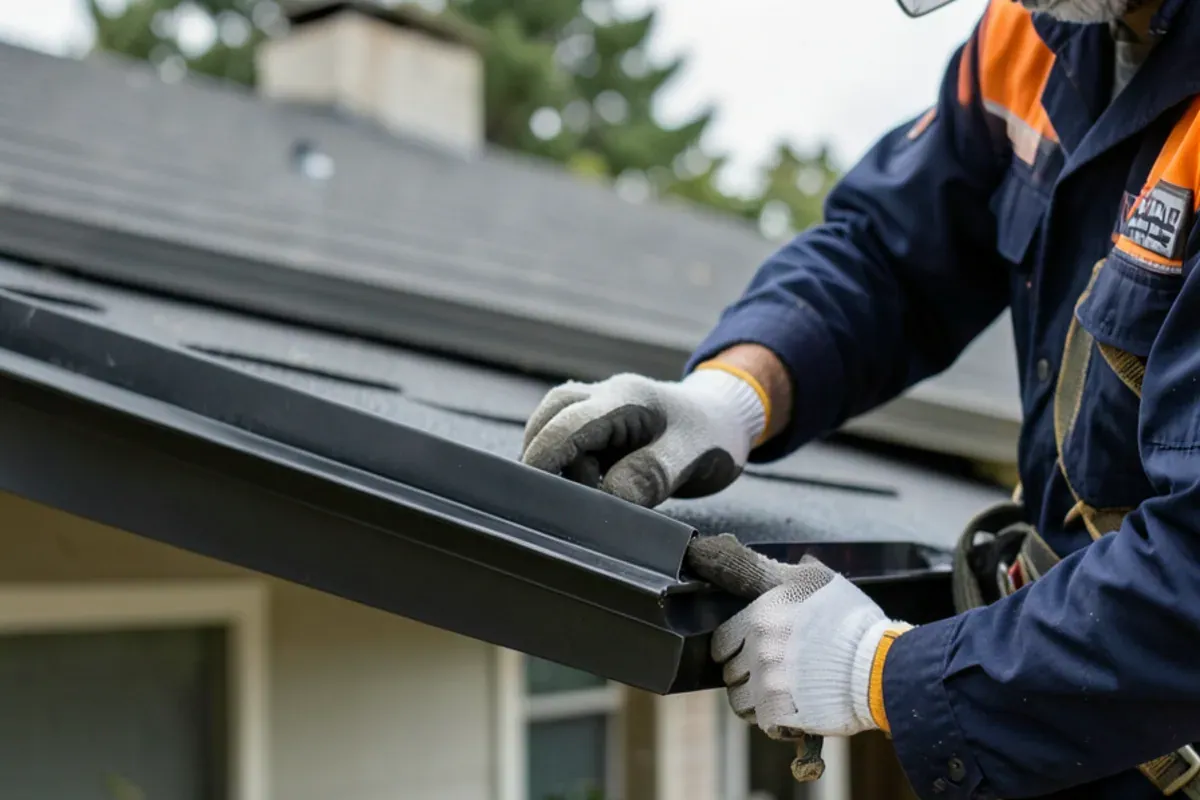
EPDM membrane installation, step by step
- Inspect the deck, drains and walls, and check for moisture under the old roof.
- Write the estimate with the attachment method and thickness named.
- Tear off the old roof if it has two or more coverings, or if the deck is wet or soft.
- Repair the deck and add insulation, tapered where water has been collecting.
- Roll the sheet out to relax, then adhere it with the substrate clean and dry.
- Flash the walls, pipes and corners with formed rubber pieces and seam tape.
- Set the drains and edge metal, walk the roof and send photos.
California's reroofing rule bars a new covering over a roof with two or more existing applications, so a roof with two layers comes off first. Wet insulation is the other reason to tear off.
Rubber roof repair and EPDM roof repair
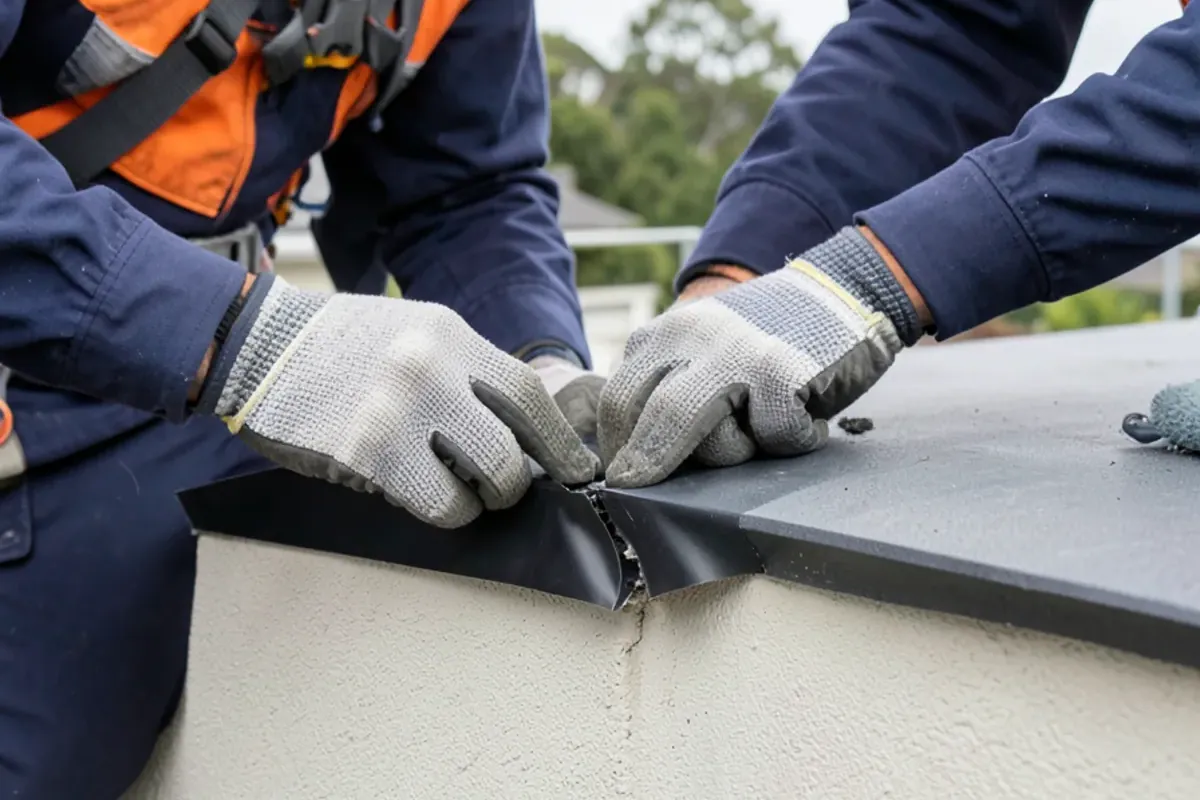
EPDM roof repair is straightforward when the sheet is healthy. Punctures, split seams and lifted flashing are cleaned, primed and covered with tape or a patch. Small repairs rarely need a full tear-off.
Rubber that has aged shows shrinkage at the walls, cracked surface and lifted laps. A few patches buy time, but a roof with patches on every wall usually costs less to replace. See roof coatings if the sheet is sound but weathered, and roof deck waterproofing if the roof is also a deck.
What makes a rubber roof leak?
Shrinkage that pulls the sheet off the wall, seam tape that has let go, leaves packing a drain and punctures from foot traffic or tree debris cover most leaks. Check those four spots before blaming the middle of the roof.
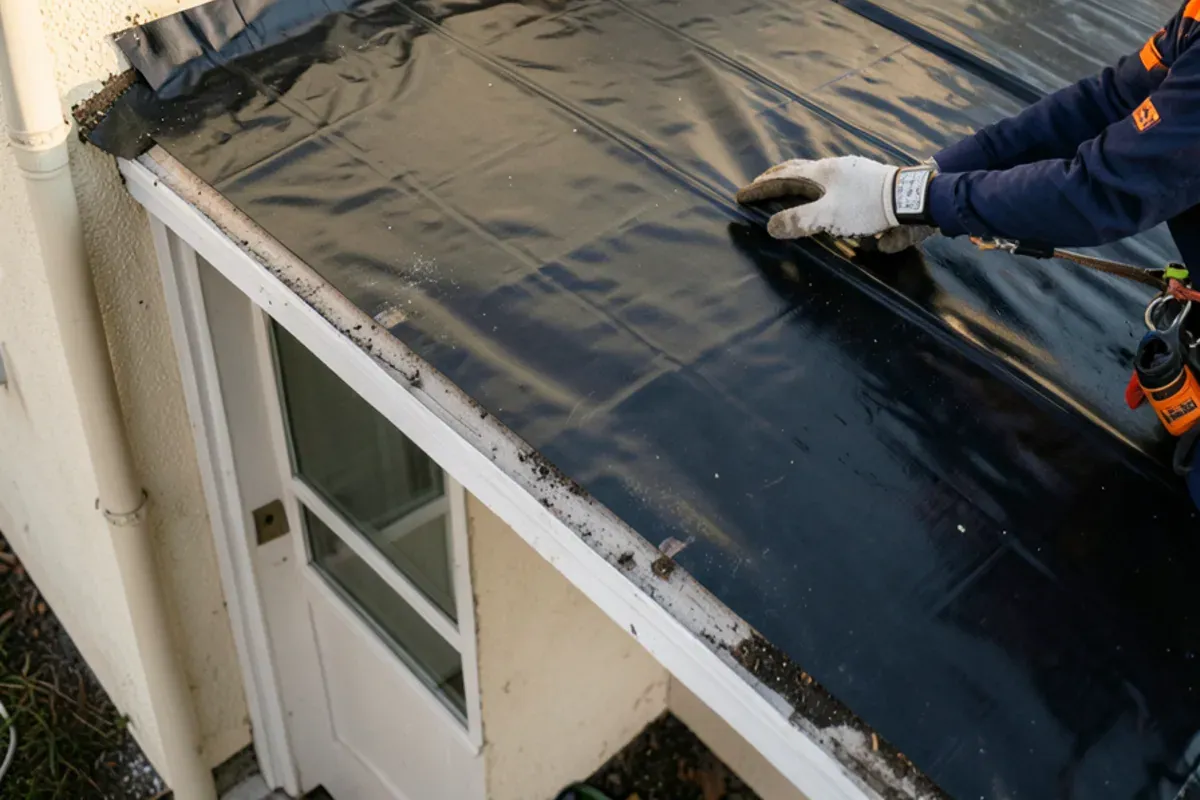
Black rubber roof, white option: what about the heat?
A black rubber roof absorbs sun, and a white or coated one reflects it. In the bay climate, with fog and breezes, the penalty is modest, and over an ordinary garage it rarely matters. Over a sunroom or a finished room beneath, it can.
One Alameda customer was advised to go with a lighter color to keep a sunroom cooler. Cool-roof ratings are optional in Alameda, which is in Climate Zone 3, outside the 2025 Energy Code list for single-family reroofs. Exceptions exist and the building department has the last word. If you choose a rated product, it must be listed with the Cool Roof Rating Council.
What does an EPDM flat roof cost?
EPDM flat roof cost depends on area, attachment method, deck repair, insulation and the length of wall flashing. We have no verified local EPDM price, so we publish none. The broader benchmark of $6,000 to $18,000 for flat or built-up roofs in 2026 Alameda data covers many systems.
Small roofs carry minimum job costs, since mobilization and tear-off do not shrink with area. Ask for a written estimate with the deck allowance on its own line. Price comes from the written estimate, and a small job still earns a written one.
Permits and licensing for a rubber roof
Small roofs still have rules. The City of Alameda Permit Center says most construction work needs a permit, and a third-party county guide puts roof work at about 200 square feet and up (PermitFlow), so a garage roof may fall either side of the line. Ask the Permit Center, and have the estimate say who pulls any permit. The minor-work exemption for unlicensed work stops at $1,000 and applies only to jobs that need no permit and involve no employees (Business and Professions Code §7048). Roofing needs a C-39 classification, so look up any roofer at cslb.ca.gov.
Where we install rubber roofs
From Webster St, Oakland is about 12 minutes, Berkeley roughly 18 and San Leandro about 24, depending on bridge and freeway traffic. Garages, porch covers and bungalow additions in those cities are where rubber fits.