Skip to content
Apex Shield Roofing logo
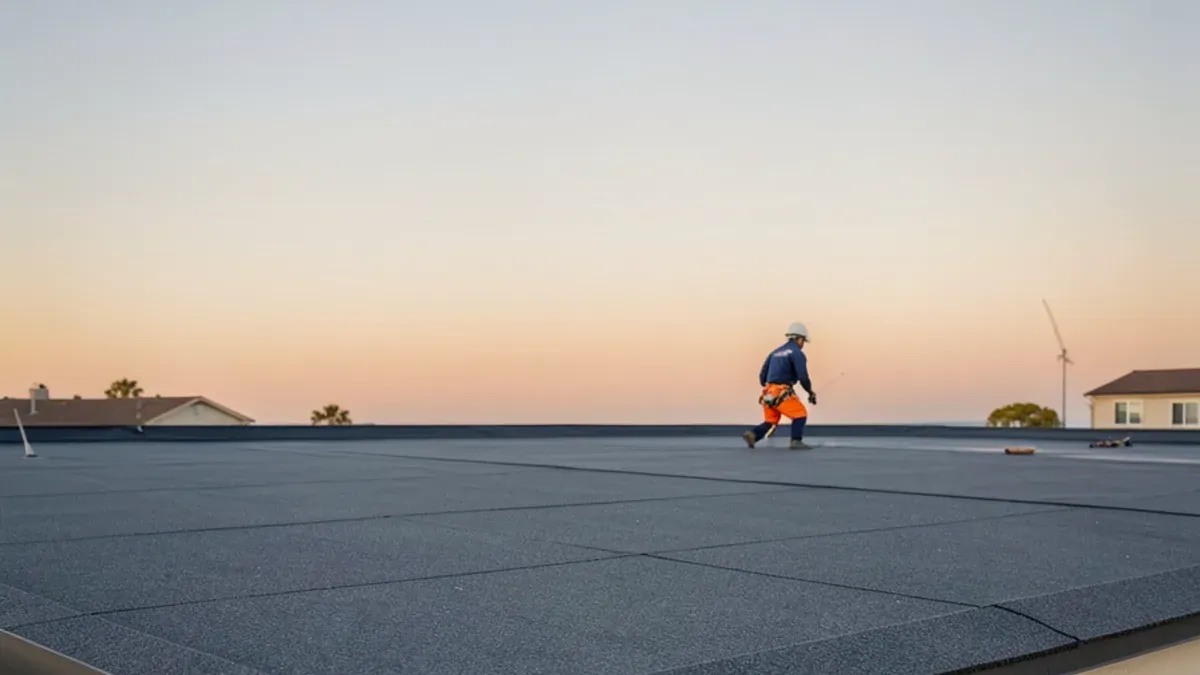
Dark layered modified bitumen flat roof over a stucco home in Alameda

Torch-Down Roofing in Alameda, CA

Torch down roofing in Alameda, CA is a layered modified bitumen roof, and the method of attaching it matters as much as the material. On a wood-framed older home, open flame is a decision made with care, and self-adhered sheets are often the safer route. It is one of the systems in our flat roofing work.
  • 4.9 stars from 60 Google reviews
  • Free written estimates
  • Photo updates by text and email
  • Office on Webster St, Alameda

Torch down roofing: how the layers work

A modified bitumen roof is built in layers. A base sheet goes on first, then a granulated cap sheet on top, and each is lapped and sealed. Asphalt modified with rubber-like polymers (the SBS in "SBS roofing") keeps the sheet flexible through cold snaps and hot summers, and the reinforcing mat keeps it from tearing.

"Torch-down" names one way of sticking the sheets down: a propane torch softens the underside of the roll as it is laid. The same sheets can also be self-adhered, cold-applied with adhesive, or mechanically fastened. The roof you end up with looks similar from the street, but the risk to the building during installation is not the same.

Safety first: torch, self-adhered or cold-applied

The attachment method is the first decision on a wood-framed home. Open flame is a real hazard near eaves, old sheathing joints and roof gaps. For many of the older houses in Alameda, where 31.9% were built in 1939 or earlier (Point2Homes), a torch is not the default.

  • Torch-applied: fast, strong laps, but needs a fire watch and clear attic and eave spaces.
  • Self-adhered: peel-and-stick sheets, no flame, a good fit for small or sensitive roofs.
  • Cold-applied adhesive: no flame, slower, with fumes that need ventilation.
  • Mechanically fastened base: screws and plates through the base sheet, then a cap layer over it.

Self-adhered flat roofing keeps the layered build and drops the flame, which is why it is our first suggestion for a wood-framed home with tight eaves.
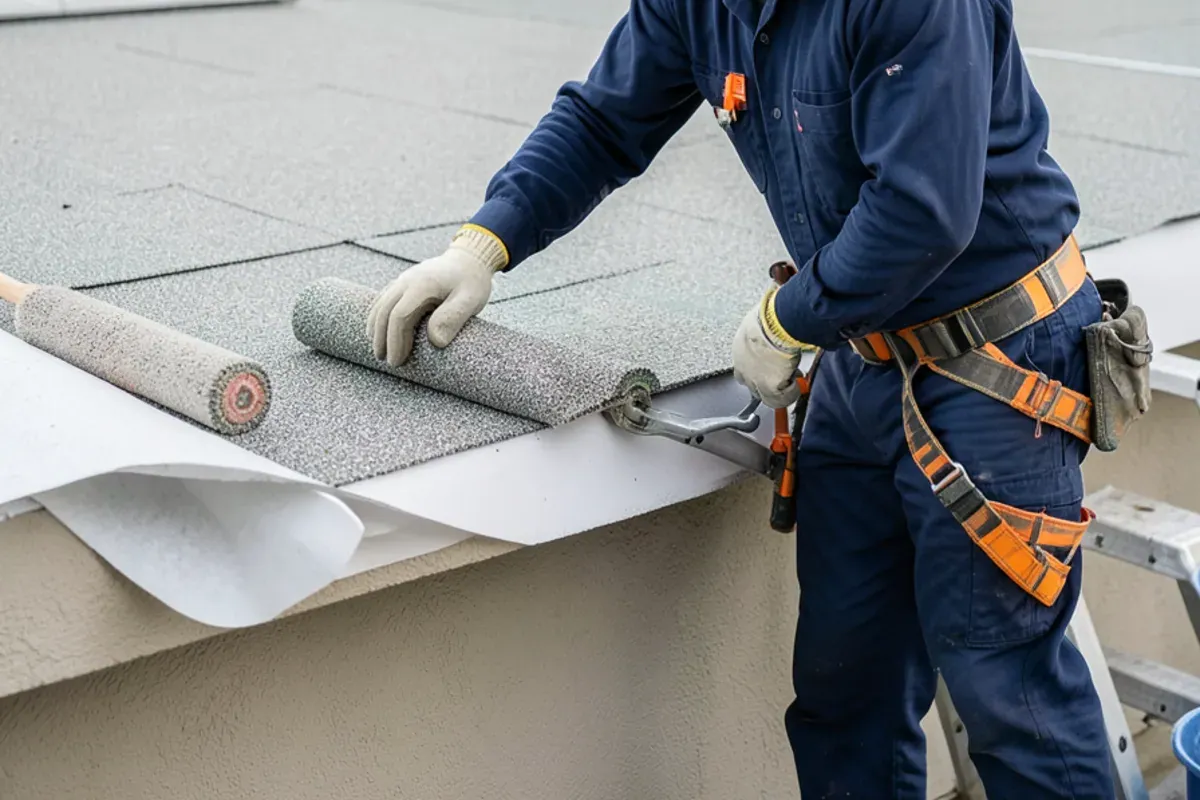
Roofer rolling out a self-adhered cap sheet across a flat roof deck
A roofer presses a self-adhered sheet down with a weighted roller, with no open flame.

What a modified bitumen roof job includes

  • Inspection and a stated attachment method: torch, self-adhered or cold-applied
  • Tear-off, or a recover only over one sound layer
  • Deck repair, insulation or cover board
  • Base sheet and granulated cap sheet, lapped and sealed
  • Flashing carried up every wall and curb
  • Photos, debris removal and a final walkthrough

Signs a layered roof is near the end

Granules gone across the field, laps opening in several places, alligator cracking and water ponding at seams all say the cap sheet is finished.
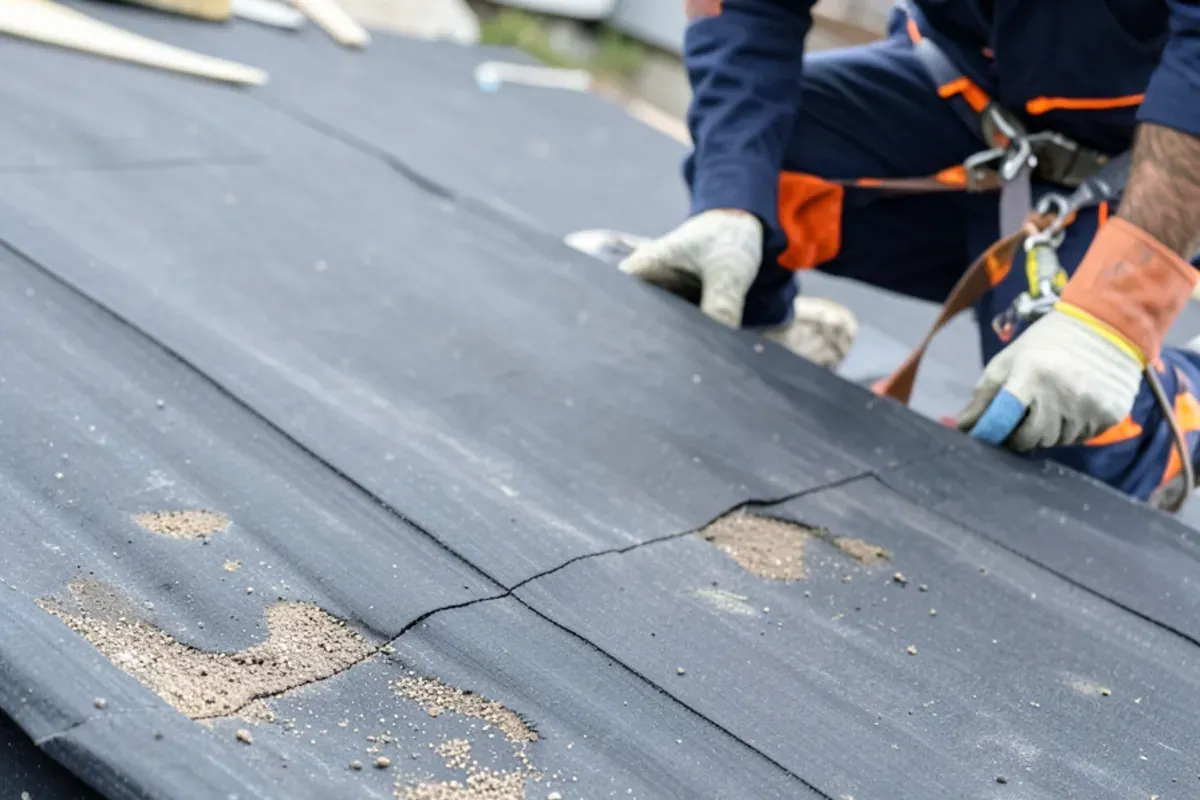
Worn granule surface and exposed mat on an aging modified bitumen cap sheet
Bare patches in the granule surface show a cap sheet nearing the end of its life.

Where do layered roofs beat single-ply?

Layered roofing wins on roofs with many details. A cap sheet gets patched and layered up a wall easily, takes foot traffic better than thin single-ply, and forgives imperfect decks. That is why a townhouse flat roof with a bulkhead, three vents and a skylight often ends up as modified bitumen.

TPO and PVC win where the roof is large, plain and reflective. EPDM is covered on its own page and suits small, simple areas. A good roofer will explain the trade-off for your roof, not push a single material.

Torch down roof repair and what comes before replacement

Torch down roof repair is practical when the sheet is sound. We cut out a split or failed flashing, clean the area, and lap new modified bitumen over it. A layered roof is easier to patch than single-ply because the new piece bonds to the old.

Repair stops being the answer when granules are gone across the field, the laps are opening in many places, or the deck beneath is soft. At that point the work moves to the flat roof repair question of repair or replacement, and we put both numbers on paper. A worn but watertight roof may instead suit a liquid layer, which our roof coatings page explains.
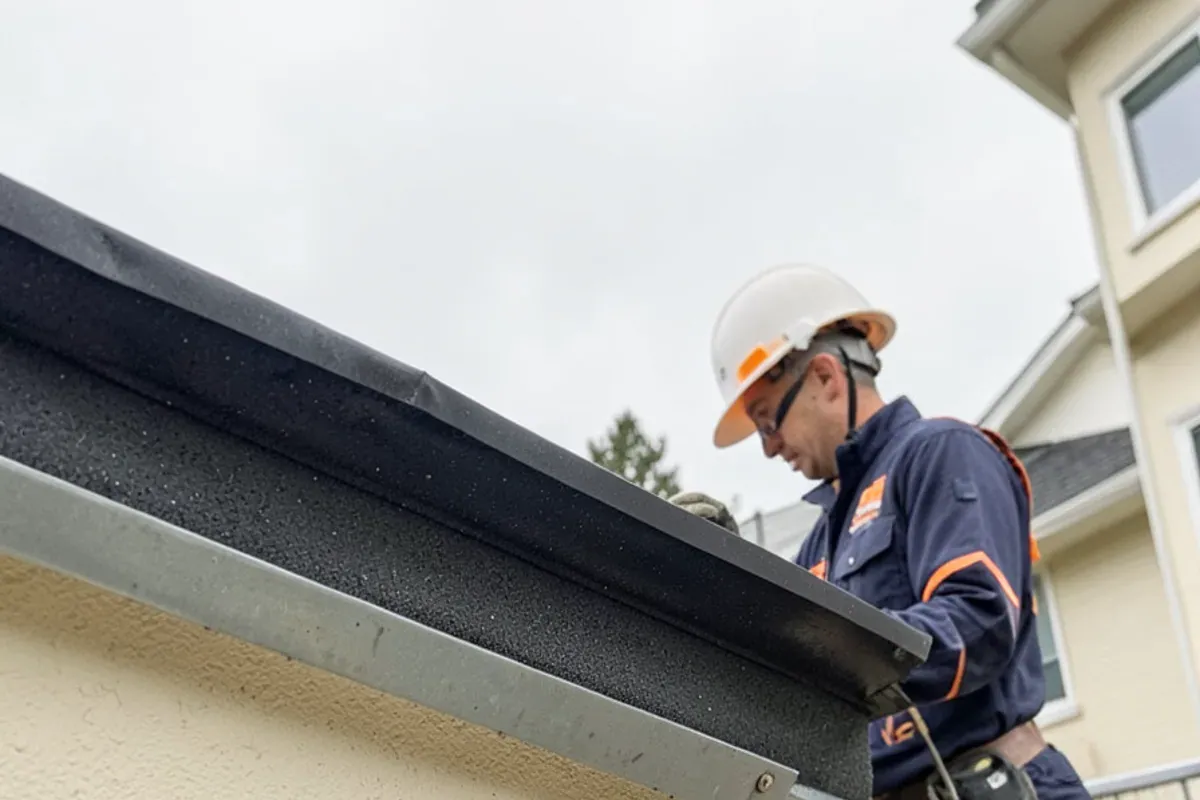
Layered modified bitumen flashing climbing a stucco wall with a metal termination
Layered flashing carried up a stucco wall and capped with a metal termination edge.

Our installation process

  1. Inspect the roof, deck and structure, and decide on torch, self-adhered or cold-applied.
  2. Write the estimate with sheet layers, attachment and flashing listed.
  3. Confirm who pulls the permit, then protect walls, windows and landscaping.
  4. Tear off to the deck, or confirm that the existing layer is sound enough to recover.
  5. Replace bad sheathing, after you approve the change order.
  6. Install insulation or cover board, then the base sheet.
  7. Lap and seal the cap sheet, and carry the flashing up every wall.
  8. Walk the roof, remove debris and send photos.

How much does a torch-down roof cost?

Torch down roof cost depends on layers, attachment method, roof area, deck repair and the number of walls and curbs. A 2026 Alameda pricing source puts flat or built-up roofs at roughly $6,000 to $18,000, a third-party range that spans several systems and is not our quote.

Torch-applied roofs tend to install faster than adhesive-applied ones, but flame safety measures such as a fire watch and a cooldown period add time. Self-adhered sheets cost more in material and save on risk. The written estimate fixes your price, so ask what attachment the price assumes before you compare bids.

Fire rules, permits and licensing for torch-down

California's fire code treats torch-applied roofing as hot work, with fire watch and extinguisher rules, and the local fire authority sets the details, including how long the watch lasts after the flame goes out. Ask the Alameda Fire Department what applies to your address. The City of Alameda Permit Center says most construction work needs a building permit, and the estimate should state who pulls it. California requires a C-39 Roofing classification for roofing work; check the license and bond at cslb.ca.gov before you sign. A contractor that will not name the attachment method in writing is a warning sign.
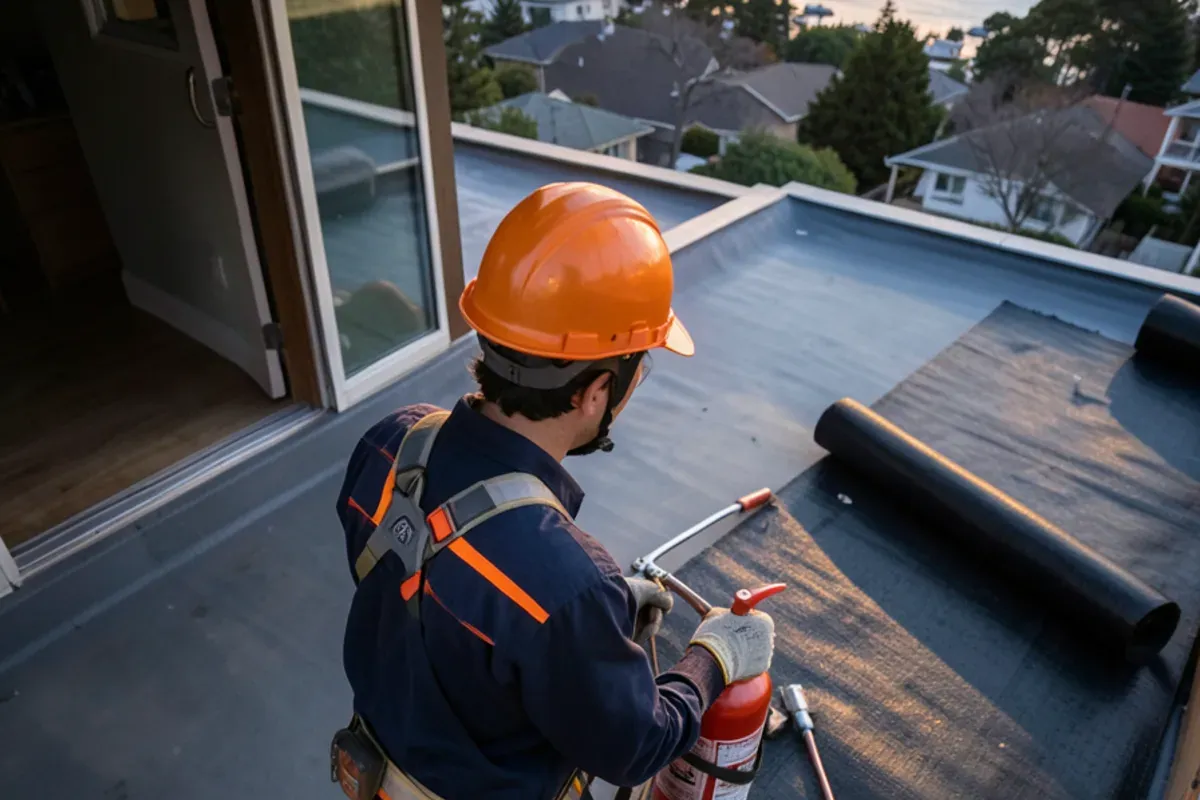
Roofer standing fire watch with an extinguisher beside torch equipment on a flat roof
A roofer keeps a portable extinguisher at hand beside a propane torch and a roll of modified bitumen.

Where we install modified bitumen roofs

We install flat roofs across the East Bay from Webster St. Oakland is about 12 minutes away, San Leandro about 24 and Castro Valley around 35, with bridge and freeway traffic adding time at rush hours. Older wood-framed homes in all three places raise the same question, which is whether a torch belongs on the roof at all.

What customers say about torch-down roofing work

4.9 stars from 60 Google reviews, as of May 2026. Read more reviews

“I had been needing a new roof for quite a while, and after hearing a great recommendation from a friend, I reached out to Apex Shield Roofing for an estimate.”
Jeffery O. · Google review · Alameda · 2026
“Since then, the team has also completed gutter work on three rental homes and most recently installed a new roof on one of them in Alameda.”
Shirley D. · Google review · Alameda · 2026
“I had an ongoing issue with leaking skylights after a past roof replacement done by another roofer. … He resealed the flashing and problem areas as needed, and so far I have had years of dry floors for much less than the cost of full replacement.”
Emilia K. · Google review · 2026

Where we do torch-down roofing work

  • AlamedaAlameda's pre-1940 wood-framed homes, 31.9% of the housing stock (Point2Homes), put the torch-or-self-adhered decision first on many flat roofs.
  • OaklandOakland's older wood-framed bungalows with flat rear sections raise the question of open flame near eaves and old sheathing.
  • BerkeleyBerkeley's close-set older wood homes leave little clearance for a torch, so a flame-free sheet is priced alongside it.
  • PiedmontPiedmont's older homes sit on tight lots with mature trees, so eave clearance shapes the choice, and the city runs its own building department.
  • AlbanyAlbany's compact lots put flat roof sections near neighboring walls, so a self-adhered sheet is the first option to price.
  • San LeandroSan Leandro's mid-century homes have low-slope sections with many vents and wall tie-ins, which suit layered sheets.
  • Castro ValleyCastro Valley is unincorporated, so Alameda County rules apply, and tree-lined lots make fire clearance part of planning.
  • San FranciscoSan Francisco Fire Department publishes its own fire safety rules for roofing operations, so a torch job there starts with that city's requirements.

Torch-Down Roofing: common questions

Is torch-down roofing safe on an older wood-framed home?

It carries a fire risk that has to be managed. An open flame near wood framing, eaves or gaps in old sheathing needs fire watch and a plan, and many roofers avoid it on wood-framed homes. Self-adhered or cold-applied modified bitumen gives the same layered roof without a torch. We choose the attachment after looking at the structure, not by habit.

How long does modified bitumen last?

A general industry range is roughly 15 to 25 years, and site conditions change it. Ponding water, foot traffic, sun exposure and poor flashing shorten it. Granulated cap sheets protect the asphalt from sun. Ask for the manufacturer's data sheet and treat any warranty term as paperwork, not a promised lifespan.

Can torch-down be installed over an old flat roof?

Sometimes over one sound layer. California does not allow a new covering over a roof that already has two or more applications, so two layers means tear-off. Wet insulation or a soft deck also rules out a recover. We check moisture and deck condition first, because covering a wet roof hides the problem and shortens the new roof.

What is a cap sheet?

The cap sheet is the top layer of a modified bitumen roof, surfaced with mineral granules that shield the asphalt from sun and add fire resistance. Beneath it sit a base sheet and sometimes a ply sheet. Together they are the layered system. A missing or worn granule surface is how you can tell the cap is nearing the end.

Can torch-down roofing be repaired?

Yes. Splits, lifted laps and failed flashing can be cut out and patched with new modified bitumen, and a layered roof is forgiving to patch. A patch only holds when the surrounding sheet is sound. If the granules are gone across most of the roof, we discuss replacement or a coating instead of another patch.

Get a written estimate for torch-down roofing

The phone is the fast way. If the water is coming in now, call first and use the form later.

  • 4.9 stars from 60 Google reviews
  • Free written estimates
  • Photo updates by text and email
  • Office on Webster St, Alameda

Ready to talk about torch-down roofing?

A call gets you a real person and a time for an inspection.

Apex Shield Roofing · 1910 Webster St, Alameda, CA 94501 · +1 (209) 563-1278

Call +1 (209) 563-1278
Call NowQuote