
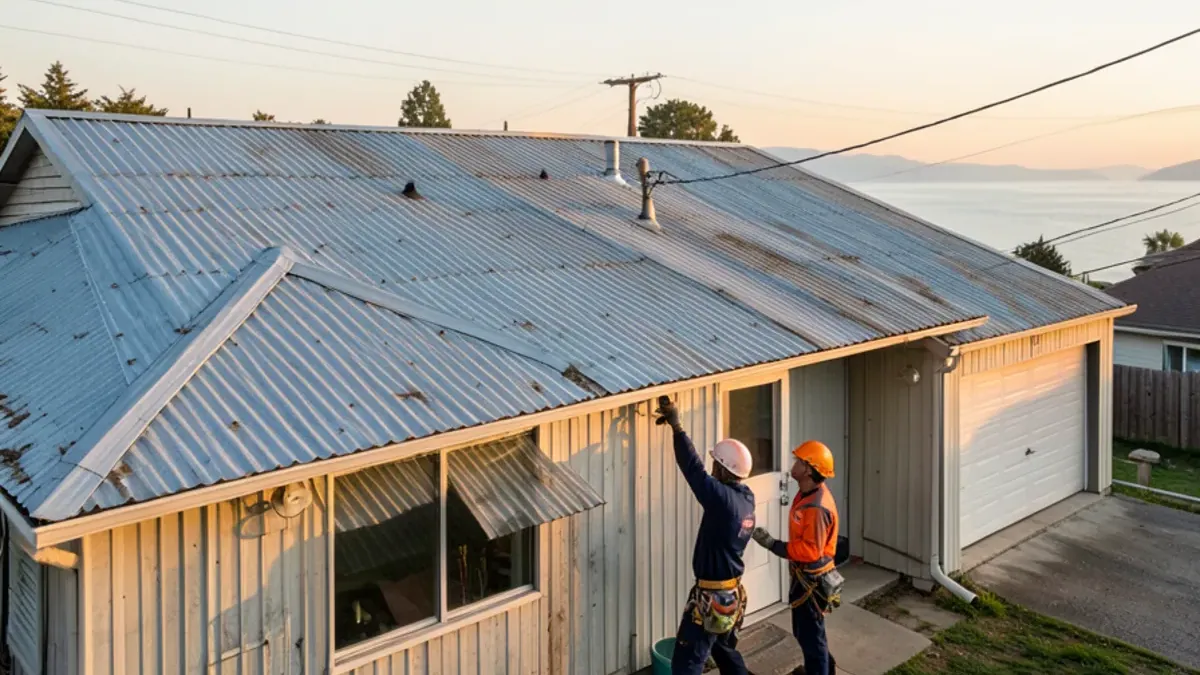
Where do metal roofs leak?
Four places account for nearly every metal roof leak. Knowing them tells you whether you need a small repair or a bigger one.
- Fasteners: On exposed-fastener panels the screws and their rubber washers are the weak link.
- Laps and seams: Where panels overlap or meet a ridge, sealant ages and gaps open.
- Penetrations and flashing: Pipes, vents, skylights and chimneys need flashing that moves with the metal.
- Rust: Cut edges and scratches expose bare steel, and corrosion works along the seam.
A dented panel is rarely the cause. Metal is tough, and the leak sits in a joint or a fastener.
Metal roof screw replacement
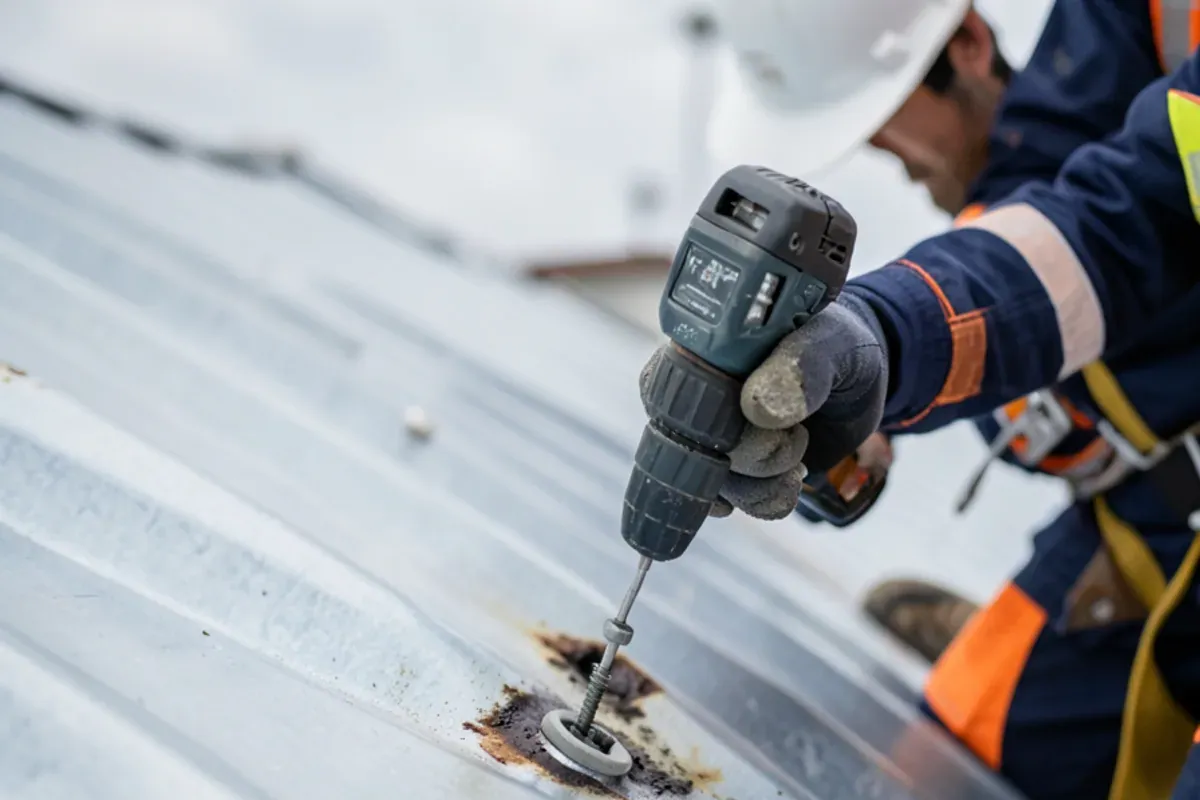
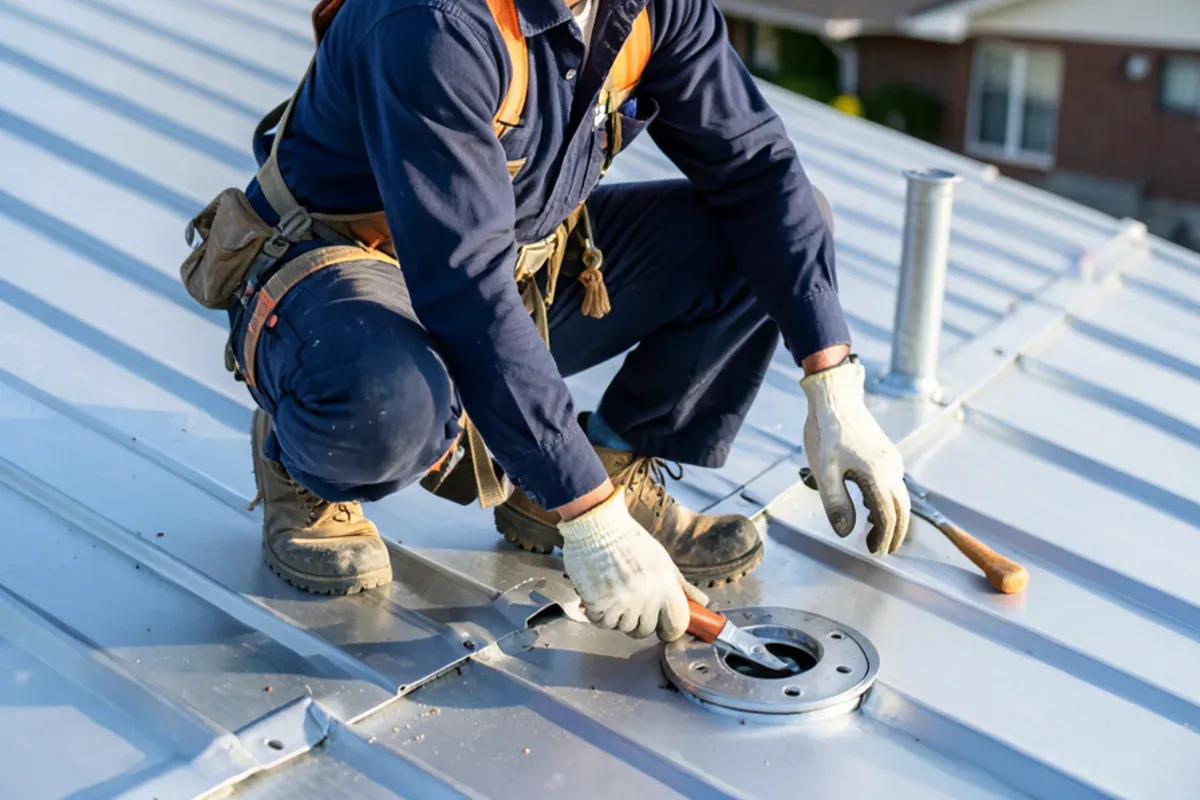
Fastener replacement is the most common metal roof repair. On corrugated and exposed-fastener roofs, the screws sit through the panel into the framing with a rubber washer under the head. Over the years sun dries the washer and the roof moves, so the screw loosens and water follows the shank.
We replace backed-out screws with new fasteners, sometimes one size larger when the hole has stripped. Old washers that are cracked are replaced as well. A roof that has lost most of its washers is best done in one full pass, because spot fixes leave next year's leak.
One Alameda customer had screw replacement done on a metal roof. How long it takes depends on pitch and panel count.
Does salt air corrode metal roofs in Alameda?
It can, mostly at the edges. Alameda is an island city on the bay, and salt in the air attacks cut edges, exposed screw heads and any scratched coating faster than it does inland. Dissimilar metals, such as a copper pipe above a steel panel, speed it up too.
You can slow it down. Rinse the roof once a year with fresh water in the dry season, touch up scratched paint, and have the fasteners checked before the rains. Keep leaves out of the valleys, where trapped moisture rusts the metal from beneath.
Standing seam repair versus corrugated repair
The two systems fail in different ways, so the repair differs.
On corrugated metal, with exposed fasteners, the work is screws, washers and lap sealant. On standing seam, with concealed fasteners, the panels are held by clips, and leaks tend to start at penetrations, end laps or a damaged seam. A seam can be re-crimped or resealed, but adding screws through the face of a standing seam panel defeats the system.
When condensation under the panels looks like a leak, the cause may be the attic. Our attic venting repair page explains how poor ventilation produces drips under metal that is not leaking at all.
Rusted metal roof repair: what can be saved
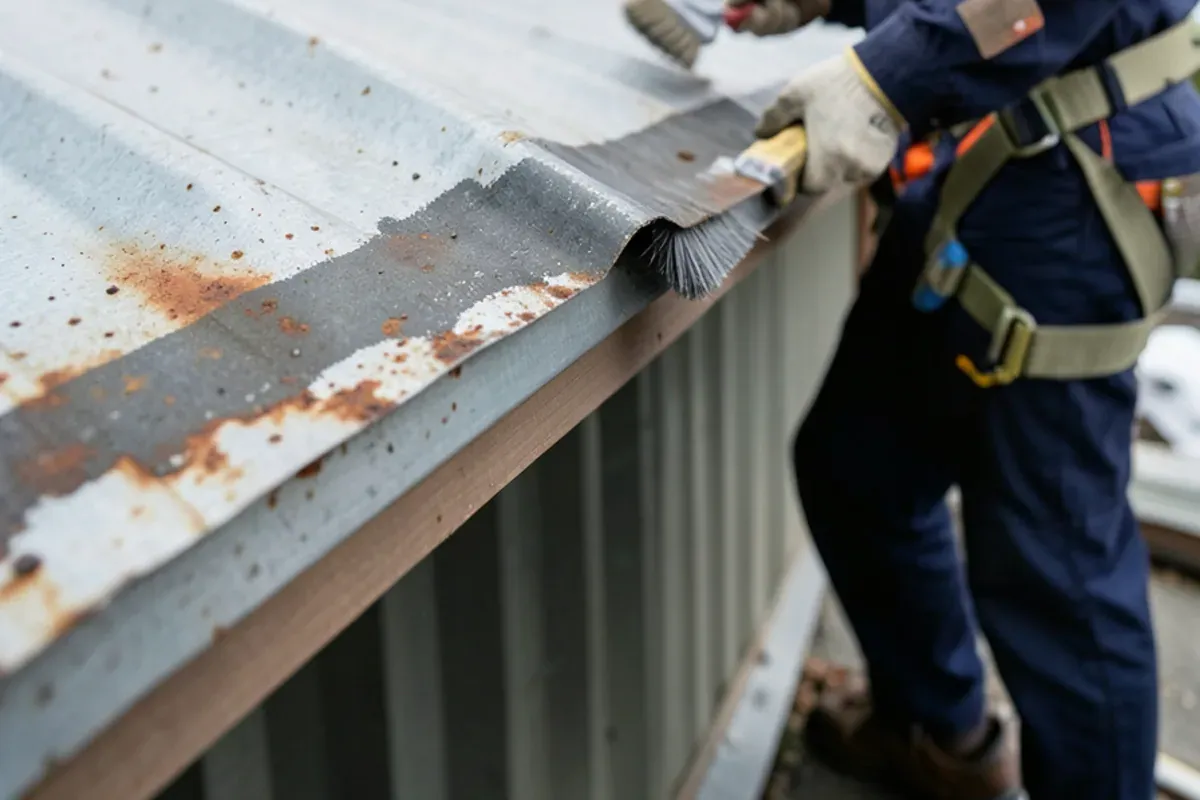
Surface rust can be brushed back to clean metal, treated and recoated. Rust-through is different. When a panel has holes or the rust runs along its seams, a patch buys a season, and a panel or section replacement is the honest answer.
We photograph the rust and show you which type you have. If most of the roof is failing, we say so and explain the replacement options. If only a section is gone, we replace that section and match the panel profile.
Estimating a metal roof repair from satellite images
A metal roof is simple to measure from above. For one metal roof in Alameda, the estimate came from satellite images and GPS, and the customer did not have to wait for a visit.
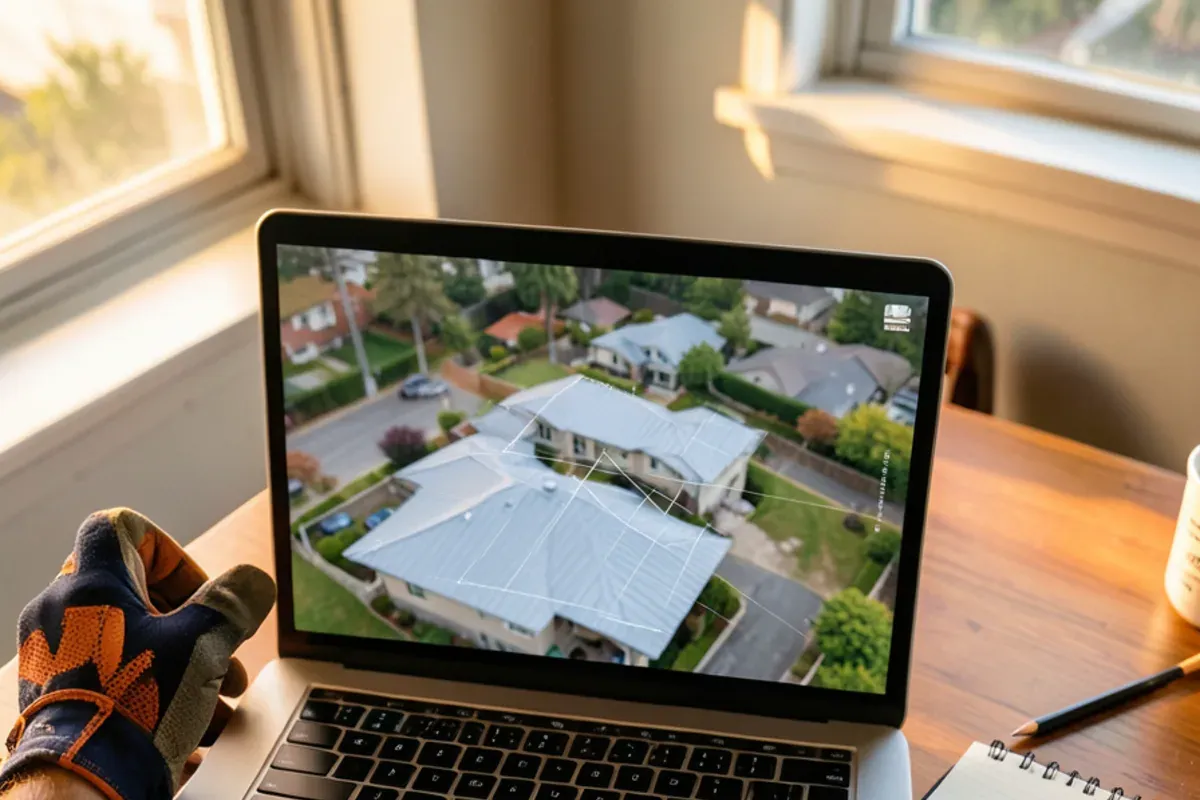
Images show size and pitch lines, not a cracked washer. We use them to scope the work and price it, then confirm on the roof or with aerial photos before the final written estimate. If conditions on the ground differ, you hear it before work starts.
Metal roof repair visit, step by step
- Call and photos. You describe the leak. Photos of the stain or the panels help.
- Remote scope. Satellite images give the size, layout and obvious problems.
- On-roof check. Fasteners, laps, penetrations and rust are inspected and photographed.
- Written estimate. It lists fasteners, sealant, any panels and who pulls the permit. Confirm the permit question before signing.
- Repair. Screws and washers, seams, flashing and rust patches are completed.
- Test and check. Seams and penetrations are checked for the cause of the leak.
- Cleanup and photos. Loose fasteners are collected and finished photos are sent the same day.
Cost and timeline for metal roof repair
Cost follows the number of fasteners, the roof pitch, whether panels need replacing and how much flashing is involved. Rust-through costs more than a screw pass. Access on a steep or tall house adds to labor.
Many repairs take a day or less, while a roof needing a large section replaced runs longer, depending on panel availability. On a full tear-off and metal install, one Alameda job took about a week, which gives you a sense of scale. We do not publish a flat price for metal repair, because the range is too wide to be honest. Your written estimate is the number that counts, with fasteners, panels and flashing listed separately.
Penetrations are often the real leak source, which the roof flashing repair page covers.
Permits and licensing for metal roof repairs
Screw and seam repairs are small, but replacing panels across a slope can pass the roughly 200 sq ft where a third-party county guide says roof permits generally begin (PermitFlow). Ask the City of Alameda Permit Center, and have the estimate name who pulls any permit. Roofing needs a C-39 classification from the CSLB, which you can check at cslb.ca.gov.
Metal roof repair around Alameda
From Webster St, Oakland is roughly 12 minutes away, San Leandro about 24, Hayward about 31 and Castro Valley about 35. Those are estimates, and traffic through tunnels and over bridges can lengthen them.
The coverage details for each city are on the Oakland, San Leandro, Hayward and Castro Valley pages.