Redwood shade and a wet winter
Mill Valley gets about 47 inches of rain a year, per Wikipedia, with roughly 90% of it between November and March. Alameda sees about 22 inches. That is twice the water on every roof, and the shaded canyons hold it longer.
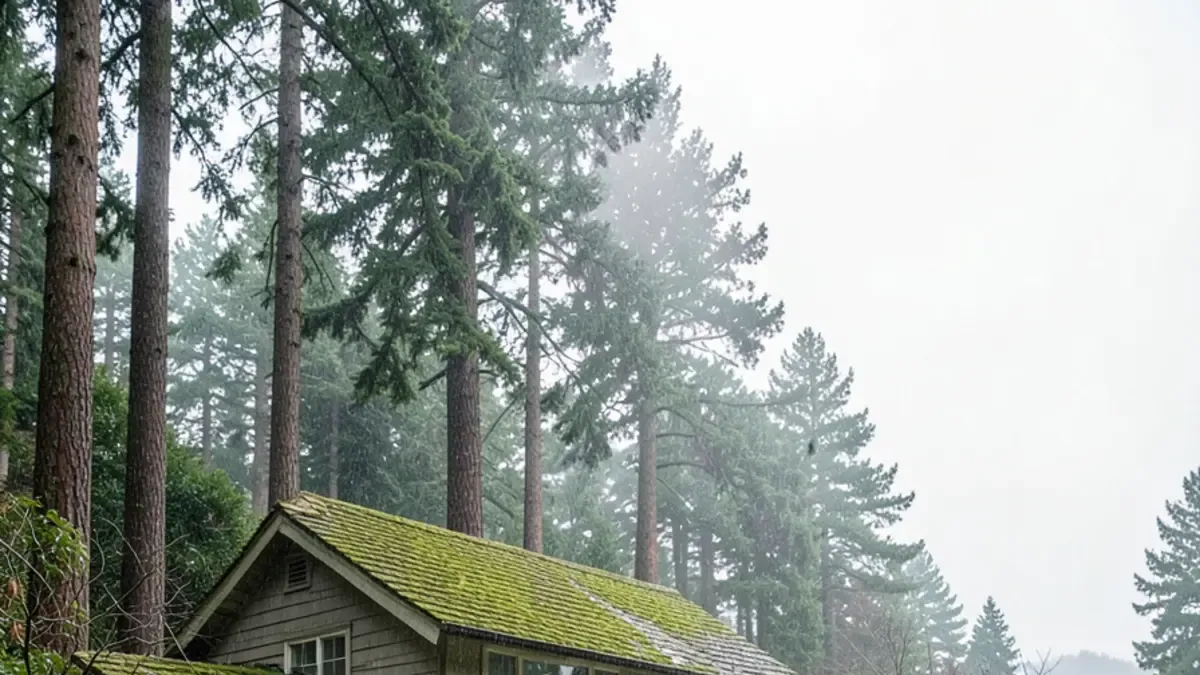
Expect moss, black algae streaks and a lot of needle debris. Underlayment and flashing do real work here. We look hard at valleys, skylight curbs and chimney flashing, because those are the places a damp roof fails first.
Gutters under the canopy
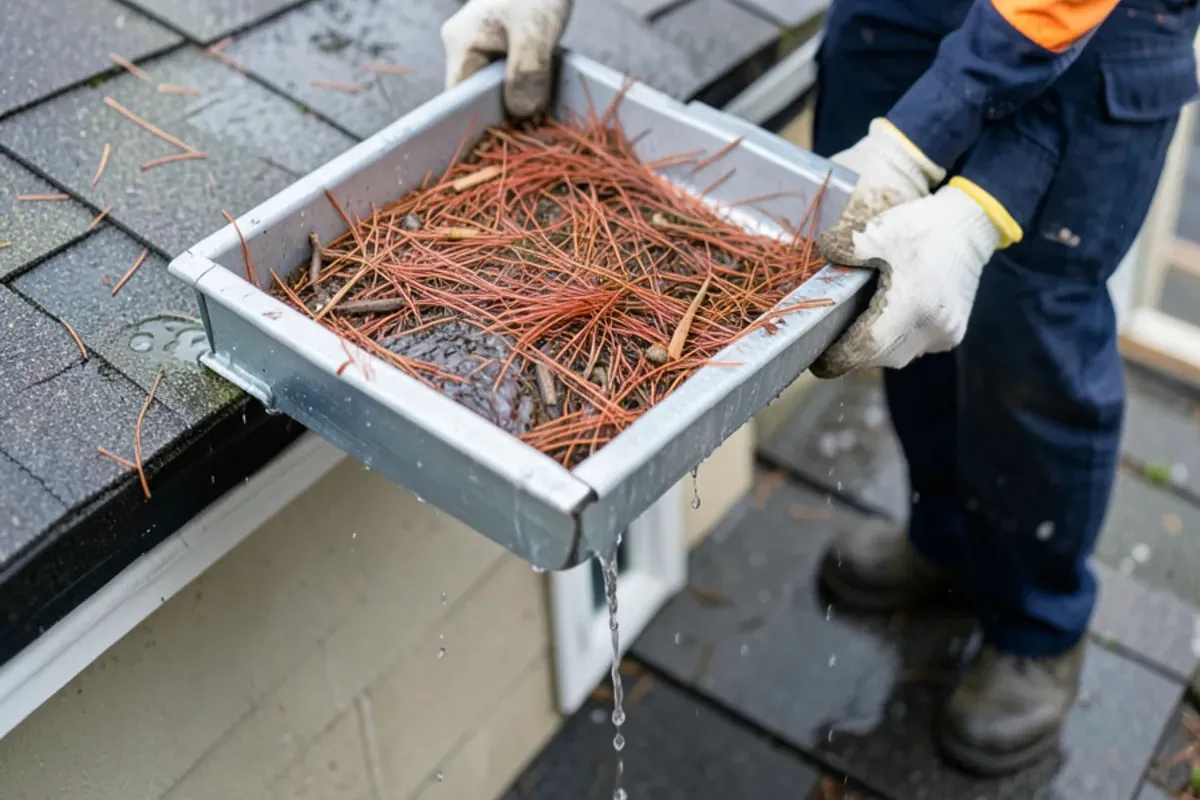
Needles and twigs pack gutters and valleys faster than leaves do. When water cannot get out, it backs under the first course of shingles. Gutter cleaning belongs on the schedule here, and a deeper gutter or a guard can be worth pricing. Alameda customers have asked for deeper gutters and had them installed after a reroof, and that is a fair question for a canopy-covered lot too.
- Roof Repair
Moss lifts shingle edges on shaded slopes, and a lifted edge becomes a leak path. We press-test the edges and check the first course at the gutter, where a damp roof fails first.
- Roof Replacement
Damp redwood-canyon roofs age differently, so a replacement quote starts with a look at the deck. About 90% of the rain falls from November through March, so the tear-off belongs in the dry months.
- Gutters
Redwood needles pack gutters and valleys, and overflow runs down the fascia. With about 47 inches of rain a year, the outlet size and downspout count matter more than they do on the island.
- Emergency Roof Repair
Winter storms land hard here; urgent visits depend on crew availability and the bridge traffic that day. Move belongings, photograph the stain and call early so we can plan a tarp.
- Roof Maintenance
Moss, needles and algae return every year under the canopy. A yearly look at the valleys, the north-facing slopes and the gutters catches problems before the first big storm of the season.
- Roof Flashing Repair
Valleys, chimney flashing and skylight curbs stay wet longest in the shaded canyons. Resealing or replacing flashing is often the whole repair, and we photograph each joint before and after.
Stair streets and steep lots
Mill Valley was laid out with step-systems and paths, per Wikipedia, and some houses sit well above where a truck can park. That affects labor, not just convenience. We ask about the approach on the first call, and the written estimate says how material gets to the roof and where debris goes.
Panoramic Highway, the 1929 fire and fire-rated roofs
The July 1929 fire destroyed 117 homes on the mountain above town, and Panoramic Highway, built in 1929 and 1930, links Mill Valley with Stinson Beach, per Wikipedia. Wooded slopes still run right up to the houses. Ask the city and the fire authority whether your parcel needs a Class A covering or ember-resistant vents on a reroof. The Marin Wildfire Prevention Authority, funded by a 2020 parcel tax, has offered homeowner grants for home hardening, so check its site for current terms before you order materials.
Older houses, remodeled rooflines
Mill Valley has 6,502 housing units, and Wikipedia notes that many 19th- and early 20th-century homes were gutted or demolished in the 1990s. A remodeled house often keeps part of an older roof and adds new sections. Every place a new roof plane meets an old wall or valley is a joint that can leak. We trace those joints on the inspection and photograph them, so the scope shows which section needs work and which can wait.
A visit from Webster St
Wayne or Pedro often does the inspection. You get photos and a written scope, and you hear whether repair or replacement is the honest answer. The City of Mill Valley's building department handles permits; the estimate states who pulls it, and you should confirm.
For Mill Valley, what we offer is a straight account of the drive and of crew availability. Neighbors we also cover include Tamalpais-Homestead Valley, Strawberry and Kentfield.